
The mystery of the Bayesian shipwreck: all the hypotheses and the judicial enquiry
An ongoing investigation seeks to discover the cause of the sinking of the Bayesian, with hypotheses ranging from opening portholes to drift conditions
3' min read
3' min read
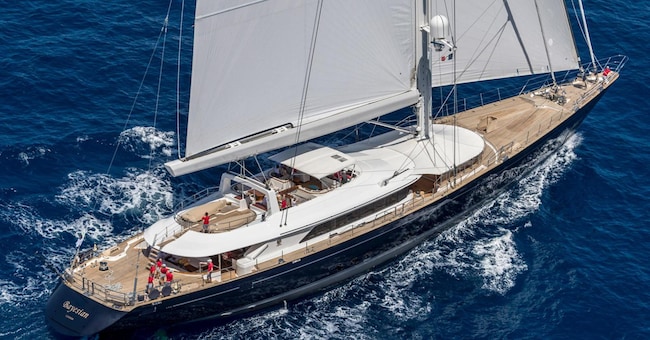
The question everyone has been asking from the start is how it is possible that a 56-metre-long sailing yacht built by Perini Navi of Viareggio - one of the world's most famous shipyards for large sailing yachts, a model of style and technology - went down in a matter of minutes while at anchor, a few hundred metres off the coast of Palermo, as happened to the Bayesian of billionaire Mike Lynch .
One of the (few) things that has been certain so far is that the whirlwind that hit the boat shortly after four o'clock in the morning, while the 22 people on board were asleep, may not be the only reason for the accident that claimed seven lives, all of them foreigners: British tech tycoon Mike Lynch, 59, and his daughter Hannah, 18; the chairman of Morgan Stanley International, Jonathan Bloomer and his wife Judy, 71; American lawyer Christopher Morvillo, 59, and his wife Neda, 57; and the on-board cook, Caribbean Recaldo Thomas. Out of twelve passengers, six died; out of nine crew members, one died.
How a sailboat of that size can take on water
.Maxi-yacht experts consulted by the Sole 24 Ore since the day of the accident on Monday 19 August have explained that "it is impossible for a boat like that to sink even if the mast breaks" (which, moreover, it didn't), and that "it is more likely that it will take on water from underneath, because the hatch or portholes of the cabins were left open". Four days later, this seems to be the most probable hypothesis that the Termini Imerese public prosecutor's office, led by Ambrogio Cartosio, is working on, and so far nothing has been leaked on either the hypothesis of crime or possible suspects. It is known that the magistrates are questioning the survivors (15 people, including a one-year-old girl) and that they have already heard for two hours the captain of the sailing ship, 51-year-old New Zealander James Cutfield, to try to reconstruct the dynamics of the accident.
Having ruled out the breakage of the 75-metre-high aluminium mast and the damage to the hull, which appears intact on the seabed at a depth of 49 metres (at least on the side visible to divers), attention is now focused on the hatches and portholes and on the drift, the fin that helps keep the mast balanced, which weighs tons and, in the case of the Bayesian, has a draught of ten metres: it appears to have been found partially raised by divers.
The judiciary's next steps
.Once all seven bodies have been recovered and autopsies have been carried out, it is likely that the magistrates will order the removal of the Bayesian from the seabed in order to complete the investigation (and avoid environmental risks: the tanks contain 18,000 litres of diesel and oils): an operation that, according to wreck salvage experts, is not impossible and could be carried out with the help of 'balls' that bring the boat afloat. In the meantime, claims for compensation will start. The yacht, refitted (complete refit) in 2020 in Mallorca, is estimated by experts to be worth around EUR 30 million. It is insured under two policies: the 'body and machinery' one, taken out with a pool of companies (Omac with Tci, Navium Marine and Convex), covers damage to the hull, equipment, furnishings; the P&I one (Protection & Indemnity), taken out by the Lynch family with the British Marine company of the Australian Qbe group, which specialises in third party liability in the maritime field, covers loss of life, the consequences of accidents, the risk of pollution, the costs of repatriating crew and passengers and the possible removal of the wreck. For the P&I policy, the maximum insured sum is usually USD 500 million per event. In total, therefore, the insurance companies involved in the disaster could be called upon to pay more than 500 million euros in compensation.

