The Bayesian shipwreck

The sinking of Mike Lynch, the tech tycoon's legal disputes and the links between Autonomy, intelligence and high finance

Mike Lynch, former British technology magnate and founder of Autonomy, who went missing in the wreck of his yacht in Sicily, has been at the centre of one of the most intricate and controversial legal cases. HP's billion-dollar acquisition of Autonomy revealed a complex web of connections between finance, national security and London's most prestigious law firms. Find out how these links to British intelligence and high finance influenced the legal battle and its reputation, starting with the (then start-up) Darktrace
by Silvia Martelli

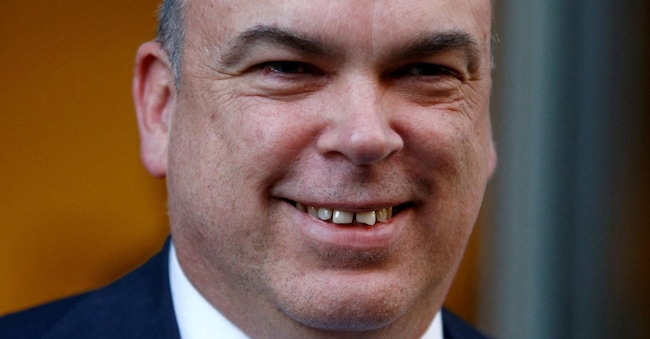
FILE PHOTO: British entrepreneur Mike Lynch leaves the High Court in London, Britain March 25, 2019. REUTERS/Henry Nicholls//File Photo

4' min read

4' min read

The name of Mike Lynch, the former British technology tycoon who disappeared in the wreck of his yacht in Sicily, has in recent years been inextricably linked to one of the most complex and controversial legal cases, linked to his software company Autonomy. During the trial, it soon emerged that behind the courtrooms and intricate financial dealings lay a dense network of connections spanning high finance, the British secret services and London's most prestigious law firms.

Lynch's court case, which saw the entrepreneur clash with the British and American authorities following the acquisition of Autonomy by Hewlett-Packard (HP) for USD 11.1 billion in 2011, has in fact highlighted not only the company's mismanagement, but also the close relationships that the tycoon had cultivated over the years. A network of relationships that extended far beyond the world of technology, offering a glimpse into the complex power dynamics between finance, justice and national security in the British capital.

Loading...

The Bayesan shipwreck dossier

High finance and links with the City

.

Mike Lynch built his fortune with Autonomy, a company that pioneered the use of artificial intelligence to analyse unstructured data. Based in Cambridge, Autonomy grew rapidly, soon attracting the attention of big investors in the City of London, the beating heart of finance. Among its early financial backers were the venture capital fund Innovacom and Softbank. Later, the backing of investment banks such as Goldman Sachs and UBS enabled Lynch to consolidate Autonomy's position as a market leader, making it a coveted target for large multinationals.

Goldman Sachs also played a crucial role in advising Lynch during some of the most delicate phases of Autonomy's growth. JP Morgan , one of the world's largest investment banks, was also involved in the financing transactions that supported the company's expansion.

These connections not only provided Lynch with the capital he needed to grow, but also granted him access to a network of influential figures in the financial sector. Access to capital and resources allowed the entrepreneur to consolidate Autonomy's position, making it a market leader and a coveted target for multinational technology companies.

Relationships with prominent figures in finance also helped Lynch build an image of solidity and trust, which then crumbled when HP accused him of artificially inflating the value of Autonomy, leading to one of the most disastrous acquisitions in the history of technology.

The Role of the Intelligence Services and the Implications for National Security

One of the lesser known aspects concerns Lynch's alleged relations with British intelligence. According to the British press, Lynch was invited to lunch at British intelligence headquarters in 2011 to discuss security and technology issues. As the founder of a technology company with access to sensitive data, Lynch inevitably attracted the attention of national security agencies. Autonomy, in fact, has developed software used by various government agencies and law enforcement agencies for data analysis and crime prevention. This has fuelled speculation about a possible collaboration of Lynch with British intelligence, in particular with Government Communications Headquarters, the government agency responsible for cyber security and eavesdropping.

Although there is no concrete evidence of a direct link between Lynch and GCHQ, speculation intensified after the start of the legal proceedings. Some believe that Lynch's knowledge of sensitive information influenced the UK authorities' approach to him, prompting caution in dealing with the case. Others, however, speculate that the intelligence interest in Autonomy's technology made the company a strategic national security asset, helping to protect Lynch from more immediate and severe prosecution.

Moreover, in 2013, Lynch had co-founded the cybersecurity company Darktrace in collaboration with former British intelligence officials, including Stephen Huxter, a senior figure in MI5's cyber defence team, who was later appointed CEO of Darktrace.

Former MI5 chief Jonathan Evans also served on the board of Darktrace and Jim Penrose, after 17 years at the US National Security Agency, headed the company's US operations. Adding to the list are technology director Dave Palmer, who had previously worked at MI5 and GCHQ, and security director John Richardson, who had worked on cyber security for the British government. The company recruited several other former MI5, MI6, CIA, NSA and FBI agents, creating a team with unique expertise in cyber security.

London's big law firms

.

With HP opening legal proceedings accusing Lynch of manipulating Autonomy's accounts to inflate its value prior to its sale, the entrepreneur was faced with an unprecedented legal battle. To deal with it, he promptly assembled a team of lawyers from London's most renowned law firms. Prominent among them is Clifford Chance - part of the 'Magic Circle', the elite group of the five most prestigious British firms - known for its expertise in high finance cases and international litigation.

The team included Chris Morvillo, a partner at Clifford Chance and a defence lawyer known for representing numerous high-profile clients in financial crime and corporate governance cases. Morvillo played a key role in building an aggressive defence strategy, challenging the allegations made by HP and questioning the strength of the evidence presented by the other side.

Another central figure in Lynch's defence was Alex Bailin QC, barrister at Matrix Chambers, another prominent name in the UK legal landscape. Bailin was chosen for his experience in corporate fraud cases and his ability to deal with complex and high-profile legal issues.

Lynch's defence relied on an aggressive strategy, contesting each charge and questioning the legitimacy of the evidence presented by HP and the authorities. The lawyers also sought to shift the focus of the case, highlighting alleged irregularities in the acquisition process and pointing the finger at the accusers themselves. They argued that HP had mishandled the Autonomy integration and that the losses incurred were the result of mistakes by HP's management rather than alleged deception on its part.

Copyright reserved ©

Brand connect

Loading...

Newsletter

Notizie e approfondimenti sugli avvenimenti politici, economici e finanziari.

Iscriviti