Legambiente-AzzeroCO2

Almost 3.7 million new trees planted in Italia in 2025 (+17 per cent)

They will generate benefits of 27.8 million euros a year. Metropolitan cities have stepped up their use of PNRR funds

3' min read

Translated by AI
Versione italiana

3' min read

Translated by AI
Versione italiana

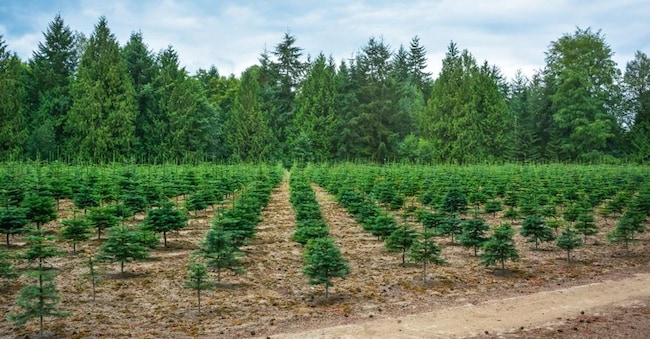
The number of trees planted each year in our country continues to rise. Between spring 2025 and spring 2026, almost 3.7 million trees were planted, 17 per cent more than the previous year. Over a four-year period (from spring 2022), more than 12 million trees were planted across an area of 16,889 hectares.

The picture is painted by the Forest Atlas, a report compiled for Monday’s edition of *Il Sole 24 Ore* by AzzeroCO2 (a sustainability and energy consultancy) and Legambiente, in collaboration with the Compagnia delle Foreste, now in its sixth edition.

Loading...

The economic benefits

New green infrastructure recoups the initial investment within four or five years of planting, after which it continues to generate positive benefits for decades. As in previous reports, the Atlas does not merely catalogue urban and extra-urban afforestation projects but, by applying the methodology developed by AzzeroCO2 with the support of ISPRA (the Higher Institute for Environmental Protection and Research), quantifies the economic benefits generated by the plantations. The positive effects are manifold and range from mitigating climate change (plants absorb CO₂, the main greenhouse gas responsible for global warming) to preventing hydrogeological instability. Green spaces also regulate air quality, mitigate extreme weather events, reduce soil erosion, produce raw materials and food, and boost tourism and recreational activities.

A quantification of the benefits reveals that the trees planted in 2025 (the period under consideration always runs from spring to spring and therefore, for 2025, from spring 2025 to spring 2026) will generate 27.8 million euros per year for each year of the trees’ lifespan. And, if we consider the positive effects produced by the trees planted between 2022 and 2026, the economic value exceeds 88 million euros per year.

The impetus of the NRRP

The growth in tree planting over the last two years has been driven primarily by initiatives undertaken by metropolitan cities, which have stepped up their use of PNRR funds ahead of the 30 June 2026 deadline. The start had in fact been slow, and by 2022 only Turin and Venice had begun work on their projects. Between the spring of 2025 and that of 2026, however, metropolitan cities planted more than 1.4 million trees – four times the number recorded the previous year. Most of the planting (59 per cent) was carried out by Turin and Rome.

Initially, the PNRR measure dedicated to urban and extra-urban afforestation provided for funding of 330 million euros, with the aim of planting 6.6 million trees. However, following the scale-back carried out in December 2023, funding was reduced to €210 million and the target was revised to the planting or sowing in nurseries of 4.5 million trees and shrubs, with at least 3.5 million to be transplanted to their final sites by 30 June 2026. The first target has been met, whilst the second was on track to be achieved as of last April (when the Atlas survey was completed).

By contrast, the main driver of regional forestry policies – which draws on European funds earmarked for supporting the agricultural and forestry sectors and for the development of rural areas – has been at a standstill for three years. The cause lies in the transition between two funding programmes: the conclusion of the 2014–2022 Rural Development Programme (RDP) and the launch of the 2023–2027 Rural Development Programme (RDP). Last year, only Lombardy, Tuscany and Umbria had already begun reforestation projects under the 2023–2027 Rural Development Programme. In the other regions, however, the new programme is still being finalised (in Puglia, Piedmont and Sicily, projects linked to the 2014–2022 Rural Development Programme are still being implemented).

In the local area

For the third year running, Trentino-Alto Adige has retained its top spot in the ranking of regions with the highest number of tree plantings, thanks to reforestation programmes funded by provincial funds to restore areas affected by Storm Vaia and bark beetle infestations. The report highlights that in Trentino-Alto Adige, ‘continuity depends on a regional policy rather than a time-limited national programme’. Both the Autonomous Provinces of Trento and Bolzano have carried out reforestation projects using provincial funds, whilst initiatives funded by regional resources have been implemented in Veneto, Valle d’Aosta and Lazio.

In second place this year, behind Trentino-Alto Adige, is Sicily, thanks to the projects carried out by the metropolitan cities of Catania and Palermo using PNRR funding and funds from the 2014–2022 Rural Development Programme (PSR).

Private individuals

Last year, projects funded by private sources enabled 69,510 trees to be planted, 70 per cent more than were planted in 2024 (from spring 2024 to spring 2025). This was a substantial increase, but it was not enough to make up for the drastic declines seen in 2024 (-72%) and 2023 (-14%). The number of trees planted thanks to private funding therefore remains far below the peak of 169,799 trees recorded in 2022.

Copyright reserved ©
Loading...
Loading...

Brand connect

Loading...

Newsletter

Notizie e approfondimenti sugli avvenimenti politici, economici e finanziari.

Iscriviti