
Alto Adige/Südtirol, the quality label does not only boost local products
The label has 200 producers and 4,600 farmer members and, after products such as yoghurt and bread, with the vertical greenhouses it has enhanced basil, exotic mushrooms and non-alcoholic beer

When it was born in 2005, it was a pioneer. It was one of the first 'labels' to guarantee the origin, sustainability and quality of food products, verified by independent controls from the field to the packaging plants. Today Alto Adige/Südtirol remains the most widespread quality mark in Italy, with over 200 producers and 4,600 farmers adhering to it, and is considered a benchmark for those involved in territorial marketing. But it is also an indicator of the evolution of the South Tyrolean agri-food sector and the many paths it has taken in recent years to emerge from the tunnel (and risks) of the agricultural monoculture of wine and apples.
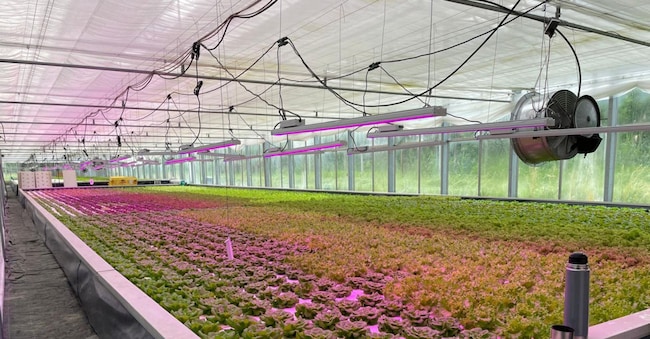
Starting with classic products (such as yoghurt and bread), the Alto Adige brand has since expanded to 11 product categories, including innovative ones such as watercress obtained in vertical indoor farming. "We started out in 2009 with the aim of offering a regional, organic and sustainable product to chefs who were forced to source it from Holland, by starting an additional farming business to the family business," explains Ulrich Kager, founder together with Patrick Sanin of Profarms, specialising in microgreens. Starting with a small investment to develop the prototype plant and then supported by crowfunding and a partner specialising in catering, Profarms now produces 2,500 cartons per month and delivers them to fruit and vegetable wholesalers and restaurateurs within 20 hours of ordering. In January it will double its production capacity and continue its 'affiliation' project (from which it obtains half of its revenues), with which it supplies seeds and software for microgreen vertical farms to four partners in Italy, Switzerland and Austria.
A similar path is what prompted Josef Obkircher and Andreas Kalser to transform the old barn of a farm into a 'greenhouse' for 'exotic' mushrooms, such as shiitake, and Mediterranean ones, such as cardoncello, which have acclimatised well at an altitude of 1,500 metres. 'We thought of it as a complementary activity to that of our farms, but in fact the project has grown quickly and now employs ten people,' explains Andreas Kalser. Kirnig has EUR 1 million in revenues and produces 100 tonnes of mushrooms per year, which are sold fresh or preserved to shops, platforms (such as Cortilia) and restaurants, and which also reach markets in northern Italy.
It has international appeal (especially popular in Germany and Holland) Freedl, the first non-alcoholic 'craft beer' brewed in Italy and also the first that, for a few months now, can be labelled as 'non-alcoholic craft beer'. An unusual choice for a family of craft brewers who run a popular biergarten in Lana d'Adige.
"In 20167, my brother Max and I made a clear decision: to create a new category of alternative beverages to alcohol, focused on taste and pleasure," explains Maria-Elisabeth Laimer. "We were pioneers, we believed in it and we set up the plant, expanding it year by year. But we want to remain artisans and continue to make innovations in fermented beverages, such as the sparkling teas we have launched, a natural alternative to dealcoholised wine'.
Not only new products for new consumption. In Italy's greenest province, innovation also focuses on projects that combine the development of the region with the more sustainable use of resources. Proof of this is the first South Tyrolean insect farm, opened a few weeks ago at Solos Aquaponix in Termeno. Here, the larvae of an insect, the black soldier, are fed with by-products of the agri-food chain collected locally, avoiding waste, and then converted into protein flours for quality feed. The same are used to feed trout perch, catfish and sheatfish bred in the company's aquaponics plant, which integrates fish farming with the in-water production of salads and herbs (such as basil and chives).

