

Alzheimer's, here comes Teo: the robot that helps memory and caregivers
Daisi&Ron, a project integrating Ai, robotics and virtual reality to monitor and stimulate cognitive functions in the elderly, gets underway
2' min read
Key points
2' min read
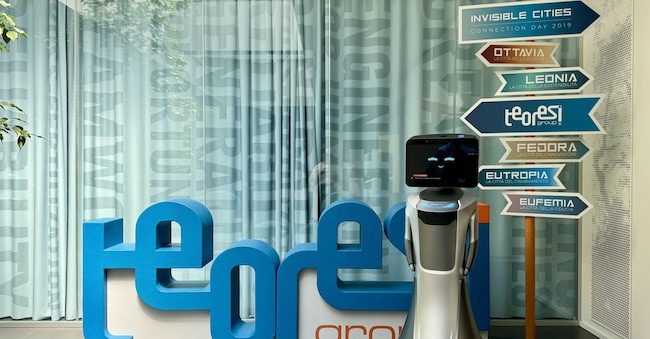
A technological ally to combat Alzheimer's and cognitive decline. His name is Teo and he is an assistance robot designed to monitor, stimulate and support frail elderly people in nursing homes and at home. The project featuring it, Daisi&Ron, integrates robotics, artificial intelligence and virtual reality with the aim of promoting active ageing and lightening the load of caregivers and health workers.
The initiative is being developed as part of Anthem - AdvaNced Technology for Human centred medicine, funded by the Mur through the National Complementary Plan (NCP) and a call for proposals from the University of Milano-Bicocca. Coordinating the work is the 'Rita Levi Montalcini' Department of Neuroscience at the University of Turin, led by Alessandro Vercelli, in collaboration with the Teoresi Group and Intravides Srl, a UniTo spin-off.
A robot to stimulate memory and attention
.Teo does not just move around autonomously and interact vocally: thanks to the integration with virtual reality platforms developed by Intravides, it can offer the elderly immersive cognitive games and exercises, such as digital escape rooms, useful for training memory, attention and orientation. The data collected are then processed and returned in a comprehensible form, creating a customised cognitive stimulation path.
Tests in the laboratory and in real environments
.After programming by Teoresi, the robot is currently being tested at the group's Turin headquarters, which has been transformed into a real technological laboratory. Here Teo is being tested in realistic scenarios: reception, accompaniment along predefined routes, voice interaction and autonomous navigation. The next steps include validation in living labs with elderly subjects at the University of Turin and the Nico - Neuroscience Institute Cavalieri Ottolenghi.
An aid to caregivers, not a substitute
"We cannot imagine that robots will replace caregivers, but they will certainly be able to support staff, collecting useful data for assistance and care," explains Alessandro Vercelli, director of the Department of Neuroscience at the University of Turin. 'In a society that is ageing rapidly and in which the demand for services is growing, these technologies represent a valuable resource for continuously monitoring the condition of the elderly, personalising therapeutic interventions and proposing targeted cognitive activities. This is not science fiction: robots can become concrete tools to make nursing homes and homes safer, more stimulating and less burdensome places for family members and caregivers'. The aim is to reduce the risk of isolation of the elderly, improve their quality of life and provide tools for prevention and early monitoring of diseases such as Alzheimer's and dementia.


