

Alzheimer’s, Schillaci: ‘New plan with fresh funding in the budget’
The Minister announced the new 2027–2031 strategy and requested funding from the Ministry of Economy and Finance to strengthen support for patients and carers

Key points
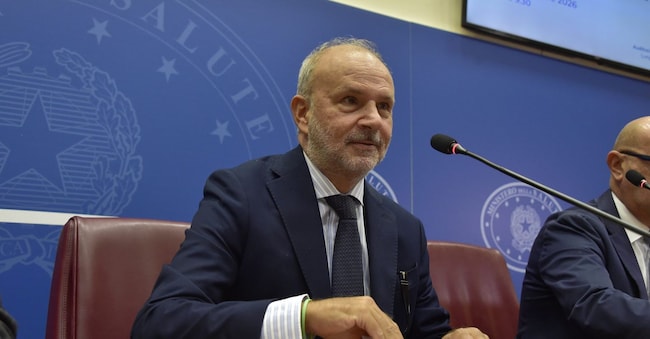
“We are working on a funding proposal for the forthcoming Budget Bill to support the implementation of the Plan and to strengthen public health responses for the prevention, diagnosis, treatment and support of people with dementia and their families.” The announcement of new funding in the budget came on the occasion of the 33rd World Alzheimer’s Day from Health Minister Orazio Schillaci, who launched the new National Dementia Plan 2027–2031 at the Ministry. The Plan was drawn up by a working group comprising institutions, regions and experts at the Ministry. A document which, he said, ‘will be submitted to the Unified Conference by the end of October’.
Funds currently in place and those requested
Schillaci went on to point out that the Alzheimer’s Fund ‘has been renewed and increased by almost 35 million for the period 2024–2026. ‘The new Plan provides us with a more modern national framework,’ he said. ‘The allocated resources have enabled us to consolidate important initiatives, and now the proposal for the Budget Bill aims to give these measures continuity and structural strength.’ The Plan currently in force has never received stable funding and, as experts point out, has so far been sustained “thanks to the goodwill of the regions and ad hoc allocations”. In the international context, amongst countries with advanced planning, the weakness remains the absence of structured financial support that truly treats dementia and Alzheimer’s as a ‘public health priority’.
“The request for resources in the budget will ‘complete the work already underway to achieve a significant improvement’,” continued Schillaci, “ensuring continuity, reducing regional disparities and enabling local areas to tailor provision to actual demand. “We want accessible services and a care pathway that supports people through the various stages of their illness, without leaving families to cope on their own,” the minister concluded.
10 per cent of the population affected
Rocco Bellantone, President of the Italian National Institute of Health (ISS), pointed out that Alzheimer’s ‘directly affects around 10 per cent of the Italian population, comprising people with major and minor neurocognitive disorders and their family members, with a significant social, health and economic impact’. Fourteen years on from the previous one, he added, the new 2027–2031 Plan “incorporates the World Health Organisation’s seven global action areas, which are based on an approach to dementia as a public health priority, and translates them into a strategy focusing on prevention, diagnosis and care, inclusion, support for carers, information systems and research’.” For the first time in Italia, the ISS president added, a campaign has been launched on communication campaign on dementia and Alzheimer’s has been launched. Itwill be promoted by the Ministry of Health in collaboration with the Istituto Superiore di Sanità and the Italian Medicines Agency (AIFA) “to raise awareness of the issue, combat stigma and prejudice, promote prevention and encourage early diagnosis, by providing clear, scientifically sound and accessible information”.
The plan could yield savings of up to 1.8 billion
For the first time, the Dementia Roundtable has attempted to estimate how much would need to be spent at full capacity across all seven areas of action set out for the next five years: “‘For a truly effective Plan that begins to consider strategic pathways, we would need an investment of at least 2 billion’, explained Teresa di Fiandra, ISS adviser for the Alzheimer’s and Dementia Fund, who also highlighted the anomaly in Italy of having had no structural resources at its disposal to date. At the same time, the expert provided an estimate of the potential savings if all the measures in the new Plan were actually implemented. Starting with prevention, by addressing the numerous risk factors identified by the Lancet Commission, “with a reduction in the number of dementia cases, the number of people admitted to care homes and the use of antipsychotic drugs, this would result in financial savings of over 1.2 billion for the National Health Service and 664 million 500 thousand euros for families who currently bear many of the costs out of their own pockets’, she said.

