
Amarone, half the vineyards are sustainable: the strategy to counter the crisis in the greenest markets
Between organic and ministerial certificates (Sqpni), 53% of the area under vines has been reached: +10% in little more than a year, thanks also to the production incentives of the Consortium, which is aiming to defend its shares in Northern Europe and the USA

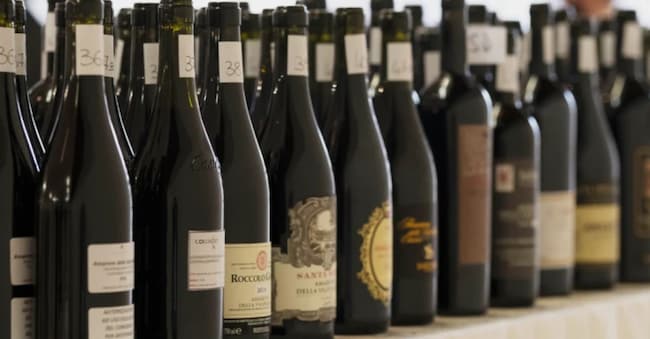
To cope with the difficulties of red wines, Valpolicella is going green. In 2025 and for the first time organic or sustainably certified vineyards became the majority among Amarone vineyards with a share of 53% of the total (they were 42% in 2024) with an exploit of about a thousand new certified hectares in one year. Overall, of the 8,600 hectares of the denomination, 1,100 are organic and 3,600 are Sqpni (National Quality System for Integrated Production) certified, the ministerial logo for sustainability. This is positive news that partly balances out the difficult market moment. In the first ten months of 2025, Veneto's PDO red wines (among which Valpolicella is the main driver) lost 2.4% in value. The trend was also difficult abroad, withtariffs weighing down in the USA (-5.8%), but also declines in Switzerland (-9.8%), Denmark (-3.7%) and Norway (-6.5%%); partly offset by Canada (+4.8%), Germany (+5.1%) and Sweden (+4.7%). Trends that were the focus of Amarone Opera Prima at the Gallerie Mercatali in Verona.
"The exploit in green certifications," explains the President of the Consortium for the Protection of Valpolicella, Christian Marchesini, "is not only the result of sensitivity to environmental issues. We have incentivised it by allowing, for example, those who are certified to put a higher percentage of grapes to dry to produce Amarone. Compared to 4 tonnes per hectare for a conventional producer a Sqnpi-certified winery can dedicate 4.5 tonnes while an organic producer can go up to 4.8'.
It is also a choice guided by market evaluations. "Our wines," adds Marchesini, "have historically had an important market in the Scandinavian countries, where there is a strong demand for 'sustainable' wines. They absorb 21% of our exports, a share twice that of the United States at 10%.
From the 8,600 hectares of Valpolicella an average of 57 million bottles are produced each year (13.5 of Amarone/Recioto, 16.5 of Valpolicella and 27 of Ripasso) for an estimated turnover of 600 million euro. A second lever for the relaunch focuses on promotion: "In spring," adds Marchesini, "we will launch the first event dedicated to a single market, the Scandinavian countries, and to a single wine: Recioto. We need to invent new formulas for promotion as well. We have the feeling that promoting different products around the world to different audiences no longer works. We need a more tailor-made action centred on a single market and a single label'.


