
France tries to sweeten red wine crisis with grape sugar
The practice is banned in Italy, but is now permitted in the post-fermentation phase even for DOCs that request it: the aim is to try to get closer to the tastes of younger customers

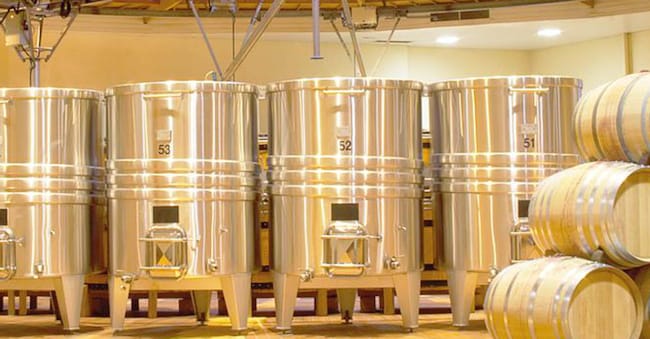
Under the blows of the international wine consumption crisis, France breaks the taboo on the integrity of tradition and opens up the possibility of using grape sugar in the wine-making process. The objective? To smooth out the organoleptic roughness of wines, especially reds, and to meet the entry-level tastes of new consumers, and young people in particular, who seem to be the group that is most moving away from the dictates of tradition.
The one that has just been introduced in France, and not for generic wines, but for Aoc wines (the equivalent of our Doc and Docg wines) represents a real revolution, above all because it is adopted by a country that has always professed to be a defender of the integrity and tradition of the wine product.
First of all, the contours of the legislation must be clarified. The addition of grape sugar that has been authorised is post-fermentation and must therefore be distinguished from the addition of sugar (even beet sugar) during fermentation. In the latter case (a practice authorised in a few restricted areas in France and Germany but absolutely forbidden in Italy) the addition of sucrose (also known as chaptalisation) is intended to boost the alcohol content (up to a maximum of two degrees alcohol) of wines produced in areas where, for climatic reasons, an adequate degree cannot be reached (an increasingly rare phenomenon, due to global warming that, if anything, is moving vineyards northwards and upwards in response to excessive degrees of alcohol and too low acidity, ed).
However, in the case of the novelty that has just been introduced across the Alps (which is also excluded in Italy) addition may take place until a maximum residual sugar content of 9 grams per litre is obtained in the wine and must take place once fermentation is complete. A date is also set for this: operations may not take place before 1 November each year. Thus the addition of post-fermentation sugar permits rounding off the sharpness of tannins and acidity without having to move the product (whether red, rosé or white) into the sweet wine category.
The sugar also has to be 'grape sugar' and therefore has to be added to the wine by recourse to concentrated must or rectified concentrated must. This makes it possible to use an 'additive' that in any case originates in the vineyard and not outside the wine-growing process (as would be the case when using beet sugar). In any case, a raw material from the same Aoc or the same production area as the final wine must be used.


