De Beers also for sale

Anglo ready to part with diamonds: not to give in to Bhp spin-offs and divestments

The miner presents its plan to strengthen itself while avoiding a takeover. The sale of De Beers and many other assets is planned, as well as the spinoff (also requested by Bhp) of the South African platinum company.
by Sissi Bellomo

(Aggiornato il 14 maggio 2024 alle ore 19,10)

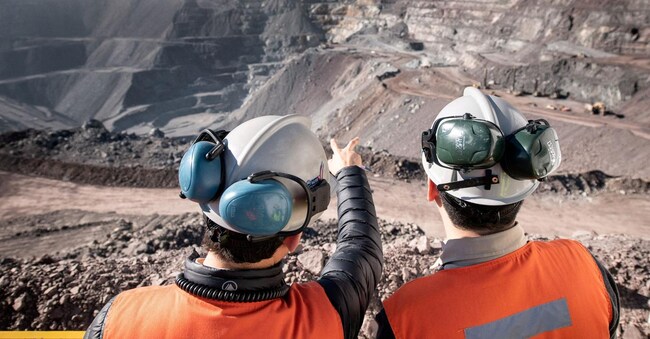
FILE PHOTO: Two men stand at Anglo American's El Soldado copper mine in Chile, obtained by Reuters on April 26, 2024. Anglo American/Handout via REUTERS THIS IMAGE HAS BEEN SUPPLIED BY A THIRD PARTY./File Photo

4' min read

4' min read

Anglo American is poised to part ways with De Beers' diamond and platinum mines in South Africa, severing ties that have endured for nearly a century, and is also preparing to bid farewell to its metallurgical coal operations in Australia - for which it has reportedly seen 'strong interest' from potential buyers - and its nickel operations in Brazil, which are more likely to close.

Whether the Bhp takeover goes ahead or not, the 'break-up' now seems to be a sealed destiny for the mining group, which is choosing this very path - divestments and divestments - to try to recover from the crisis, in the hope that the strategy will convince its shareholders to snub the Australian giant's advances.

Loading...

It was to Anglo's shareholders that Bhp's CEO Mike Henry immediately turned, challenging them at this point to compare the two alternatives, assessing 'which team is more capable and has a better track record in execution' and choosing the solution that 'creates the most value the fastest'.

Anglo's plan was unveiled on Tuesday 14, twenty-four hours after the board's second rejection of Bhp's takeover proposals: the still informal offer rose to a staggering USD 43 billion (from the previous USD 39 billion) and was equally rejected, with the justification that it continues to "undervalue" the group and its future prospects, but also because the precondition - described as "very unattractive" - of spinning off two South African subsidiaries in advance was not withdrawn. One of these is the platinum company, Anglo American Platinum (or Amplats), for which even Anglo's top management now plans a spinoff by 2025; the other is Kumba Iron Ore, which would instead be kept within the perimeter.

The restructuring plan - based on the portfolio review launched in February by Anglo CEO Duncan Wanblad - also considers iron ore strategic for growth and value creation: an indispensable second pillar, like copper, on which instead BHP (which is already the world's third largest iron producer, surpassed only by Vale and Rio Tinto) seems to focus predominantly.

Anglo has an ambitious plan: 'actions that represent the most radical changes in decades,' Wanblad emphasised. The aim is to achieve a 'dramatic simplification of the business', with a focus on 'products that support the energy transition, improve global living standards and food security'.

In addition to copper and iron - an ingredient of steel, of which Anglo has quality production in both South Africa and Brazil - the fertiliser business is also surprisingly saved: the management is not giving up on the costly and futuristic Woodsmith project in the North of England, criticised by many shareholders, but is nevertheless pulling the brakes, reducing investment to USD 200 million in 2025 and zero in 2026, instead of spending a billion a year as it had planned to complete the work by 2027. In the meantime, it will look for a partner.

Anglo also announced further cost-cutting, with savings of USD 1.7 billion by the end of 2025, USD 800 million more than already planned, while committing to save dividends (with a 40 per cent payout) and to conduct the restructuring in a manner 'respectful towards our employees, communities and host countries', Wanblad specified.

The group at the end of the plan will have 'an extremely high value', the CEO assured analysts, so much so that 'if someone wanted to buy us at some point, they would have to pay a huge amount of money'.

The historical link with South Africa will be preserved: Anglo, Wanblad emphasised, has no intention of exiting the country, unlike Bhp. And it will carry out the planned divestments in a 'completely different way in terms of timing and complexity' than the latter would.

The manager focused in particular on the platinum and diamond businesses, sectors that are suffering from a crisis that is feared to be structural: 'I would like to reiterate that they are both excellent businesses, which I expect to do very well,' he said. 'But their value in the Anglo American portfolio is compromised and for the shareholders the best solution is this one,' i.e. the spinoff for Amplats and the sale for De Beers.

The point is that finding buyers for this and other assets may not be easy, especially if you want to do it quickly but avoid selling off. And it is precisely on this aspect that the analysts' main doubts point.

The planned divestments 'could take at least 18 months to complete, with the same execution and timing risks associated with Bhp's bid,' notes Grant Sporre of Bloomberg Intelligence.

For Wood Mackenzie, Anglo could theoretically make up to USD 25 billion gross from the sale of assets, but 'executing the plan will not be easy'. Moreover, the announcement risks being a misstep, because 'by showing a willingness to de-structure the group, Anglo has given credibility to Bhp's takeover proposal, making it more palatable to regulators in key markets such as South Africa'.

Copyright reserved ©
Loading...

Brand connect

Loading...

Newsletter

Notizie e approfondimenti sugli avvenimenti politici, economici e finanziari.

Iscriviti