
Aquaculture held back by the concessions obstacle: covering only 20% of Italia's needs
At Aquafarm the point made by the operators: oysters are replacing mussels, trout cannot compete with salmon and Italia remains the leader for caviar

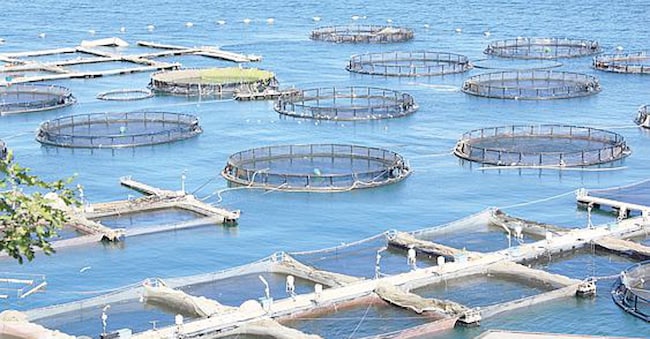
Mussels remain number one, while the true clams have lost a lot of ground (-75% in one year) due to the blue crab and are beginning to be supplanted by oysters, still few in number but growing strongly. And on rainbow trout and caviar in Italy nobody beats us. This is the aquaculture scenario that emerged from Aquafarm, the specialised exhibition that has just ended in Pordenone. An appointment that represents the main meeting occasion for an important sector of the national economy. With 80 thousand tonnes of shellfish and 51 thousand tonnes of farmed fish in 2024 (latest available data, ed.) it represents over 40% of Italy's total fish production. Yet it does not even cover 20% of domestic demand and is experiencing a situation of increasing instability, caused by various factors.
Upstream, bureaucratic delays and structural uncertainties weigh heavily, slowing down its development. Downstream we have to contend with a poor consideration of aquaculture in the public eye and increasingly aggressive global competition. "Our sector continues to live with heavy criticalities, such as the renewal of state concessions and the relative fees, or the incomplete definition of marine areas suitable for the development of mariculture," explains Matteo Leonardi president of the Italian Fish Farmers Association (Api). "Added to these are market factors linked to the pressure of non-European producers, whose competition is not always balanced by transparent information to the consumer.
The lack of knowledge among consumers, aggravated by the spread of scandalous information and genuine fake news, causes a general distrust of aquaculture and is a further critical factor, especially on the demand side of consumers and restaurateurs. "The absence of structured communication on fish and shellfish farming has led to its low social acceptability despite the fact that it is a modern sector, which responds in an increasingly sustainable way to the growing demand for fish protein and the need to reduce fishing pressure," emphasises Valentina Tepedino, fish supply chain expert and director of Eurofishmarket. The case of rainbow trout is emblematic: despite the fact that we are Europe's largest producers (30,600 tonnes in 2024) we continue to prefer salmon, not recognising either its proper commercial or sensory value'.
Like trout, carps and sturgeon in ponds and sea bass, sea bream and ombrine in marine environments are also considered products of excellence, reared in facilities distributed throughout the country and working to precise standards of animal welfare and environmental protection. But which increasingly have to reckon with climate change, which has altered the marine biological balance with effects as unpredictable as they are dramatic.
If in the Adriatic the blue crab has brought the clam sector to its knees, in the Tyrrhenian Sea the threat to mussel farming is wild sea bream, which the warming of the waters has made more aggressive. "These unexpected events are having a negative impact on traditional production and pushing breeders to turn to different products," explains Federico Pinza, president of Associazione Mediterranea Acquacoltori (Ama). The most emblematic case is that of oysters, which, due to their resistance to blue crab, are emerging as an alternative to clams. The business is in its infancy (300 tonnes annual production) but growing and can count on a domestic market 90% covered by imported products. The example the oyster farmers are looking to is that of sturgeon caviar, a niche product (67 tonnes per year) that has established itself as the top quality product throughout Europe.

