
Fishing, little generation turnover and risk of heavy cuts from the CAP
There is a shortage of young fishermen and dependence on imports is increasing: last year 840,000 tonnes of foreign fish arrived, with domestic production of 130,000 tonnes

"Gilberto Ferrari, head of Confcooperative's fishing sector, on the eve of the budget law and, above all, of the EU negotiations on post-2027 funding for the sector. The European Commission's proposal for 2028-35 allocates less than 190 million euro to the Common Fisheries Policy, a third of the current 500 million euro that cover the 2021-27 programming of a policy that is fundamental for Italy.
"The next manoeuvre," says Ferrari, "must re-launch the social protection for workers in the sector and the turnover. The Mattei Plan must also be used to train young fishermen, including African ones, who can come and work with us to guarantee the generational turnover that risks blocking activities even before the EU policy".
In a recent meeting with EU commissioner Costas Kadis, the associations recalled how European policy has produced a 40% cut in fishing capacity over the last five years without improving the budgets of companies, which have lost 30%, while the climate crisis is upsetting the balance, especially in the Mediterranean.
"The sector, a bit like agriculture, is made up of many different realities," explains Ferrari, "and the cuts mainly concern the segment with the highest impact for Italy: trawling, with trawls, used for crustaceans and bottom fish, which is very important for production and the number of boats.
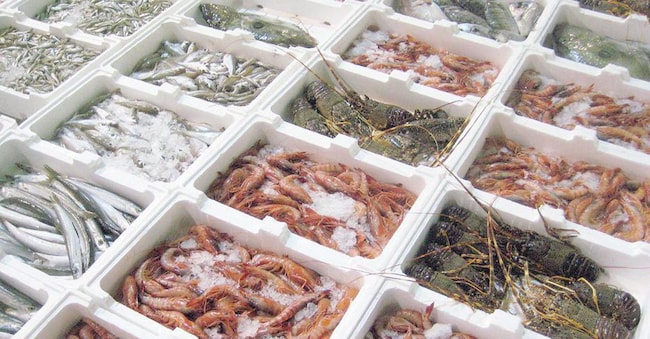
In the last forty years, according to Coldiretti Pesca, dependence on imports has risen from 30% to 90% of overall consumption: last year, around 840,000 tonnes of foreign fish arrived in Italy, against domestic production of 130,000 tonnes. Meanwhile, the fishing ban has been in effect for the entire month of October in the Tyrrhenian Sea, the Ionian Sea, and the islands, while fishing boats have resumed their activities throughout the Adriatic Sea after the blockade between July and August. The blockade will affect the entire trawl fishing system. Despite the temporary suspension, there will be no shortage of domestic fish thanks to the contribution, Coldiretti Pesca emphasises, of small-scale coastal fishing, dredges, aquaculture, and areas not subject to the ban.
On the closure, the associations are asking for the calculation system to be revised, basing it on actual fishing time. The Commission's approach also risks penalising the Mediterranean itself, "because the theory is that the area is lagging behind in terms of protecting resources by overfishing. Now we are catching up, but this," Ferrari continues, "has a cost, in terms of lower production and therefore lower income for fishermen. What worries us most is the difficult search in the new policy for a balance between environmental, economic and social sustainability".

