Security

The No Kings procession in Rome. And the Ilaria Salis case

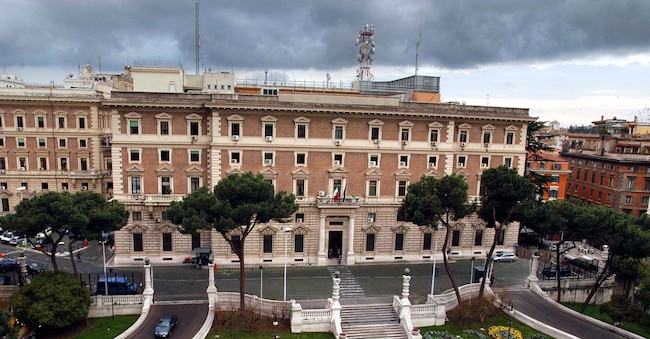
The Capital's security plan, coordinated by the Viminale. The Questura on the control of the MEP: 'Control originated from an alert from a third country', Germany

by Ivan Cimmarusti

MINISTERO DELL'INTERNO  VIMINALE  ISTITUZIONI  SEDE

3' min read

Translated by AI
Versione italiana

3' min read

Translated by AI
Versione italiana

Rome has armoured itself for the No Kings march and deployed an extraordinary security device. More than 1,000 law enforcement officers - including police, carabinieri and Guardia di finanza - have manned the capital to monitor the demonstration that started from Piazza della Repubblica. The Viminale's objective was clear: to prevent infiltration, isolate any violent fringes, and secure a day considered to be a high risk in terms of public order. The most sensitive areas, such as diplomatic and institutional headquarters, were monitored.

Plateau on the rise

The numbers alone explain the level of alertness. The organisers spoke of 300 thousand participants. According to police sources, 25 thousand people marched. And it is precisely the scale of the mobilisation, combined with the event's political and symbolic appeal, that has prompted the security apparatus to prepare a capillary plan of territorial control.

Loading...

EU parliamentarian Ilaria Salis

On X, Avs MEP Ilaria Salis reported that 'this morning the police showed up at dawn in my hotel room in Rome for a preventive check that lasted over an hour in view of today's demonstration. Apparently an effect of the Security Decree'.

Then he sank: 'Let us realise how far we have come with the Meloni government in power...we live in a police state. But we must not let ourselves be intimidated. Demonstrating is a right and we must defend it with all our strength'.

Ilaria Salis: "Controlli? Ho detto di essere eurodeputata, mi hanno chiesto del corteo"

The Questura's clarification

On this point, the Questura wanted to clarify. "With regard to the control that, in the early hours of today morning, concerned the MEP Ilaria Salis at an accommodation facility in the capital, it should be noted that the above-mentioned activity originates, as a due act, from a report from a third country on the European scene (Germany, ed.), which does not allow room for discretion in the fulfilments required of the Italian authorities.

Furthermore, it was stated that 'the staff intervened only to request documents from her and the person in her company. As soon as the staff realised that it was the MEP, all checks were stopped and the hotel room was not entered. Therefore, no search and no action was taken'.

"Under no circumstances and in no way can the identification be correlated with the recently passed regulations on public order," it added.

'It is therefore categorically ruled out,' it is emphasised, 'that this could have been a preventive control carried out in connection with today's event, but rather an act due to international obligations'.

Highways, railways and metros

Under observation were above all the access points to the city: highway toll booths, railway stations, underground stations. It is there that a decisive part of the preventive filter set up by the authorities is concentrated, to monitor arrivals and nip in the bud any presences deemed sensitive. The fear is that organised groups could exploit the visibility of the procession to insert themselves in the flow of demonstrators, raise tension and turn the square into a battleground.

Askatasuna, Piantedosi: "Chi sfila con antagonisti offre loro impunità"

The risks

The investigators' attention was also focused on the announced participation of circles from the antagonist area and realities close to the Askatasuna social centre, a historical expression of the autonomous movements and long monitored by the security apparatuses. In this framework, the procession is read not only as an appointment of protest, but as a possible political junction to be observed carefully, also for its future repercussions.

Extremist circles, according to qualified sources, could in fact try to capitalise over time on the following gathered by the ProPal mobilisation, reshaping anti-militarism in an anti-rearmament key and consolidating, along this line, links with similar transnational networks. A process that is being followed carefully because it could weld, within the same mobilisation framework, radical demands, ideological activism and protest circuits that have already emerged in recent months.

Anarchici morti a Roma, Giannini: “Prosegue lavoro degli inquirenti, indagini importanti”

The Aqueduct Park

To make the picture even more delicate is also the context that has developed in recent weeks. The level of vigilance of the forces of law and order has been further raised after the recent explosion in the Parco degli Acquedotti, in Rome, where two militants of the anarchic-insurrectionalist area died while, according to the investigative hypothesis, they were assembling a homemade bomb. An episode that reinforced the approach of maximum prevention around today's demonstration.

It is no coincidence that, speaking at the question time in the Chamber of Deputies, Interior Minister Matteo Piantedosi reiterated that 'there must be no room for those who with violence intend to subvert democracy and replace it with chaos'.

Copyright reserved ©
  • Ivan Cimmarustigiornalista

    Luogo: Roma

    Lingue parlate: Italiano, inglese

    Argomenti: Sicurezza, giudiziaria, inchieste, giustizia tributaria

    Premi: Nel 2011 tra i vincitori del Premio Internazionale Antimafia Livatino-Saetta

Loading...

Brand connect

Loading...

Newsletter

Notizie e approfondimenti sugli avvenimenti politici, economici e finanziari.

Iscriviti