Venice

“Arrested Memory”: plenty of action but little substance

Asian cinema takes centre stage once again in Venice with new films by Sabu and Hirokazu Koreeda

3' min read

Translated by AI
Versione italiana

3' min read

Translated by AI
Versione italiana

Far Eastern cinema continues to take centre stage in Venice: following Shin’ya Tsukamoto’s “Mr. Nelson, Did You Kill People?” and Lee Chang-dong’s “Possible Love”, it is now the turn of “Arrested Memory” and “Look Back”.

The first, screened out of competition, is directed by Sabu, a Japanese actor and director known for directing films such as “Miss Zombie” (2013) and “Mr. Long” (2017).

Loading...

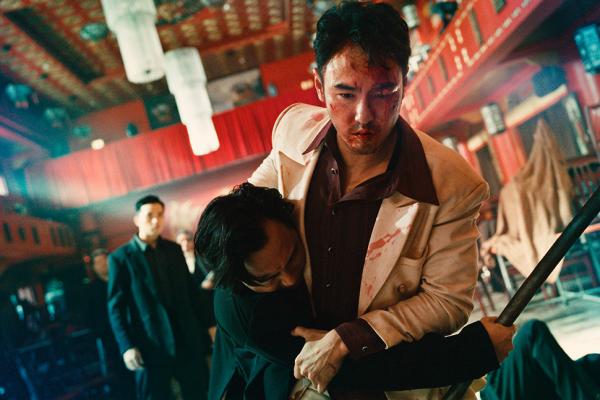
“Arrested Memory” centres on Lee, a leading inspector with the Taipei police force. After losing his team during an investigation, he is tormented by guilt and ends up being transferred to a rural police station. Traumatised by the incident, Lee develops amnesia, which he is determined to keep secret. He is soon assigned a new case: the kidnapping of the son of an influential Japanese businessman. As his memory continues to fade, Lee can rely only on his instincts, which, against all odds, will lead him to the criminals.

‘Arrested Memory’ gets off to a fairly good start; it is a film which, right from the very first sequence, relies less on dialogue and more on imagery, through a fast-paced editing style that is the most successful aspect of the entire production.

Although the pace is more than decent, the narrative lacks any real substance, and the overall impression is that the result is a production with very little substance.
Arrested Memory

Declining as the minutes tick by

The main shortcomings lie not so much in a plot that is, in any case, fairly predictable, but in the gradual decline in interest that risks affecting the audience as they watch: as the minutes tick by, in fact, the plot developments and characterisation give way to action sequences that, however, only manage to engage the viewer to a limited extent.

The humour on display and the desire not to take itself too seriously help, but they are not enough to effectively raise the standard of a film that you’re likely to forget rather quickly once the credits have rolled.

Look Back

Hirokazu Koreeda and the world of manga: a seemingly curious combination that has been successfully realised in “Look Back”, the Japanese director’s new film presented in the competition,

It is based on the acclaimed manga of the same name by Tatsuki Fujimoto, which Koreeda said he read in one sitting: ‘The manga conveys its author’s determination with extraordinary force. Although manga and cinema are different forms of expression, as a creator I felt with absolute clarity that Tatsuki Fujimoto could not have carried on without creating this work.”

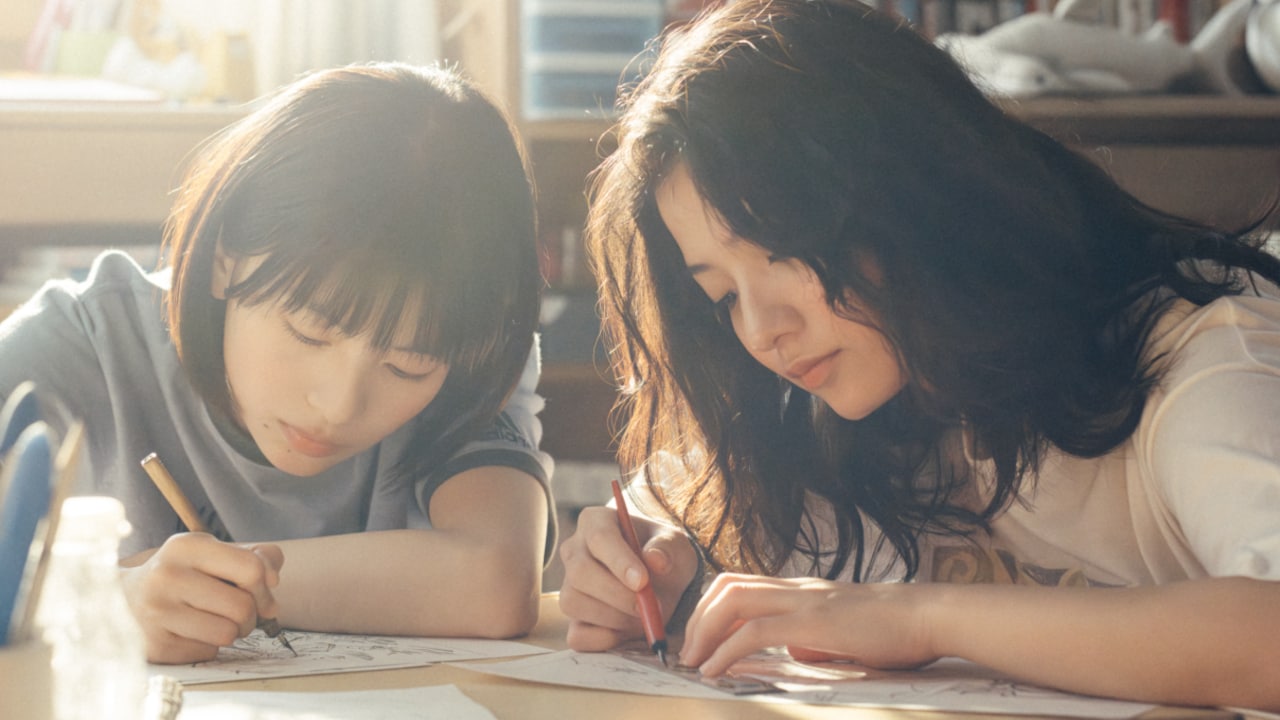
This sense of urgency is also very much evident in this film, which remains largely faithful to the original story and centres on two middle-school pupils who appear to be very different: Fujino is a determined and talented teenager who dreams of becoming a mangaka; Kyomoto, on the other hand, is shy, solitary and spends almost all her time shut away in her room, devoting every moment to drawing. United by the same passion, the two girls, who grew up in a small town, have been pursuing their dream of becoming manga artists for several years.

Loading...

Look Back

Following the rather lacklustre *Sheep in The Box*, which was screened at Cannes this year and has recently been released in our cinemas, this new film better captures that delicate touch that made the director’s films *Father and Son* and *A Family Affair* so great.

Koreeda positions the camera at the same height as the two young protagonists, managing to capture their fears and hopes, within a narrative structure that may be partly reminiscent of the one he had already employed in the beautiful *Innocence* three years ago.

Drama and comedy, coming-of-age tale and melodrama alternate in this story of friendship, which also features a beautiful sequence created entirely through animation (the two protagonists’ dream was that their drawings would come to life).

The coherence between the story’s form and content is remarkable, and there is also scope for some moving moments that emerge as the film draws to a close: throughout the narrative, there is a certain style to it, and a couple of sequences seem a bit too contrived, but the film holds up well over the course of its runtime and the result is decidedly positive.

In conclusion, it is also worth highlighting the moving soundtrack and the excellent performances of the leading actresses in a film that is further enhanced by their natural acting style.

Copyright reserved ©

Brand connect

Loading...

Newsletter

Notizie e approfondimenti sugli avvenimenti politici, economici e finanziari.

Iscriviti