

‘Gulf: the art market holds up – seasoned collectors in the crisis’
Art Basel in Qatar, Frieze in Abu Dhabi, new museums in Dubai. The attacks forced postponements and cancellations, but local demand remained strong

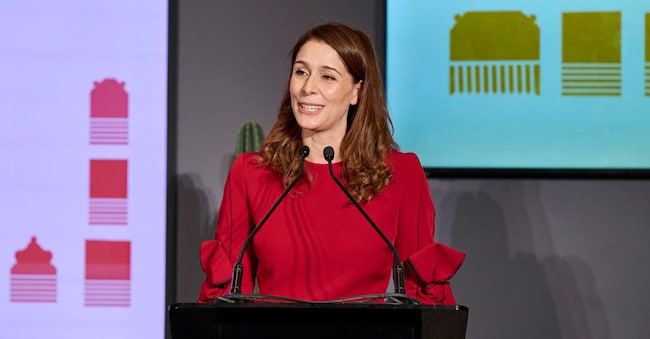
Where a generation ago there were dunes and pearl-fishing ports, today the Gulf is shaping one of the most ambitious landscapes of contemporary culture. Benedetta Ghione, Executive Director of the Art Dubai Group – the organisation behind Art Dubai, the Middle East’s leading international art fair – and head of Art Dubai Projects, a platform dedicated to the production and promotion of cultural events running throughout the year, looks to the future from her privileged position. What lies behind this process? A political vision, the availability of capital, or a genuine demand for culture?
‘Each of these factors has played a part and has developed in parallel with the others over time. Seen from the outside, this acceleration may seem sudden. In reality, it is the result of more than twenty years of development, in which each phase laid the foundations for the next. Dubai’s leadership has created the right conditions by treating culture as part of the city’s infrastructure, through initiatives such as the long-term cultural visa for creative professionals, introduced in 2019, and the Dubai Cultural Grant, a 180 million dirham programme announced in 2024. Today, the clearest evidence of this transformation is demand. When Art Dubai was launched in 2007, the city had barely a dozen galleries; today there are more than 40, alongside private foundations, corporate collections and an ever-growing community of collectors who buy out of genuine interest and keen curiosity. ‘Our role has been, and continues to be, to build an ecosystem capable of sustaining this demand. That is why we launched Art Dubai Projects, which commissions works from artists, builds collections and invests in education with a long-term perspective.’
Art Basel has made its debut in Qatar, Frieze in Abu Dhabi, and Sotheby’s is holding auctions in both Diriyah and the Emirates. Is this a competition between city-states or a regional ecosystem that is growing in a complementary way?
‘The arrival of Frieze and Art Basel in the Gulf confirms that the region’s art market has reached a new level of maturity. A regional calendar packed with events strengthens the ecosystem as a whole, offering collectors, curators and institutions more reasons to engage with the region throughout the year. What they find is a scene that has been developing for twenty years, and which cannot be imported from outside. The art scenes across the Gulf are closely interconnected, and much of their growth is the result of ongoing collaboration between cities, institutions and the private sector.”
The Middle East still accounts for a very small share of the global market. What conditions are needed for a more widespread culture of collecting – amongst the middle classes and professionals – to take root?


