
Italian artichokes in crisis, harvest down 40%
Cultivated areas -25% in 10 years. Coldiretti Puglia: 18 cents per artichoke to producers and over one euro to the supermarket

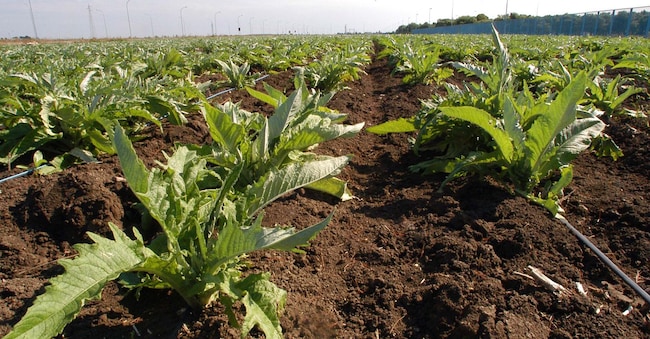
Unfair competition from non-EU countries, frost and price mark-ups of up to 60% on the shelves of large-scale distribution are bringing the artichoke supply chain to its knees. Confagricoltura Puglia denounces the paradox: those who cultivate in the fields collect less than 18 cents for fresh artichokes and about 6 cents for artichokes destined for the industry, while at the supermarket the consumer pays over one euro per head (the edible part of the vegetable). And so part of the product remains unsold.
This year's cynariculture campaign - already delayed due to summer weather stress and water shortages - has to contend witha reduction in domestic supply estimated at "at least 40%".
But the crisis in the cynariculture sector has been going on for some time. "In Italy, thecultivated area has lost 25% in ten years, going from 33 thousand hectares in 2015, to just under 25 thousand hectares in 2024," comments Elisa Macchi of Cso Italy. Four regions now concentrate almost 90% of artichoke cultivation: Apulia (43%), Sardinia (25%), Sicily (15%) and Lazio (4%).
Puglia produces about 1.3 million quintals per year, confirming its position as the absolute national leader, but even here the areas have shown a slight downward trend in the last two years. In 2024 the cultivated area was 10,700 hectares, -7% on 2023 (Cso Italy data). In Sicily, too, drought led to a drastic drop in cultivated hectares (-17% 2024 vs 2023), with 2024 production about 20% lower than the previous year. There has also been a progressive contraction of areas in Sardinia where, however, average yields are growing, favoured by varietal change: 2024 production is up 17% on 2023.
"Our agricultural entrepreneurs are caught in a vice," explains the president of Confagricoltura Puglia, Antonello Bruno. On the one hand, the problems already listed, on the other, 'the invasion of North African products, which arrive with completely different rules from ours'.

