

Artificial intelligence for 61% of doctors but the training issue remains
The exploit of generative AI among white-collar workers raises the issue of skills and the use of tools dedicated to the health sector: the first data from the Digital Health Observatory of the Politecnico di Milano presented in preview at the Festival of Economics

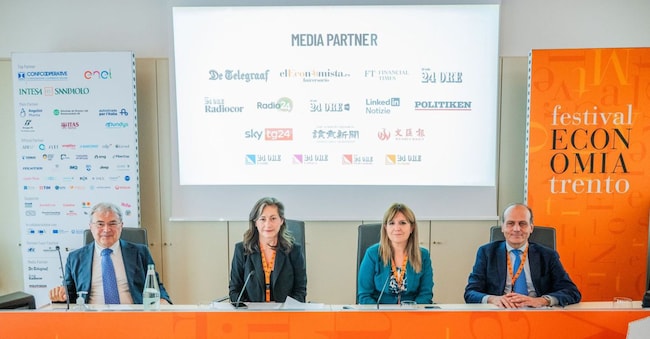
Artificial intelligence marks a real exploit among doctors: 61% now use generative AI, from Chat Gpt to Copilot. The figure, previewed at the Economics Festival, comes from the latest research by the Digital Health Observatory of the Milan Polytechnic. "It is worrying, however, that in 90 per cent of cases platforms are used that are not specific to the healthcare sector, the ones that doctors buy directly," warns the Observatory's director, Chiara Sgarbossa. "This entails potential risks in the case of entering personal patient data or reports, without using more closed versions.
Not only that: 'There is a danger of "hallucinations", i.e. that the answers are not true but only probable and plausible,' she continues, 'and that is why it is important to move towards dedicated platforms'. Meanwhile, only 30% of professionals declare themselves 'trained' in generalist AI. 'We need to make doctors more aware of the tools they use, but also develop skills that are useful for this real revolution,' the expert concludes.
A revolution that 'is already here', emphasises Andrea Laghi, director of the Imaging Diagnostics Department, Irccs Istituto Clinico Humanitas: 'There is widespread 'invisible' AI, from imaging diagnostics to cardiology to dermatology. Ditto in oncology, where today CT scans emit a 60% lower dose of radiation than four to five years ago, thanks to integrated machine learning systems'. Not only that: today AI can also be of support in critical contexts such as emergency rooms, with its ability to recognise a fracture in the first instance - but confirmation remains with the radiologist - or to assign examination priorities to the most serious patients. Then there is the 'conversational' AI that helps the doctor in reporting and in the relationship with the patient.
The issue of conscious management remains, however. "Today's doctor, with his skills, cannot 'do it' alone,' warns Laghi. 'For this to be possible, we need a multi-professional team that includes biomedical engineers, clinical engineers, data scientists, legal and administrative experts. As for the new generation, our first graduates of the Humanitas Medtec School, which combines Medicine and Biomedical Engineering, are already 'natives',' he concludes.
But in the meantime, where does Italia stand? "Investment in artificial intelligence started only four years ago,' emphasises Domenico Mantoan, CEO of the Pederzoli Hospital in Peschiera del Garda, former Agenas DG and now on the board of the Agency, 'but in the context of the European AI Act, we were the first to pass a law, setting clear limits. First of all, this tool cannot replace either the man or the doctor; then, the citizen's data can only be used 'in the clear' for treatment. But today, in order not to create a far west, hospital managers must know the law. As for care in the territory, to support family doctors in taking care of chronic patients Agenas is building the national platform 'Mia' based precisely on AI'.

