
Can artificial intelligence help us achieve all 17 Sustainable Development Goals (SDGs)?
Not just doomsday scenarios and labour crises, the new McKinsey report is a breath of optimism.
4' min read
4' min read
Not only doomsday scenarios, labour crises and laboratory-generated viruses. Artificial intelligence can help mankind achieve all 17 of the UN Sustainable Development Goals (SDGs) and in fact there are already concrete examples, use cases in all these areas.
The AI and the 17 objectives
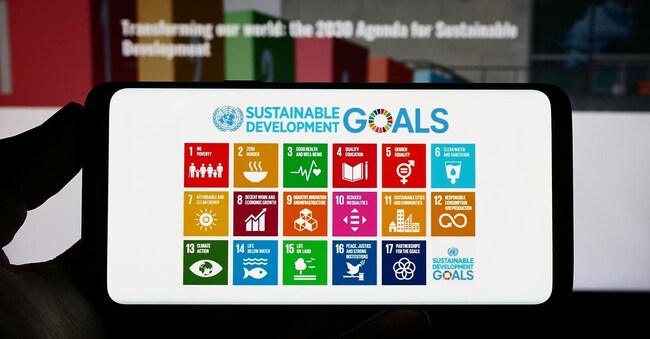
.In the days when AI is being used - among other things - to generate electoral misinformation and alarms are growing over the booming energy consumption in data centres due to this technology, the report just published by McKinsey is a breath of optimism. In 29 pages it delves, with many examples, into the ways in which AI is already contributing to goals of utmost importance to the future of humanity, which the United Nations would like to achieve by 2030: eradicating poverty, hunger, ensuring health and wellbeing, providing quality education, achieving gender equality, ensuring clean water and sanitation; ensuring clean and affordable energy, promoting sustained and sustainable economic growth, building resilient infrastructure and promoting innovation; reduce inequality; make cities and communities sustainable; ensure sustainable patterns of consumption and production; combat climate change; conserve and sustainably use oceans and marine resources; protect terrestrial ecosystems; promote peace, justice and strong institutions; and strengthen partnerships for sustainable development. The United Nations in 2023 recognised that in seven years since the 17 goals were initiated, humanity is still 15 per cent of the way there.
The point is that AI could help us speed up, then, 'but it is not a magic bullet' acknowledges McKinsey, and there are several major challenges to overcome in order to exploit this opportunity.
Positive cases
.Experts interviewed by McKinsey agree that AI has a particularly high potential to make a difference for five SDG goals: good health and well-being (SDG 3), quality education (SDG 4), affordable and clean energy (SDG 7), sustainable cities and communities (SDG 11) and climate action (SDG 13). In fact, 60 per cent of AI uses for social good for non-profit purposes were in these areas.
For example, in Kenya, Jacaranda Health uses AI-based solutions to improve the quality of care for women and reduce maternal deaths. Their Prompt service, an exchange of personalised text messages to women, increased the likelihood of mothers attending more than four antenatal visits by 20 per cent. In India, Armman developed mMitra, an automated voice messaging system that provides key information on preventive care. Some 3.6 million women in nine states were reached in this way.

