
Antimicrobial resistance

Artificial intelligence hunting viruses and bacteria in one in four laboratories

For a long time microbiology had a predominantly diagnostic function now it can activate advanced surveillance systems

by Francesca Indraccolo

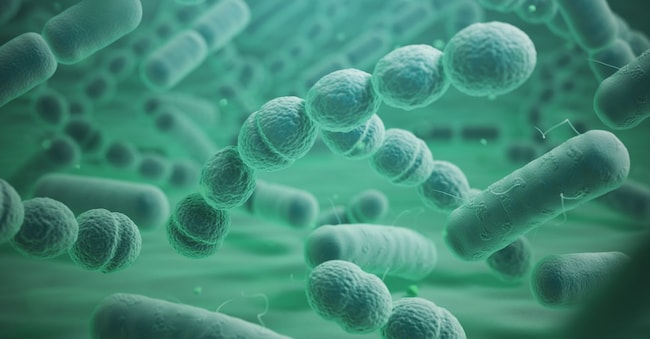
Various bacteria cells in microscope. Streptococcus pneumonia, pneumococcus, enterobacteriaceas, escherichia coli, salmonella, klebsiella and others. 3d illustration Maksym Yemelyanov - stock.adobe.com

3' min read

Translated by AI
Versione italiana

3' min read

Translated by AI
Versione italiana

Thanks to the introduction of Artificial Intelligence, clinical microbiology laboratories are becoming increasingly effective sentinels capable of intercepting pathogens early and actively contributing to infection management. In Italia, one in four employs machine learning systems along the various stages of the diagnostic process, from sample quality control to the identification of the most effective drug to be administered to the patient, as emerges from the first Italian research on the subject, published at the end of 2025 in the 'European Journal of Clinical Microbiology and Infectious deseases' and presented a few days ago as part of the 53rd National Congress AMCLI - Italian Clinical Microbiologists Association held in Rimini.

Laboratory survey

The survey, conducted by the AMCLI Working Group for Artificial Intelligence in Microbiology (GLAIMAL), highlights how AI is progressively entering the field. "The figure of 25% of the deployment of AI systems in laboratories is, on the one hand, a very positive sign, on the other hand, it confirms that we are still in an early stage of adoption. If we consider that clinical microbiology is a field historically based on manual and interpretative processes, this level of implementation is consistent with what has also been observed at an international level, where adoption is growing but not yet uniformly widespread,' comments Pierangelo Clerici, president of AMCLI.

Loading...

For a long time, microbiology had a predominantly diagnostic function. Today, thanks to the availability of large quantities of data and the possibility of analysing them with advanced systems, laboratories contribute more directly to the early detection of infectious phenomena by becoming advanced surveillance systems.

The effects on finding more appropriate care

'Machine learning models developed in recent years,' Clerici continues, 'allow complex clinical conditions such as sepsis to be estimated at an early stage and support a more appropriate use of diagnostic tests, as well as improving the timeliness of interventions. Integrated data analysis also makes it possible to predict antimicrobial resistance profiles and provides useful indications for more targeted therapeutic choices'.

The analysis of the GLAIMAIL Working Group also highlighted the effects of AI applications on the organisational level. "In some contexts, the introduction of algorithms for the management of diagnostic workflows has led to a reduction in workload of up to 41 per cent, while maintaining sensitivity levels of around 95 per cent in different patient groups. The figure shows a real impact on the use of resources, in a field characterised by increasing complexity and limited availability of specialised personnel,' he specifies.

AI in key areas of microbiology

The most mature and well-established applications of AI in microbiology concern the automated analysis of cultures and microscopic images, bacterial identification and, increasingly, the prediction of antimicrobial resistance. These tools make it possible to reduce response times, increase diagnostic accuracy and support more timely therapeutic decisions, which are central to effective antimicrobial stewardship.

One context in which AI can add great value is virology: it can help to analyse large volumes of data in real time, detect early signals, correlate information from different sources more quickly and support even more timely public health decisions. 'If we want to cite an even more direct example of the use of AI in virology, we can think of genomic surveillance and automated analysis of sequencing data, which are useful for identifying variants, clusters and viral spread dynamics more quickly,' Clerici points out.

The scenarios of the not-so-distant future foresee the integration of AI throughout the diagnostic pathway: from the pre-analytical phase, in particular with regard to the appropriateness of the request, to the analytical phase for a faster diagnosis, up to the post-analytical phase, where advanced systems, such as large language models (LLMs), will be able to support the interpretation of results and the production of clinically oriented reports. "However, the 'human-in-the-loop' model remains central: AI does not replace the microbiologist, but enhances his capabilities. The real innovation is not technological, but organisational and cultural: using these tools to improve quality, appropriateness and sustainability of care,' Clerici emphasises.

Know-how and design of new tools

The GLAIMAL Group survey also stigmatises the 'gap' between interest in and use of AI systems in microbiology. "Almost all professionals," it concludes, "recognise the potential of AI and 99% require specific training, but barriers related to skills, infrastructure and data integration persist. In this context, the role of the AMCLI and the GLAIMAL group is to accompany an informed and safe deployment. Initiatives are already being developed on several levels: structured training programmes, pilot projects with technologies integrated into laboratory workflows and collaborations with technology partners to create inter-operable solutions with health information systems. The aim is not indiscriminate dissemination, but progressive growth, guided by evidence, clinical validation and organisational sustainability'.

Copyright reserved ©
Loading...

Brand connect

Loading...

Newsletter

Notizie e approfondimenti sugli avvenimenti politici, economici e finanziari.

Iscriviti