
Green hydrogen and carbon capture: the industry awaits the regulations
According to Polimi’s Decarbonisation Policy & Technology Report 2026, there is a need for a push on legislation and funding

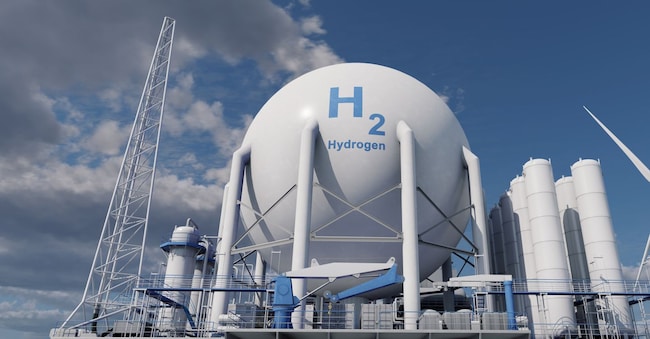
Italian (and European) industries are caught between the need to aim for climate neutrality by 2050 and – most recently – the geopolitical crisis in the Gulf involving blockade of the Strait of Hormuz which, barring any sudden solutions, is expected to result in a hefty bill within six to twelve months. Competitiveness is at risk, particularly in energy-intensive sectors.
The decarbonisation process
Broadly speaking, the solution could lie in the decarbonisation currently underway – a complex (the target is unlikely to be met on schedule) and costly process which, over 35 years, has reduced industrial emissions in Europe to - 37% and has become a strategic necessity to ensure energy security, industrial competitiveness and geopolitical autonomy. Provided, that is, that the necessary investments are made economically viable and the regulations are clear. This is one of the conclusions reached by the ‘Decarbonisation Policy & Technology Report 2026’, produced by the Energy&Strategy unit at the School of Management of the Politecnico di Milano and published in preview form in Monday’s Sole 24 Ore. ‘Decarbonisation is the only structural solution capable of reducing exposure to energy prices, but not without industrial protection and revitalisation, which must be reconciled with the achievement of climate targets,’ explains Vittorio Chiesa, head of Energy&Strategy at the Polimi School of Management and lead author of the report –. ‘The strategic direction therefore appears clear, but many questions remain regarding industrial competitiveness, the economic sustainability of investments and the ability of regulatory systems to support the ongoing transformation.’
EU measures
The “reinterpretation” of the decarbonisation process in terms of competitiveness and energy security has led the European Union to approve the Clean Industrial Deal and to launch a series of measures to promote emissions reductions: the Industrial Accelerator Act, aimed at restoring manufacturing’s share of European GDP to 20 per cent by 2035; the CISAF, with new rules on state aid; the METSAF, a package of extraordinary measures to tackle the energy crisis; and the revision of the European ETS system (also supported by the Meloni government). At national level, however, short-term measures are being introduced in succession, such as Energy Release 2.0 and the Utility Bills Decree (which focuses on reducing energy costs for businesses), with longer-term projects designed to support businesses in adopting technologies that effectively cut emissions.
CO₂ capture and storage
In taking stock of the progress made on some of these key technologies, such as the carbon capture and storage (CCUS) system and renewable hydrogen, the report highlights the lack of regulations that would enable the practical implementation of these green technologies. And to nurture an ecosystem of high-potential start-ups: Polimi has mapped 372 start-ups worldwide active in CCUS, 40 per cent of which are in Europe, and 162 in green hydrogen, the majority (39 per cent) of which are also in Europe.
The CCUS is recognised as a key driver for the decarbonisation of non-electrifiable industrial processes, but there are several challenges: there is a lack of infrastructure for the transport and storage of CO₂, and implementation requires a substantial initial investment. Above all, Italian legislation is incomplete: although the enabling act approved by the Council of Ministers on 30 June 2025 provided for the establishment of a comprehensive regulatory framework within 12 months, the text of the draft bill is still under consideration by the Environment Committee. One of the most effective tools for providing financial support for this type of investment is the Carbon Contracts for Difference (CCFDs), agreements between the State and companies that cover the financial difference between traditional production methods and those using low-emission technologies; however, these are not yet operational on a large scale in our country, as they are in Germany.

