
Diesel prices fall; the prospect of variable excise duties recedes
The recent fall in diesel prices has eased the pressure on the government, which is considering the use of variable excise duties only in the event of further price rises before the end of the year.

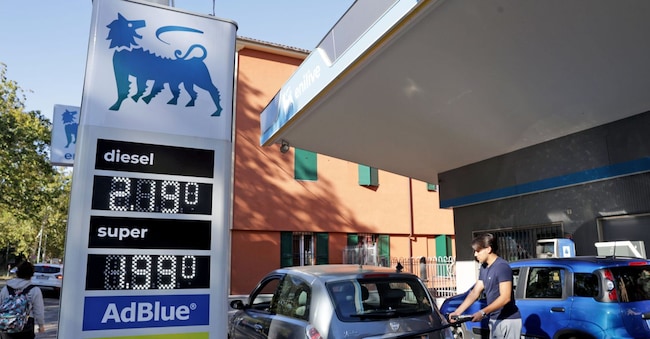
There is still time regarding the variable excise duties. Eni’s return to its recommended prices for diesel at €2.19 per litre, announced on Friday, makes government intervention on fuel prices less urgent. One less pressing matter on an already packed agenda, ahead of a budget bill that will require difficult decisions. One of the first decisions was to make full use of the safeguard clause granted by the EU for energy and, only partially, that for defence, allocating 14.4 billion to each until 2028. The defence sector has foregone around 8 billion in potential overspending. “It didn’t cost me anything,” said Defence Minister Guido Crosetto at the Festa del Foglio, “if the welfare state doesn’t exist or collapses, there’s no point in defence.”
The Public Finance Policy Document
On Monday 12th, the Minister for the Economy, Giancarlo Giorgetti, will present the Public Finance Policy Document (DPFP) at a hearing in the Chamber of Deputies, setting out the new framework for public finances, with growth rising to around 1 per cent in 2026 before slowing to 0.8 per cent. The deficit, expected to be below 3 per cent this year, would allow Italy to exit the infringement procedure and, in European calculations, to exclude the permitted deviation for defence and energy expenditure for 2027 and 2028. It is precisely on this issue that Parliament will be called upon to give its opinion on Tuesday 13th, when it will discuss not only the Dpfp but also the report on the budgetary deviation. Approval requires an absolute majority of deputies and senators.
Towards the Cabinet meeting
Also on Tuesday, the Council of Ministers is due to meet to discuss the Budget Policy Document, a streamlined version of the DPFP set out within the framework of the Budget Law, which must be submitted to Brussels by the middle of the month. The Council meeting could be preceded, either on the same day or the day before, by a summit between the leaders. The Prime Minister will then be in Brussels for the European Council, partly to put forward the case for Italy’s proposal on inflation. The issue is highly technical and concerns the interpretation of the factors relevant to compliance with the current Stability Pact under the energy clause. According to the Executive Vice-President of the European Commission, Raffaele Fitto, “in the coming days, and I think next week, we will be able to make a comprehensive assessment”. A response might perhaps arrive before the budget bill, which must be submitted to the Council of Ministers by 20 October.
Fuel price pressures ease
There are some signs that tensions over fuel prices are easing. Diesel has fallen from 2.258 to 2.252 euros per litre on the road network and from 2.281 to 2.271 on the motorway, according to daily figures from the Ministry of Enterprise and Made in Italy. And new companies are following in the footsteps of Cane a sei zampe, most recently Saras, which has committed to offering a discount on fuel supplied to Sardinia from the Sarroch refinery until 31 October. Eni’s price cap will expire on that date. If fuel prices were to rise again, the government could then intervene with variable excise duties, using the 160–170 million in additional revenue. These funds can only be used for this purpose and must be spent by the end of the year.

