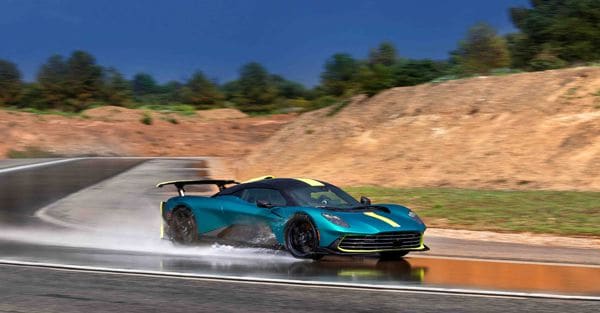
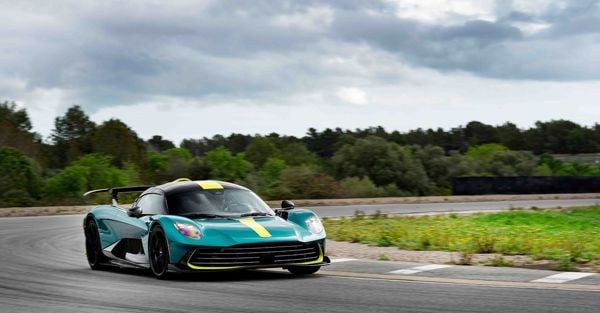
Aston Martin Valhalla, the last tests of the British hypercar before launch later this year
Production will start in the second quarter of 2025 and will be limited to just 999 units at a price of over EUR 1 million excluding customisation.
3' min read
Key points
3' min read
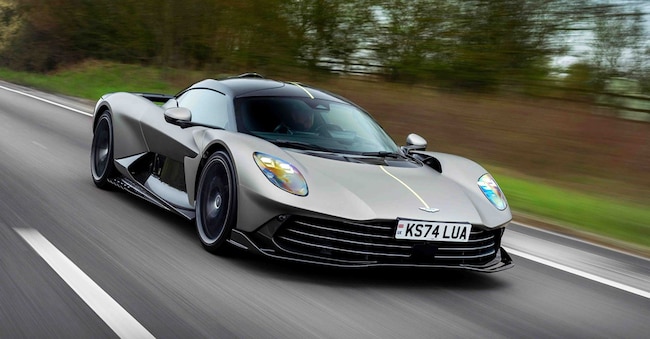
Aston Martin has unveiled the new Valhalla a hybrid hypercar derived from F1 and conceived by designer Adrian Newey. With 1,079 hp, it has a carbon-fibre chassis. Produced in only 999 examples, it is a plug-in hybrid powered by a mid-mounted 828 hp twin-turbocharged 4,000 cc V8 and three electric motors, two of them on the front axle adding another 250 hp, for a total of 1,079 cc. The transmission is the new 8-speed dual-clutch robotized gearbox. The result is performance that is nothing short of exaggerated: 0 to 100 km/h in just 2.5 seconds and a speed, albeit electronically limited, of an impressive 350 km/h.
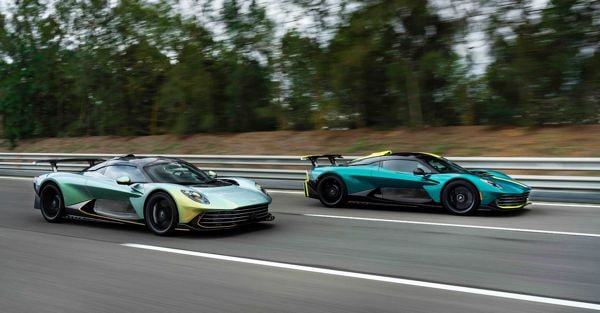
It features sophisticated active aerodynamics
.There are four driving modes, including electric drive with traction relying solely on the front electric motors to offer a claimed range of 14 km at a top speed of 140 km/h. The rear axle, on the other hand, is driven by the V8 using the third electric motor integrated in the gearbox. Equipped with sophisticated active aerodynamics with wings and spoilers that change position depending on speed, the car generates over 600 kg of downforce, reducing the angle of attack of the front and rear wings to relieve downforce that is in excess as speed increases.
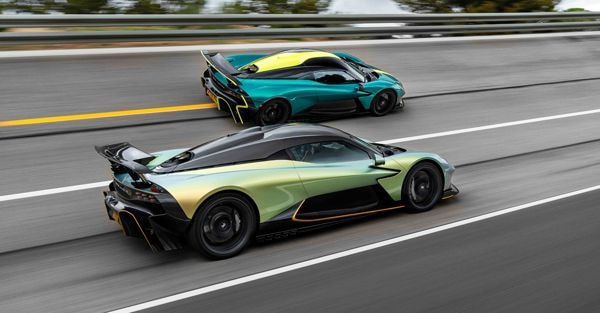
Reinterprets some details of the Valkyrie
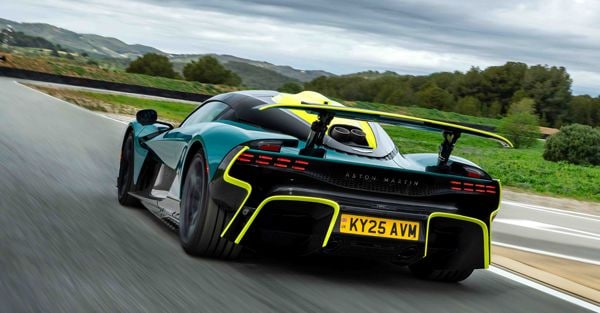
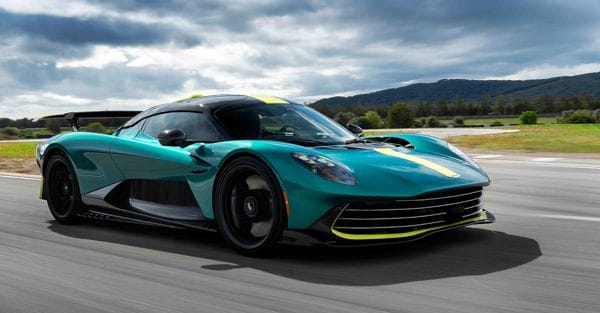
.The design is aggressive but also reinterprets some details seen on the Valkyrie, but adapted for road use of the hypercar. And so aerodynamic efficiency is combined with high downforce while the front grille and sinuous side shapes channel air into the engine and cooling system of the hybrid system. Behind the exhaust tailpipes at the top of the car, there is also space for a huge carbon-fibre diffuser and a wing, which on the standard car is of the active type and can also function as an aerodynamic brake, especially during heavy deceleration.
Racing for interiors
.The interior of the exclusive hypercar has a distinct racing character, with references to Formula 1, such as the small carbon-fibre steering wheel, the raised footrests, the low seating, and the monocoque carbon-fibre seats. The dashboard and central display, which are touch-screen, are suspended in the centre of the car on a carbon-fibre bar that spans the entire width of the cabin. In addition, the multimedia system has features that also relate to the rechargeable hybrid, including a transmission display that is able to define the expected energy flow in real time.
The interior of the new Valhalla is essential
.The driving position is similar to that of a racing car. However, thanks to the extra centimetres in height and width, there is much more space than in the Valkyrie. The controls are stripped down to the bone with the start button located on the centre console and two screens, one for the digital dashboard, one for the multimedia system from which to control all the car's functions. Naturally, as one would expect from a car with a list price of just over a million euros, the possibilities for customisation of colours and materials are almost endless, depending on the tastes of the lucky owners.