

Studying the brains of astronauts to discover cures for Parkinson's disease
Long-duration space missions may help understand how to reduce the symptoms of neurodegenerative diseases

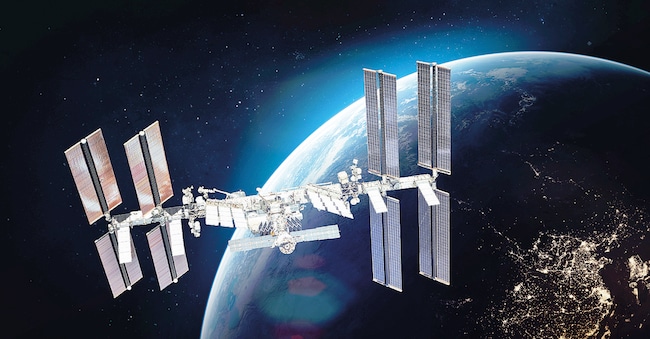
Protecting the brains of astronauts on long-duration missions to the Moon and Mars could help reduce the symptoms of one of the most devastating neurodegenerative diseases on Earth: Parkinson's. The meeting point between space research and neuroscience lies in nanoparticles capable of counteracting oxidative stress in neurons, invented by brains at the Italian Institute of Technology (IIT). "When one thinks of astronauts, one hardly imagines that they can suffer brain damage," explains Gianni Ciofani, coordinator of the 'Prometeo' experiment whose results were published last December. 'Yet we now know that microgravity and cosmic radiation create a biologically aggressive environment for the nervous system. Because more things happen to the brain in space than we imagine. In microgravity, such as aboard the International Space Station, the human body loses its reference to Earth's gravity. Fluids redistribute, the brain changes volume slightly and the first consequences are often observed in the eyesight. "The optic nerve and eye are, to all intents and purposes, an extension of the brain," Ciofani emphasises. "This is why visual changes are among the earliest documented signs." The problem is not only macroscopic. Microgravity and radiation cause cells to produce too many 'toxic by-products' of oxygen, more than they can neutralise, affecting neurons and brain immune cells. 'We observed that microglia, the immune cells in the central nervous system, tend to take on an inflammatory phenotype,' the researcher explains. "It's as if the brain goes into a permanent state of alertness."
The other surprise is the bridge to Parkinson's disease. Many of the mechanisms observed in cells exposed to the spatial environment are also central in Parkinson's disease: oxidative stress, energy deficits, lower production of dopamine, the neurotransmitter that regulates the control of movements and posture, coordinates the execution of gestures, and is involved in some cognitive functions. 'We have seen that genes involved in dopaminergic metabolism and the function of dopaminergic neurons are altered,' Ciofani explains. "These are the same circuits that are impaired in Parkinson's patients." The difference between space and Earth, however, is substantial. "In astronauts, these alterations are reversible," he clarifies. "When they return to Earth, the system recovers. In neurodegenerative diseases, on the other hand, the damage is permanent'. The reason lies in the biological level involved: in space, the changes occur at the level of transcriptomics, i.e. gene (RNA) expression, and not stable DNA mutations. 'It is the difference between a system that changes behaviour and one that changes structure,' Ciofani summarises.
In order to observe these effects, the IIT team sent dopaminergic neuronal cells into space. After their stay in orbit, the cells are fixed and analysed on Earth. "Unfortunately, we cannot bring them back alive," Ciofani explains. "Sometimes they stay months in orbit before they can return, so we have to study what happened up there, not the recovery."
One of the most innovative aspects of the Italian study was the possibility of distinguishing the effects of microgravity from those of cosmic radiation. On the Space Station, in fact, some cells can be kept in Earth gravity thanks to centrifuges, while remaining exposed to cosmic radiation. It may seem a paradox to go into space to do experiments in Earth gravity, but it is the only way to decouple two factors acting simultaneously on the organism. The results show that both microgravity and cosmic radiation alter gene expression related to oxidative stress, synaptic plasticity and the function of mitochondria in cells. But cosmic radiation, which arrives in large quantities on Mars, proved more difficult to counteract than microgravity (on the Moon and Mars we speak of reduced gravity).
This is where polydopamine nanoparticles, a biocompatible and biodegradable material derived from dopamine itself, come in. 'These particles have powerful antioxidant properties,' says the researcher. "They neutralise free radicals, increase levels of glutathione, an antioxidant produced by the liver, and protect the mitochondria." In the laboratory, in Earth gravity and simulated microgravity, the nanoparticles dramatically reduce oxidative stress and promote neuronal maturation. 'We observe longer, more numerous neurites, better organisation of nerve cells,' Ciofani explains. When we turn to transcriptomics data, the effect becomes even more evident: 'In microgravity, with nanoparticles, we recover almost 90% of the altered genes. With cosmic radiation, the recovery is more limited, around 40%, but still significant'. These results are as important for the future of space exploration as they are for Earth. Missions to the Moon and Mars involve stays of months, if not years, in environments with reduced gravity and poor radiation protection. 'Today we observe cellular alterations after a few days,' warns Gianni Ciofani. "In the long term, we still don't know what might happen." But the research is avowedly 'dual' in nature. "If we find useful countermeasures to protect astronauts," he concludes, "and these same solutions can also help against diseases such as Parkinson's, the scientific and human value of the work doubles." Indeed, polydopamine nanoparticles could not only modulate gene expression and reduce oxidative stress, but also function as dopamine release systems, addressing one of the central nodes of Parkinson's disease.

