Consumption and events

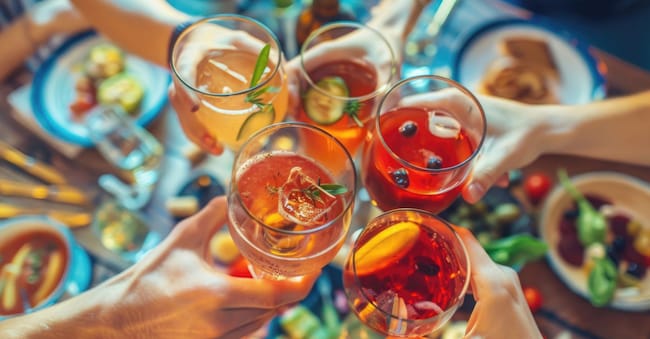
Milan's Aperitivo Festival kicks off: Italians find it hard to give up spritz

According to Cga by Niq, 37% of Italians have consumed at least one aperitif in the last three months: a stable share over time. Supermarket sales of sparkling wines, gin and ready-to-drinks increase

by Emiliano Sgambato

Lo spritz si conferma al primo posto tra i gusti dgeli italini in fatto di aperitivo

4' min read

4' min read

The aperitif is a ritual that changes over time, but one that Italians can hardly give up. According to an analysis conducted by Cga by Niq for the Aperitivo Festival, held from 5 p.m. on 9 to 11 May in Milan, 13% of Italians indulge in what has now become a ritual more than once a week, 17% once a week, 46% at least once a month, and 23% more sporadically. 37% of Italians have consumed an aperitif in the last three months (+1% over 2023). And not only in classic bars (39%) or cocktail bars and dedicated venues (34%), but also in wine bars, trattorias and disco bars (15%), restaurants (13%) and pubs and beer gardens (10%).

Then there is consumption at home, with "aperitifs + vermouth" sales reaching 200 million Euro in sales in large-scale distribution, although even in this area the cut in the trolley has been felt a little (-0.5% in value and - 5.2% in value). On the other hand, sparkling wines, gin and ready-to-drink, which totalled Euro 813 million in receipts (+4.2% in value and +3.6% in volume), do not seem to be affected by the crisis in the trolley.

Loading...

With regard to the type of aperitif consumed, among the alcoholic drinks, Spritz (33%) takes first place, followed by Prosecco (29%) and beer (26%). Among non-alcoholic drinks, on the other hand, ready-to-drink bottled drinks or ready-to-drink cocktails win, followed by fruit juices.

Also thanks to the renewed attention to sanctions of the highway code, young people in particular are mainly oriented towards options with low or no alcohol content (such as 0% alcohol beer and mocktails): 27% compared to an average of 20%.
"These are trends to be monitored," says Matteo Fortarezza, industry consultant lead at NielsenIQ, "as they not only allow us to intuit the changes in consumption behaviour, but also open up new positioning opportunities for soft drink producers and neighbourhood venues. In fact, 31% of consumers intend to increase the frequency of their visits to venues within easy walking distance, a figure that is up 13 percentage points for Gen Z. 15%, on the other hand, said they would like to go to different venues such as restaurants, museums or cinemas, a trend that once again mainly involves Gen Z (+7 percentage points), confirming their propensity to change their consumption habits.

The85% of the sample considers the proposal of food pairings important: they look at 0 km products, PDO or local products; and 4 out of 5 consumers say they are willing to pay a premium for a superior gastronomic offer. In particular, 45% would be prepared to spend up to EUR 5 more, 44% between EUR 5 and EUR 10, and 12% over EUR 10..

The toasts of the Mixology experience at Tuttofood have just finished, and in Milan those of the Aperitivo Festival signed by Mww are already opening, a weekend in the city entirely dedicated to the art of the aperitif, in the beating heart of the Tortona Savona District with 27 international bartenders, over 100 products for tasting and the involvement of some of the biggest brands in the sector.
A sign of the vitality of a sector that has increasingly transversal importance (mixology 'alone' is estimated to be worth 35 billion): for venues, of course, with aperitifs now absorbing a good chunk of consumption away from home, and probably those with the highest margins; for producers of the more 'traditional' spirits and probably even more so for producers of new no-alcohol or low-alcohol drinks which, thanks to the skills of increasingly experimental bartenders, have the chance to make a name for themselves. Not forgetting the world of beer, both industrial and artisanal, which relies heavily on these moments of conviviality. And that of wine, which is increasingly interested in this moment of consumption given the drop in sales in restaurants, and with bubbles (but not only) that are now often the protagonists in cocktails.

"The research returns the image of an Italy deeply in love with the aperitif, increasingly attentive to quality, pleasure and care in pairing with food, but also to moderation and conscious conviviality," comments Federico Gordini, founder of the Mww Group and creator of World Aperitif Day. A generational evolution, to which the food & beverage market responds with an increasing variety of high-level proposals, both in terms of ingredients and taste. At the Aperitivo Festival you can enjoy a unique tasting experience, with over one hundred proposals to taste in combination. An event that does not end with the event, but will continue with activations and initiatives until 2 June thanks to Carrefour Italia even after the World Aperitivo Day on 26 May, which celebrates its fourth edition this year in bars and retail outlets throughout Italy".

"The Italian aperitivo,' continues Gordini, 'has been a consolidated tradition since ancient times, founded on the combination of beverage and food,' comments Federico Gordini, founder of the Mww Group and creator of World Aperitivo Day. 'When we created the Manifesto dell'Aperitivo Italiano in 2022 together with institutions, consortia and major brands, we wanted to offer a clear vision of the Italian nature of this ritual, emphasising the need to call 'aperitivo' that moment in which the beverage-food combination is central. It is clear from the results of the research how this pairing represents the most important distinctive criterion for Italians today. It is on this that we have built our Manifesto: the aperitif is, first and foremost, harmony between taste and gastronomic culture'.

Copyright reserved ©
Loading...

Brand connect

Loading...

Newsletter

Notizie e approfondimenti sugli avvenimenti politici, economici e finanziari.

Iscriviti