At the Uffizi, the rediscovery of the link between Tuscany and the myth of ancient Roman Africa
A series of six talks begins today, retracing the mission to Tunisia undertaken by the physician and archaeologist Giovanni Pagni, who was sent in 1667 to the court of the Bey of Tunis on behalf of the Medici family. From visits to sites, including Carthage, to the recovery of nearly thirty inscriptions that found their way to Florence, the exhibition traces the history of this archaeological heritage within the Medici-Lorraine collections.

Key points
17th-century Tuscany and the rediscovery of ancient Roman Africa: this is the theme of a series of six talks to be held in the Paolucci Auditorium of the Uffizi Gallery from today until 6 November (free admission at 5.00 pm, subject to availability).
Leading scholars will explore the subject from a fresh and original perspective: the account of the expedition by Giovanni Pagni, a doctor and archaeologist, whom the Grand Dukes of Lorraine sent on a mission of trust in 1667 to the court of King Mura II, Lord of Tunis.
Giovanni Pagni was not only a renowned professor of medicine at the University of Pisa, but also distinguished himself as a passionate scholar of his city’s ancient history; he was therefore regarded by Leopoldo, brother of Grand Duke Ferdinand II and a man of many talents, as the ideal person for the venture, to a land – North Africa – which was, moreover, difficult to access due to political complications.
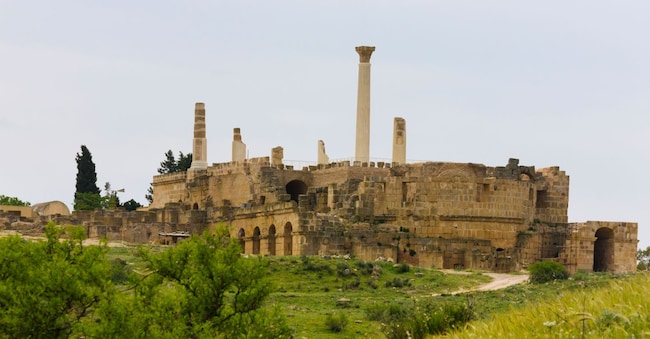
Leopoldo was not disappointed: during the year he spent in Tunisia, he gathered valuable anthropological, faunistic and archaeological evidence from the lands he travelled through. He visited the cities of Tuccabor, Suas, Uthina, Vallis and Carthage, with its millennia-old history.
In particular, he described Rome’s historic rival for control of the Mediterranean as follows: ‘For the rest, this vast expanse, where such a glorious republic had its seat, appears entirely devoid of any ornament, save for that which nature, as if in defiance of time and the barbarity of men, bestows upon it in the form of rosemary and mastic, rosemary and mastic, preserving for them, even in the grave, an eternal spring’.