Highway Code

Automatic checks, appeals, notifications: how the reform will change fines

From the crackdown on concurrent offences to more favourable treatment for those who lose their appeals and for those entitled to self-defence

3' min read

Translated by AI
Versione italiana

3' min read

Translated by AI
Versione italiana

What will the next Highway Code be like? The changes set out in the draft implementing legislative decree for the reform mandate contained in Law 177/2024 are numerous and are emerging during this consultation phase with trade associations, which began in early August and is due to close on 13 September. It would be difficult to take stock at this stage, not least because, regarding some of them, the Minister for Infrastructure, Matteo Salvini, has announced a U-turn as soon as they caused a stir.

The system is entirely new, but by no means simpler than the current one. On the other hand, we need to regulate the complexity of mobility and the sharing of public space, with human variables that are difficult to predict and subject to the butterfly effect (small initial changes can lead to far-reaching consequences in the future). To give a rough idea, we can start with the procedure for investigating offences, the backbone of any code.

Loading...

Automatic checks

There are two important new developments, which are not immediately apparent from the text of the draft:

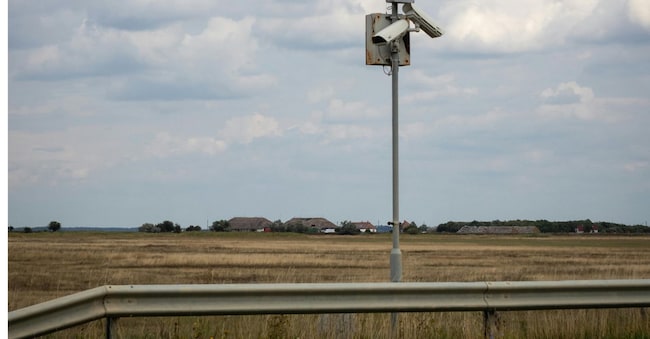
  • Devices that are legally authorised to detect multiple types of offences will be able to operate simultaneously in all possible modes, whereas until now only one mode was permitted to be active at a time (the most likely source of controversy is certain models that can operate both as speed cameras and as red-light cameras, meaning that drivers who accelerate in the hope of beating a red light risk being fined for speeding);
  • the mandatory requirement to give advance warning of speed checks (in force since August 2007) is being abolished, to be replaced by a system in which the rules may be established – in a manner that is more or less ‘protective of individual rights’ – by simple ministerial decrees (presumably also in line with the ‘smart roads’ currently being rolled out, with monitoring stations that can be placed as close as a few hundred metres apart along the entire route).

Abbreviated notifications

In addition to the usual 90-day period in cases where officers do not issue an immediate notice of offence, a shorter period is provided for, 30 days, in the case of offences detected by automated devices, such as fixed speed cameras and surveillance cameras for restricted traffic zones (ZTL), traffic lights and hard shoulders. Such offences, moreover, almost always account for the majority of those detected.

According to the Ministry of Infrastructure, the term ‘differentiated’ has a dual function:

  • on the one hand, as a preventative measure, as in the case of driving with an expired MOT;
  • on the other hand, to provide greater protection for an offender who is not yet aware of their position in relation to the offence.

Apart from these cases, which will put the efficiency of public administrations to the test, the general time limit remains 90 days, counted from the moment the breach was detected.

Appeals

Not even the latest developments regarding appeals have yet attracted media attention, yet they have a greater impact than one might think. Firstly, if you choose to lodge an appeal with the Prefect (the option to appeal to the Justice of the Peace will remain), you must – on pain of it being declared inadmissible – submit it to the police headquarters to which the inspector is attached (you will no longer be able to send it directly to the Prefecture).

The procedures for submitting appeals also appear to be more restricted than at present: appeals may only be submitted by registered post with acknowledgement of receipt, certified email (PEC) or another qualified certified electronic delivery service, in accordance with the procedures set out in the Digital Administration Code (CAD).

The Prefecture will no longer be obliged to act on any request for a personal hearing made by the applicant: summoning the applicant will become a matter of discretion.

The police authority will have 60 days to forward the duly processed appeal to the Prefecture, which must reach a decision within 120 days of receiving the appeal. Once a decision has been reached, the injunction must be served on the appellant and the other entitled parties within 150 days.

Loading...

The penalty regime in the event of an appeal being rejected will be more favourable than it is today: there will be a fixed and mandatory increase of one third for each breach, whereas at present the penalty is doubled.

Self-help

The reform finally addresses the issue of self-protection measures taken by police authorities, transforming the current landscape – characterised by a wide variety of administrative practices – into one based on regulatory provisions. The procedure is correctly termed ‘dismissal’ and may be initiated either ex officio or at the request of the person concerned.

These cases are provided for by law, but the scope is quite broad and covers all the most common situations, including errors in service and in the application of the law. The proceedings will not be suspended in the event of an appeal, and the dismissal may take place before the deadline for the commencement of enforcement proceedings.

Copyright reserved ©
Loading...

Brand connect

Loading...

Newsletter

Notizie e approfondimenti sugli avvenimenti politici, economici e finanziari.

Iscriviti