
Health

Avis alarm 'donations decreasing in 2025, we face structural limits'

Oscar Bianchi, national president of Avis, denounces organisational problems and issues an alert on the plasma emergency

4' min read

Translated by AI
Versione italiana

4' min read

Translated by AI
Versione italiana

The figures for the first ten months of 2025 on donations are not encouraging. For blood, there was a drop of 1.7%, while plasma collection was at a standstill with an increase of only 1% compared to + 3.3% for the same period in 2024. How to read these numbers?

The figure I would like to recall first is that in 2024 Avis had 1,311,775 members: the highest number in seven years. This means that Italians have not stopped donating, on the contrary. The willingness to make themselves available to the country is very strong.
Loading...

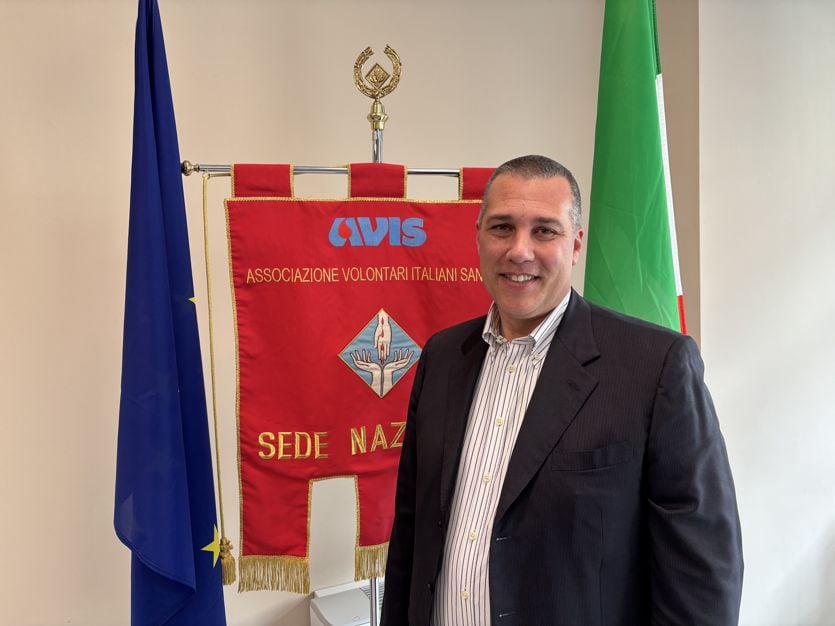
Oscar Bianchi, presidente nazionale di Avis

If we see a drop in collections, it is not because citizens are less generous, but because the system is paying for structural and organisational limitations: staff shortages, reduced seating, insufficient regional planning.

It is essential to say it clearly: self-sufficiency in whole blood is guaranteed because the system meets clinical needs. On plasma self-sufficiency, on the other hand, Italy can no longer afford to slow down.

2025 shows a lower growth in plasma than 2024, but this does not change the essential point: to achieve self-sufficiency we need structural interventions and the full valorisation of the role of the associations, which are and remain the operational pivot of collection in our country.

What can Avis do?

With a network of over 3,400 locations and more than 2 million donations per year, we are ready to do our part. If the system really wants to grow, it must put us in a position to increase collections. We, with our usual and founding spirit of service, can do this.

There are more blood donors than plasma donors (they are only 13.2% of the total). Is it possible that the gap is the result of a lack of information on the difference between the two donations?

The main problem is not cultural. Once again, the limit is organisational: few pick-up points, few cellular separators, an uneven supply across the territory. We see this every day: the demand is there, but all too often we cannot satisfy it because the locations do not have sufficient funds to increase staff or do not have the necessary technology.

Plasma is the real emergency. A shortage that forces us to import more than 30% of the stocks we need. What can be done to reverse the trend?

To increase the number of plasma donors, we need: a wider network of equipped and organised collection points, especially associative ones, so as to relieve hospitals and let fewer and fewer doctors devote their precious time to treatment; a national investment strategy on which we are working together with the institutions, which can guarantee savings in public spending; coordinated and structured campaigns, developed together with the public system. The data on women is emblematic: the law allows plasma to be donated much more often than whole blood. This is an extraordinary potential that the country is not exploiting. Avis alone cannot bridge these gaps, but it can do what no one else in the system can do: organise, call and retain donors. This is our mission and our added value, recognised by Law 219/2005. With our associative collection units, we can also increase collection, we are ready. Italy cannot depend for 30 per cent on plasma collected abroad, often remunerated, in total contrast with our ethical model.

It is not only a health issue, it is a national security issue, as is well shown by the data of the National Blood Centre, which show how an increase in domestic collection can reduce spending and secure the country in the event of a global crisis.

What are the steps to be taken?

The first is to strengthen collection through associations. Associative collection units have lower costs, greater capillarity and guarantee proximity. Avis, which alone intercepts more than 65% of Italian donors, can be the turning point and putting ourselves in a position to collect more means accelerating towards self-sufficiency.

Then it is necessary to support the consignment-work model, a process in which plasma collected in Italy is sent to specialised pharmaceutical industries to be transformed into blood products, while retaining ownership of the plasma under the responsibility of the National Health Service. Once the processing is complete, the finished products are returned for distribution to Italian patients, in compliance with current legislation, which ensures that the plasma is not commercialised and that the products obtained are for national clinical use only. The processing account is safe, ethical, cost-effective: if we achieved 100% domestic self-sufficiency, the country would save over 180 million a year.

Finally, innovating the donor pathway through tools such as telemedicine, digital questionnaires and teleconsultations, which reduce time, improve quality and build loyalty. In all this, we also need a real enhancement of the nursing staff, the heart of transfusion safety.

Italy can achieve plasma self-sufficiency and the system can do this effectively together with Avis.

The data show that men donate almost twice as much as women (66.2% compared to 33.8%), what is the reason for this different willingness?

The problem is not the lower availability of women: in our locations we see extraordinary female participation in volunteering. The obstacles are social and organisational, such as the work-family balance, the disproportionate burden of care on women, and the physiological periods of temporary exclusion. Avis has a very clear objective: to reduce this gap by building more flexible and facilitated paths, especially for women donors over 30.

Is there more sensitivity on the issue of donation in the north, the centre or the south?

The desire to donate does not change, but territorial conditions do change. Rome, for example, has to support a huge, inter-regional hospital system, while Sardinia is extraordinary in terms of collection capacity, but has a very high need for haematology for thalassaemia patients. These conditions change the pressure on the system, not the spirit of the donors. All over Italy, wherever I go, I see the same thing: civic sense, responsibility, community. And an Avis network that holds the country together.

Copyright reserved ©
Loading...

Brand connect

Loading...

Newsletter

Notizie e approfondimenti sugli avvenimenti politici, economici e finanziari.

Iscriviti