
Bad weather, the decree aims at 1 billion for the emergency
Today in the Council of Ministers a decree-law and a resolution with aid for businesses. Halt to taxes and contributions until 30 April. Niscemi: 150 million and Ciciliano commissioner. Requirements for catastrophic experts fixed

Key points
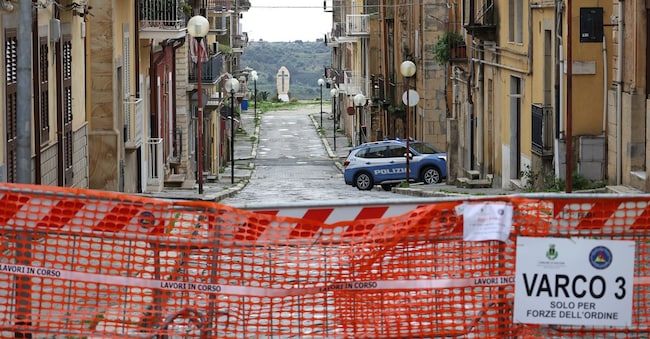
The decree-law for the bad weather emergency that hit Sicily, Calabria and Sardinia arrived on the Council of Ministers' table today. A text that tries to define an initial financial and operational framework for the compensation for the damage caused in January by Cyclone Harry, with a special chapter dedicated to Niscemi, as anticipated on Monday at the site by the premier Giorgia Meloni: 150 million euro for the city put to the test by the landslide and the appointment as extraordinary commissioner of the head of the Civil Protection, Fabio Ciciliano, called to manage demolitions, safety measures and hydrogeological risk reduction.
Another 400 million recovered from the Emergency Fund
A parallel structure is thus created, with strengthened powers, to speed up interventions that would otherwise risk getting bogged down in procedures and cross competences. Strengthening the package is a resolution of the Presidency of the Council that recovers another 400 million from the emergency fund: 200 million in 2026 and another 200 million in 2027. Resources intended to support the most immediate phase of the crisis and to cover the first interventions in the territories, while the reconnaissance of the damage is completed with the regions and technicians. The drop point could be close to one billion euro, but the resources still have to be found.
Taxes and contributions until 30 April
In the measure, which Il Sole 24 Ore has been able to view and which is still being examined by the Ragioneria Generale dello Stato, there is the expected suspension of deadlines for tax and contribution payments, which should, however, stop on 30 April next (and not 30 May as speculated last week) and include the halt to compulsory insurance premiums. Recovery, in one lump sum, would be expected by 10 October 'without the application of penalties and interest'.
The single emergency Cig for workers
The measure also recognises, for employees in the private sector, including agricultural workers, who are unable to work, an income supplement of up to 80 per cent of the salary paid by Inps, for a maximum of 90 days (reduced to 15 in the case of inability to go to work) and within the time limit of 31 May. Recourse to the redundancy fund will be subject to the existence of 'adequately documented conditions', also by means of a substitute statement, certifying the link between the lack of benefit and the calamitous event. The expenditure ceiling is set in the draft at 37.6 million for 2026. For the self-employed, the text provides for a one-off allowance 'equal to EUR 500 for each period of suspension not exceeding 15 days and in any case to a maximum of EUR 3,000'. In this case, the hypothesised appropriation would be 102.3 million.
Aid to enterprises
For businesses, the draft decree freezes from 18 January until 31 March the payments for the Chambers of Commerce and accounting and corporate obligations, and until 30 April 'all deadlines for the relative administrative fulfilments and the payment of the consequent sanctions envisaged by the regulations in force'. Agricultural, fishing, and aquaculture businesses will be able to access the aid designed by Legislative Decree 102/2004 for a total of 120 million; tourism businesses, on the other hand, will be able to count on 5 million.


