
Doctor, is it true that

Should bagged salad not be washed? Here's what to watch out for

The National Medical Association's team of doctors and anti-fraud experts answers the most important health questions
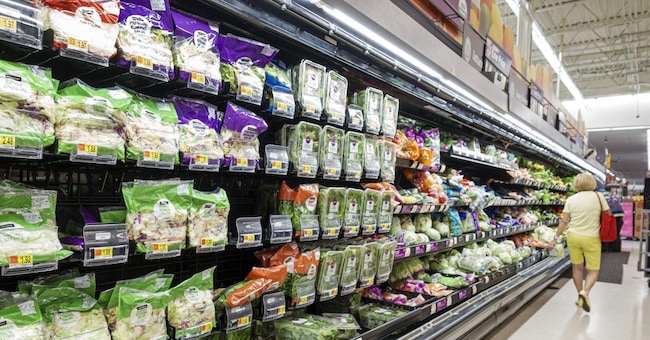
Florida, Miami Beach, Walmart, produce and prepackaged salads. (Photo by: Jeff Greenberg/Education Images/Universal Images Group via Getty Images) 2021-05-01 11:28:02 ILSOLE24ORE .FOOD Jeff Greenberg/Universal Images

4' min read

Translated by AI
Versione italiana

4' min read

Translated by AI
Versione italiana

With the arrival of summer, the consumption of cold dishes increases and, among the most purchased products, there are the salads of the IV gamma, vegetables that are already washed, cut and packaged ready to be poured onto the plate. Their success depends above all on practicality: no waste to eliminate, speed in preparation and the possibility of eating them outdoors or at work. But do they really not need to be re-washed? Doubts about safety, nutritional quality and possible contamination are widespread among consumers, but protecting health is possible by following simple hygiene rules and learning to read labels.

Is it true that bagged salad should not be washed at home?

It depends. Not all packaged salads are the same. To be sure that you are acting in the healthiest way possible, you should read the product label. If the package says 'washed and ready to eat' or 'ready to eat', the product does not need to be washed again. In other cases, the label may recommend washing or give no indication. Many consumers are also accustomed to re-washing ready-to-eat salads, but it is not necessary: these are freshly prepared products, industrially washed and stored at a controlled temperature before sale.

Loading...

What are the characteristics of the IV range?

Fruit and vegetables are divided into five types, or ranges, according to the production process and the way in which they are sold: I range: fresh fruit, vegetables and greens, perishable because they have not undergone any preservative treatment; for example: what you buy at the neighbourhood market or on the farm; II range: processed and preserved vegetables in jars, from pickles and pickles to fruit in syrup and freeze-dried vegetables; III range: frozen products; IV range: washed and packaged salad and vegetables, ready to eat; V range: pre-cooked or cooked products (such as grilled or boiled vegetables, soups) and packaged using specific techniques.

After harvest, the IV gamma products are washed several times with drinking water and disinfectants. The cold chain is then maintained, the salads are dried and packed in bags or trays, without adding preservatives.

Are IV gamma salads safer and healthier than unwashed ones?

These are two different sales methods, but from a nutritional point of view the differences are minimal. The IV gamma is appreciated for its convenience and absence of additives: it is the choice of those who have little time or lunch away from home. Fresh, non-packaged products generally cost less and are perceived as more 'genuine'. They do, however, require thorough washing to remove any germs and traces of chemicals used in agriculture.

Not many studies have compared I and IV gamma products in terms of food safety. According to the results of a research conducted by the Istituto Zooprofilattico Sperimentale delle Venezie in 2015, the presence of contamination by pathogenic bacteria in already washed salads is lower than in fresh, untreated vegetables. On an industrial level, treatment with peracids makes it possible to eliminate all chemical residues, without altering the organoleptic properties of the product, and therefore without impoverishing its colour, taste and smell.

On a nutritional level, industrial washing and cutting can result in the loss of certain micronutrients. In particular, some studies report a reduction in vitamin C and polyphenols (antioxidant molecules). However, the available evidence does not show any significant nutritional differences.

The supply of minerals and fibre is comparable to the non-bagged product. There remains, therefore, the advantage of being able to conveniently include health-safe doses of vegetables in the daily diet.

What is the best method for disinfecting fruit and vegetables at home?

According to the cited research, the most effective home washing involves the use of chlorine-based disinfectants. To find the right commercial product, simply look for chlorine or sodium hypochlorite for food use on the label. It will then be sufficient to follow the directions on how to dilute the product in drinking water and rinse.

What are the risks if you do not disinfect fresh vegetables?

Raw fruit and vegetables can harbour bacteria, viruses and other microorganisms from the soil or irrigation water. Compliance with hygiene rules and washing greatly reduce the risk, but do not eliminate it completely. However, food-borne diseases must be known and prevented. The main pathogens that can be associated with fruit and vegetables are Salmonella, Listeria, Escherichia coli, Norovirus, Yersinia. Other risks come from the hepatitis A virus

Is it true that children or pregnant women need special care?

According to some research, washing even bagged salads is an extra precaution against, for example, toxoplasmosis. This infection, caused by a parasite, is dangerous for pregnant women. During pregnancy, it is advisable to rinse the salad under running water and dry it well; disinfectants and bicarbonate of soda do not seem to offer any significant advantages against toxoplasma eggs and spores.

The possibility of traces of toxoplasma being present in IV gamma products is low but not zero. This was confirmed by a survey of ten European countries, coordinated by the Istituto Superiore di Sanità, which examined over three thousand samples of washed and ready-to-eat salads. The Italia data, of all, is the most reassuring.

The consumer, however, must also do his part to prevent products from deteriorating.

How do you choose and keep your salad fresh and safe?

Even IV gamma products, which can be found in the supermarket in the refrigerated counter, should only be consumed if the cold chain is not interrupted. Once at home, they should be stored in the refrigerator (at a temperature between 0°C and +4°C) and consumed by the expiry date. In any case, their appearance must be intact and the bag must not show too much condensation.

We have already talked about how to assess the freshness of food in the "Can I trust my nose to tell if a food is rotten?" .

Finally, an eye to the label. It is recommended to choose reliable brands and to check that the harvest and packaging date is indicated on the packaging in addition to the expiry date. In general, the shelf life of these products is about 7 days in winter and 5 in summer, but it is recommended not to consume them more than 4 days after packaging.

Read the full fact sheet on Fnomceo's website doctormaeveroche

Copyright reserved ©
Loading...

Brand connect

Loading...

Newsletter

Notizie e approfondimenti sugli avvenimenti politici, economici e finanziari.

Iscriviti