
Bagged salads, an alliance uniting 60% of producers is born
Operators united in an Aop (Association of Producer Organisations) to tackle the difficulties of a 1.1 billion sector. Among the knots to be unravelled are fragmentation and relations with large-scale distribution
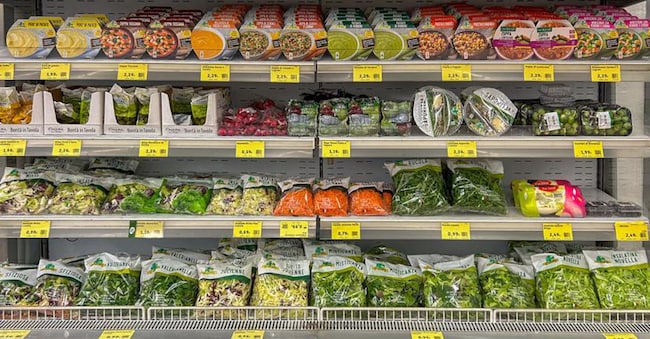
Teamwork for 'fourth range' producers, i.e. vegetables and salads already washed and bagged. A sector in which Italia is the leading country in terms of both production and per capita consumption. However, the sector, after a rapid and whirlwind growth that led it to reach a turnover of 1.1 billion euro, is now going through a phase of stalemate if not outright crisis.
Hence the need to take corrective action, above all by trying to neutralise the sector's weaknesses that lie in the excessive fragmentation of production, the atomisation of supply, the lack of planning and structured relations with large-scale distribution. Criticalities that are reducing marginality for agricultural producers.
The first step is therefore the creation of a representative body, an Aop, an Association of Producers' Organisations dedicated to the fourth range (fresh, washed products, packaged in protective packaging, ready to eat. ndr). The association, created on the initiative of Filiera Italia, was presented yesterday in Rome and today aggregates more than 60% of the agricultural production of bagged salads.
'It is no coincidence,' explain Filiera Italia, 'that while the fruit and vegetable sector as a whole has seen turnover grow by 18% since 2010, the fourth range has only grown by 1.5%. The new association will work to introduce innovation, not so much in the product as in the system. Central will be the issue of logistics, but also sustainability concerning shelf life and packaging, and also the digitalisation of the supply chain and the introduction of new contractual models that can enhance the entire production chain'.
'Over the years,' commented CEO Luigi Scordamaglia, 'we have developed and supported vertical supply chains (pasta, tomato, meat, milk and many others) and today looking at the fourth range is natural for us: the most significant companies in the sector are already our members. Today more than ever we need an alliance with all the components of the supply chain present'.


