

Beijing’s fighter jets soar over the skies of Egypt: a show of Chinese strength against Paris (and the EU)
A formation from the People’s Liberation Army Air Force is taking part in the ‘Eagles of Civilisation’ exercise alongside the Rafales. The simulated tactical confrontation against the Egyptian Air Force’s Dassaults serves as a field test for Beijing’s entire command, control, electronic warfare and logistics architecture, having deployed its fighter jets 6,000 kilometres from its mainland bases. PLAAF technicians observed the behaviour of Western electromagnetic emissions under realistic conditions. A problem in relations with India
by 24Ore NextMed
 Aggiungi Il Sole 24 Ore
ai preferiti su Google
Key points
- Logistics scale and global reach
- Electromagnetic interference and advanced sensor technology
- Italia’s position and security in the wider Mediterranean
- The dilemma of the future combat system
- The United Kingdom, the Indo-Pacific Dimension and the GCAP programme
- Market competition and geopolitical realignment
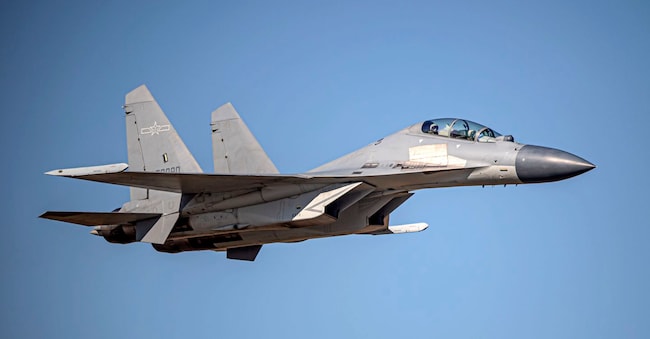
The appearance of a formation from the People’s Liberation Army Air Force (PLAAF) in the skies over Egypt, for the second edition of the joint ‘Eagles of Civilisation’ exercise, constitutes an event of strategic significance that could redefine the air and naval balance of power in the Mediterranean basin. The deployment of Shenyang J-16 heavy fighter jets, Shaanxi KJ-500A early warning aircraft, electronic warfare platforms Shaanxi Y-9LG and Xi’an YY-20A tanker aircraft more than 6,000 kilometres from mainland Chinese bases is not merely a training exercise. The simulated tactical confrontation against the Dassault Rafale of the Egyptian Air Force serves as a field test for Beijing’s entire command, control, electromagnetic warfare and logistics architecture.
For the governments and leading defence industry players in Italia, France, Germany and the United Kingdom, this paradigm shift calls for an urgent review of security strategies for the wider Mediterranean region and is accelerating the competition for technological supremacy in sixth-generation aerospace programmes.
Logistics scale and global reach
The ability to deploy a composite strike package through the congested air corridors of Central Asia and the Middle East highlights the maturing capabilities of the PLAAF in terms of in-flight refuelling and strategic projection.
The use of Xi’an YY-20A heavy tanker aircraft enables the Shenyang J-16 to exceed the physiological limit of their unrefuelled range, ensuring coverage of intercontinental routes with adequate fuel reserves to cope with unforeseen weather conditions or diplomatic overflight refusals. Operations in desert theatres characterised by high temperatures and high concentrations of abrasive particulates place severe strain on the durability of the Shenyang WS-10B engines, the thermal dissipation of the radars and the management of in-flight replaceable avionics modules. The logistical support provided by the Xi’an Y-20B strategic transport aircraft, loaded with diagnostic equipment and spare parts, demonstrates that Beijing is now capable of sustaining prolonged sorties far from the mainland’s fixed infrastructure, moving beyond its traditional coastal defence role.
Electromagnetic interference and advanced sensor technology
In beyond-visual-range air combat, the structural disparity between the heavy J-16 fighter and the medium-class Dassault Rafale aircraft reflects two divergent engineering philosophies. The Chinese fighter utilises a radar antenna with a larger aperture, featuring gallium nitride or gallium arsenide transmit/receive modules, capable of generating high peak power whilst exhibiting a more pronounced front radar signature.

