
Best Brands choose joy against global pessimism
Lego, Amazon, Nintendo and Nike topped the rankings of the best active brands in Italia: a judgement based on the intersection of economic data and consumer evaluations

Key points
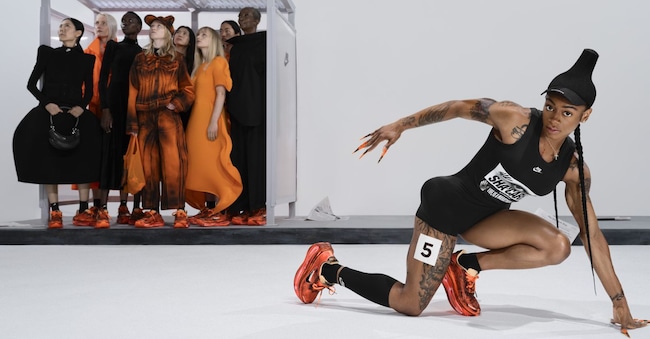
"My inner peace? It starts with the focus I put on the things that matter most to me: my team, my family, my faith". Sha'Carri Richardson, an American athlete born in 2000, one of the most iconic sprinters of the new generation with a troubled history of triumphs on the track and a turbulent life, has already been the focus of Nike campaigns. It is precisely this combination of talent, fragility and redemption that has made her a cultural as well as sporting icon. Not just performance but identity. Running simply for oneself, not for the approval of others.
So Nike reverses (again) the pattern by choosing a counter-intuitive route and winning first place in the special Best Brands 2026 ranking on Joytude. 'Run like no one's watching'. That is, learn to run like no one is watching. So this new message - at the heart of Nike Running's activation with designer Melitta Baumeister - is not just an invitation to run but a stance.
The answer to pessimism
Welcome to the economy of joy, with brands bucking the trend by trying to arm themselves against global pessimism. Even the Economist has written about it, highlighting how positive energy is in short supply and negativity is widespread and persistent amidst a geopolitical checkerboard in crisis and new hotbeds of war on the horizon. Pessimism is the main global economic problem. Yet a paradox runs through contemporary marketing: the more the world darkens, the more brands invest in joy, especially individual joy. Because today the brand does not compete on product, service or price. The game is played on states of mind, on the performance of individual well-being. No longer escapism but a strategic response to a time marked by systemic crises. A joy that becomes a strategic lever: the challenge is no longer so much to do well as to make one feel good. This is what emerges from the new edition of Best Brands 2026, an initiative by Serviceplan Group and NielsenIQ with the historic patronage of Upa and the support of Rai Pubblicità, 24 ORE System, IGP Decaux and ADC Group.
Thus, in addition to the three historical rankings Best Product, Service and Growth Brand, the Best Joytitude Brand has been added, which sees in the winning trio, in addition to Nike in first place, also Lego and Kinder. This is followed by Amazon, Samsung, Adidas. Surprise, or perhaps not. In what Dario Amodei of Anthropic has defined as a "compressed century" marked by geopolitical tensions, economic uncertainty and widespread pessimism, companies are called upon to orient people's lives with new compasses in the stormy sea. A posture that combines hope and utility, emotion, performance. Not a promise, but a tangible experience.
"Joytitude works when it stops being communication and becomes behaviour. But the joy we speak of is not entertainment so much as respect for people's time. It is the ability to simplify rather than complicate. If it remains a tone, it is fragile and easily disproved. That is why it can become an infrastructure: because it is not about what the brand says but how it behaves. If it enters into everyday processes and experiences, it builds trust, which is a concrete form of value,' says Giovanni Ghelardi, CEO of Serviceplan Group Italia. It is not a matter of superficial levity, but of planning to strengthen perceived well-being. "To do all this requires consistency between promise and experience and the ability to design effective micro-experiences. Trust is born from repeated details: clear answers, simple interactions, promises kept. If this becomes a system, it generates real competitive advantage: more trust, more choice, more loyalty over time,' Ghelardi points out.

