
From betting on hydrogen to data centres: how the Emirates change horses
The state-owned Masdar Group was developing huge solar fields for electrolysis, but has now decided to allocate them to the super energy-intensive needs of artificial intelligence. For green hydrogen, this is yet another sign of crisis: there is no demand and projects are in trouble. Even in the Persian Gulf

3' min read
3' min read
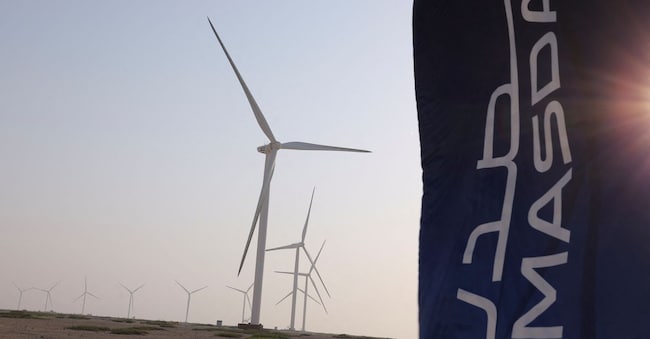
Artificial intelligence as a lifesaver, so as not to dissipate investments that were intended for the now faded dream of green hydrogen. The largest developer of renewable energy plants in the United Arab Emirates - the state-owned Masdar group, also known as Abu Dhabi Future Energy Company - is trying to change course, directing its projects at the service of another electron-hungry sector: that of data centres, which despite the doubts that are emerging (see the article above) still seems capable of providing satisfaction, also from an economic point of view.
"In the original plans,' explains Masdar's CEO, Mohamed Jameel Al Ramahi, interviewed by Reuters, 'I was to generate 6 Gigawatts (per year, ed.) of renewables to produce about 350,000 tonnes of green ammonia,' the chemical compound often used to facilitate the transport of hydrogen by 'binding' it to nitrogen molecules.
However, the company has decided to use the huge photovoltaic field in the desert - costing $6 billion - that it had planned to power electrolysis for another purpose. And the super energy-intensive data processing centres needed for the AI are an ideal candidate.
The UAE is riding the wave in the sector with a series of initiatives, including with US partners, which have accelerated after Donald Trump's recent visit to the country. In May, OpenAi announced the Stargate Uae project with Oracle, Nvidia and Cisco, a 5 GW mega data centre covering an area of about 25 square kilometres with planned start-up in 2026. Emirates Integrated Telecommunications Co PJSC, better known as Du, is planning another facility with Microsoft Corp. The Emirates will also be the first country in the world to provide the entire population with a ChatGpt Plus subscription.
From Masdar's point of view, the conditions are right for good business. The same cannot be said for green hydrogen, which after a period of great enthusiasm is again going through (for the umpteenth time in history) a phase of disillusionment.


