
No Tobacco Day

Between cigarette smoking and 'vaping' is polyconsumption for 40% of high school students

The alarm from the Istituto Superiore di Sanità (Higher Institute of Health), which photographs the composite use of products already for 7.5% of students between the ages of 11 and 13 and confirms the figure of one in four adults who are habitual smokers, with an increase, however, in e-cigs and heated tobacco devices

by Health Review

Adobe Stock

6' min read

Translated by AI
Versione italiana

6' min read

Translated by AI
Versione italiana

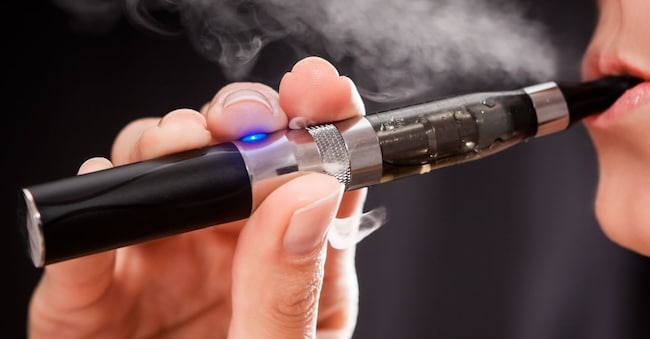
So much for the fight against smoking: in the face of the spread of new products that have now joined traditional cigarettes, strategies to combat it must be sharpened. The data, in view of "No Tobacco Day" on 31 May, speak for themselves: over 240,000 girls and boys in Italy smoke or "vape", equal to 7.5% of the 11-13 age group, and this percentage rises to 37.4% among students aged 14-17, equal to about 865,000 young people. The Istituto Superiore di Sanità (Higher Institute of Health) notes this by turning the spotlight on 'poly-consumption', i.e. the combined use of several products, which affects the vast majority of 14-17 year olds who smoke and an increasing proportion of adults. "The composite use of smoking products represents a complex public health challenge," says Iss president Rocco Bellantone, "because it cannot be ruled out that the composite use of traditional cigarettes and electronic devices, with or without nicotine, results in increased health risks.

"The introduction of new products, such as e-cigarettes and, more recently, heated tobacco devices, seems to have halted the positive trends observed in recent decades of reducing the share of smokers. Thus, the overall share of people exposed to the health risks of smoking tobacco or inhaling the substances in e-cigarettes, as well as to the risk of nicotine addiction, has remained stable in recent years. Even more worrying is the fact that this situation mainly affects young people,' explains Maria Masocco, scientific head of Passi surveillance.

Loading...

Meanwhile, calls to the Iss's anti-smoking hotline (800554088) fell to 6497 in 2024 from 6931 in 2023. 90% of callers are smokers, mainly males, while 8.1% are family members, in this case mainly women. 92.3% of callers want to quit, or to stop smoking, but those who ask for information on new products are also on the increase. As far as territorial services are concerned, their number has been stable (223) over the last two years. They are mainly concentrated in the North (60%), against 21% in the Centre and 19% in the South and Islands.

Consumption in young people

7.5% (more than 240,000 boys/girls) of Italian students aged 11-13 years smoke or vape: this percentage rises to 37.4% among students aged 14-17 years (about 865,000 boys and girls). In particular, in the last 30 days more boys than girls have used a product between traditional cigarettes, heated tobacco products and e-cigarettes among middle school students (M 7.6% vs F 6.9%), while in high school it was girls who consumed more than boys (M 32.2% vs F 42.1%). These are the results of two studies involving more than 8,000 young people between the ages of 11 and 17, coordinated by the Iss's National Centre for Addiction and Doping on a representative sample of 3,441 middle school students and 4,861 high school students.

Polyconsumption almost doubled in both age groups: while in 2022 it was 26.0% among 11-13 year olds and 38.7% among 14-17 year olds, in 2025 this percentage is 45.5% among middle school students and 70.7% among high school students.

Among the products tried by Italian students, nicotine-containing sachets also stand out: 8.2 per cent of 14-17 year old students claim to have tried them, and this figure is up sharply from 3.8 per cent in 2024.

Among the students who have used a product containing tobacco or nicotine in the month preceding the survey, the figure for those who have done so for more than 20 days is worrying - the Iss points out -: among 11-13 year-old students, 9.0% have consumed a traditional cigarette, 9.7% a heated tobacco product, 16.0% an electronic cigarette. These percentages increase significantly in older children (40.5% for traditional cigarette, 34.8% for heated tobacco, 35.9% for e-cigarette), indicating habitual consumption behaviour.

Consumption up in the we

Tobacco or nicotine consumption is concentrated at weekends or on holidays in both age groups and for all products investigated. Among the student users of e-cigarettes in both age groups, the product is predominantly used with nicotine-containing liquids (65.5% of 11-13-year-olds and 86.8% of 14-17-year-olds).

With regard to the purchase channels of traditional cigarettes, heated tobacco and e-cigarettes, the surveys showed that the youngest adolescents (11-13 years old) have them offered to them or bought from friends, whereas older adolescents also tend to buy them personally from the bar/tobacconist. Despite the ban on sales to minors, some students declare that they buy the products they consume without being refused by the retailer: the highest percentages were recorded for the purchase of e-cigarettes (62.6% of 11-13 year olds and 58% of 14-17 year olds did not receive a refusal to buy from the retailer).

Conscious parents

About one in five 11-13 year olds say their parents are aware that they smoke/smoke: this percentage rises to almost one in two among 14-17 year olds. School still remains an environment in which children see other students/professors or other school staff smoking or vaping, and this is much more common among high school children in particular (80% say they have seen smoking/smoking almost every day). "The results of the research we have carried out give us a measure of the precocity of experimenting behaviour by pre-adolescents and the criticality of the transition between middle school and high school, confirming the importance of prevention interventions aimed at these age groups," emphasises Simona Pichini, who directs the National Centre for Addiction and Doping at the Iss.

One in 4 adults smokes

Estimates of consumption in adults and the elderly were derived from data from the Passi and Silver Passi Surveys coordinated by the National Centre for Disease Prevention and Health Promotion (Cnapps) of the Iss. In Italia, the majority of adults aged 18-69 do not smoke (59%) or have stopped smoking (17%), but 1 in 4 Italians is a habitual smoker (24%), figures that have remained unchanged in recent years but are not without 'criticalities'.

In fact, against a slowly decreasing trend in the prevalence of traditional cigarette smokers, the use of electronic cigarettes (mostly with nicotine use) and heated tobacco devices is increasing, both among smokers, who thus become addicted to the polyuse of tobacco products, and among "non-smokers" or "ex-smokers", who, despite never having been (or having been in the past) exposed to the harms of cigarette smoke, are now exposed to the risks of inhaling the substances used in e-cigarettes, the residual risks of tobacco combustion (however present in HTPs) and nicotine addiction.

In the period 2023-2024, while 24% of smokers among 18-69 year-olds report using traditional cigarettes exclusively, 19% report using traditional cigarettes exclusively and 5% report both smoking traditional cigarettes and using an electronic device (e-cig and/or HTP); in addition, 4% of smokers use electronic devices exclusively (e-cig and/or HTP), even though they have never smoked traditional cigarettes or have quit smoking for some time, thus remaining exposed to the risks of nicotine addiction

Trends per individual product

The trend since the introduction of the new electronic devices on the market in Italy (2014 for e-cig and 2018 for HTP) thus shows a steady reduction in the share of exclusive smokers of traditional cigarettes (from 25% in 2014 to 18% in 2024) in favour of an increase in poly users (from 1.5% in 2014 to 4.8% in 2024) accompanied by an increase in the number of those who exclusively use electronic devices (from 0.4% in 2014 to 4.0% in 2024).
Here are the figures for the individual product types for the two-year period 2023-2024:

- Traditional cigarette smoking is more frequent among men than among women (28% vs. 20%) and draws a significant social gradient, involving much more people with economic difficulties (36% vs. 21% among those without) or with low education (30% among those with a secondary school leaving certificate or 26% among those with at most an elementary school leaving certificate vs. 18% among university graduates). The territorial variability shows some regions with the highest shares of smokers in the Centre-South, such as Molise, Campania and Umbria.

- The use of electronic cigarettes involves 4% of the population overall, but is more frequent among 18-24 year olds (8% vs. 3% among 50-69 year olds). Annual data show a slow and modest increase in e-cigarette use from just under 2% in 2014 to just over 4% in 10 years. It does not show differences by gender, nor by economic availability, but is slightly more frequent among people with a high school diploma than among people with a lower educational qualification or than among graduates.

The use of heated tobacco devices in Italy also still involves few people (a total of 4%), but seems to be increasing rapidly (from 0.5% in 2018 to 4.6% in 2024), at least compared to what has been observed for e-cigarettes. Despite the small numbers, significant differences by age and gender are already evident: the share of people using heated tobacco devices reaches 9% among 18-24 year olds, and is higher among women especially in the younger generations. In addition, a gradient by education is observed, with the value of the indicator increasing from less than 1% for those with at most a primary school licence to 4% for those with a university degree, while there do not seem to be any differences related to economic availability.

Copyright reserved ©
Loading...

Brand connect

Loading...

Newsletter

Notizie e approfondimenti sugli avvenimenti politici, economici e finanziari.

Iscriviti