
MedTec School

Between scalpels and algorithms, Europe's first doctor-engineers are born

The double degree signed Humanitas and Politecnico marks the beginning of a new generation of health professionals. And the stories of the first graduates prove it

6' min read

6' min read

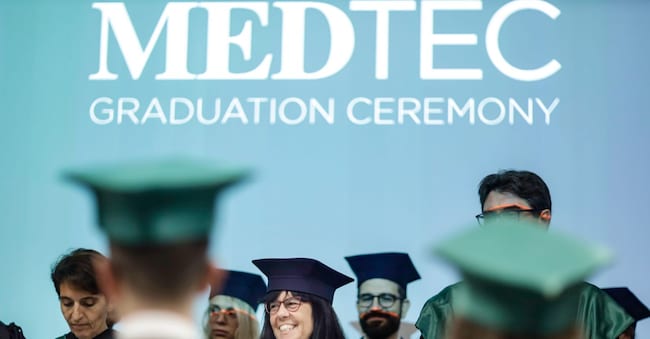
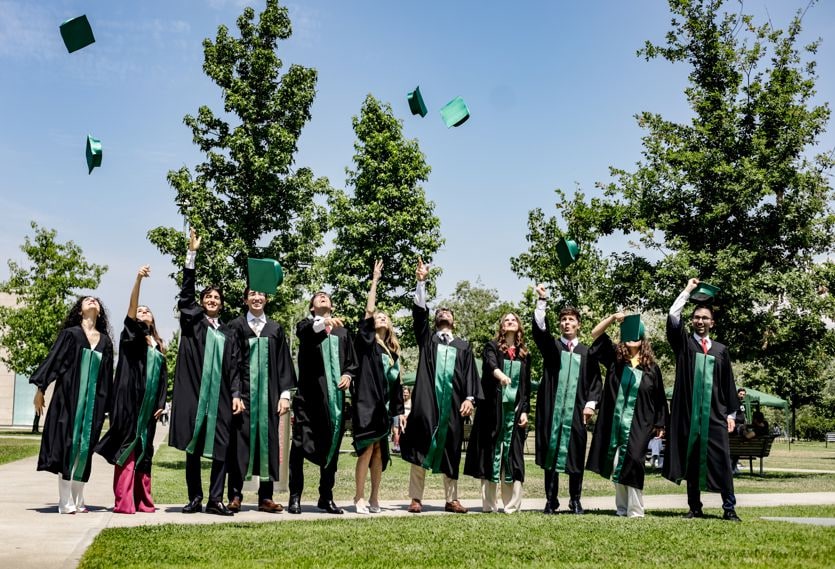
A historic milestone for European university education: today saw the conclusion of the first cycle of the MedTec School, the innovative international degree course in Medicine and Surgery and Biomedical Engineering, the result of the synergy between Humanitas University and Milan Polytechnic. The new graduates, who took the Hippocratic oath in the Aula Magna Humanitas University Campus in Pieve Emanuele (Milan), are the first European doctors to boast a double degree: a single-cycle degree in Medicine and Surgery from Humanitas University and a degree in Biomedical Engineering from the Politecnico di Milano.

The day saw the proclamation of 10 new graduates from the summer session, part of a total group of 37 undergraduates. By the end of 2025, 42 students will have completed this pioneering six-year course.
Loading...

A new training model for the medicine of the future

"The goal we have set ourselves," said Luigi Maria Terracciano, Rector of Humanitas University, "is to train doctors with integrated skills, capable of improving the efficiency and quality of care through innovative solutions, from mechatronics to artificial intelligence. Professionals capable of driving technological evolution while preserving the human gaze and the relationship with the patient, which is the basis of every therapeutic pathway'. Terracciano emphasised how MedTec's transdisciplinary experience reflects the need for an evolution in university education, increasingly oriented towards the contamination of knowledge to meet the challenges of precision medicine. "MedTec was the first project of its kind in Italy and today it is confirmed as an inspiring model for other universities," the Rector concluded.

Donatella Sciuto, Rector of the Milan Polytechnic, also emphasised the importance of this initiative: 'The convergence of medicine and engineering is an important factor for economic and social development at a global level. This degree course is unique because it expresses the combination of intentions and competences, of vision and skills, which are essential to compare with the main European realities'. The rector expressed her hope that recent graduates would remain resources at the service of the country and that the MedTec programme would continue to attract international talent.

Launched in 2019, MedTec School, co-ordinated by Maria Laura Costantino (Biomedical Engineering, Milan Polytechnic) and Maurizio Cecconi (Anaesthesiology and Intensive Care, Humanitas University), currently has 389 students enrolled, with a strong female component (58%) and a significant presence of international students (17%), particularly from France, Greece and Turkey. The course, entirely in English, offers 100 places each year, accessible through an online entrance test.

Knowledge Integration and Advanced Simulation

The MedTec School training course is spread over six years, with study periods alternating between Humanitas University and the Politecnico di Milano in the first three years. The following three years see courses and modules taught by Politecnico lecturers at Humanitas University, ensuring full integration of engineering skills in the clinical pathway. Particularly important are courses such as Automation and Mechatronics, Computer science, and Patient specific modelling and technologies for artificial organs.

The teaching approach encourages problem solving and discussion of clinical cases in an interactive mode. Students have access to one of the most advanced Simulation Centres in Europe, a 3,000 square metre area dedicated to clinical simulation and practical anatomy laboratories with a virtual 3D catalogue and VR simulators. This centre is the only one in Italy to hold Full Accreditation Sesam (European Society of Simulation in Medicine), certifying excellence in simulation-based medical training.

Prime is born: the international doctorate for personalised medicine

Coinciding with the conclusion of the first MedTec cycle, Humanitas University and Politecnico di Milano have launched Prime - PhD in Personalised care and innovation in medicine and engineering. This international and interdisciplinary PhD, led by Maurizio Cecconi (Humanitas University) and Andrea Aliverti (Politecnico di Milano), aims to train researchers capable of developing innovative solutions for personalised medicine. The programme combines engineering, medicine, biology and data science, with two focuses: computational modelling and Ai, and medical technologies. Entirely in English, the PhD programme offers research projects with industrial partners and opportunities for international mobility.

The stories of the first physician-engineers

.

The first graduates of the MedTec School embody the vision of this innovative path, combining scientific rigour and human focus. Their stories reflect the versatility and commitment that characterise this new generation of professionals.

Vera Rebasti: from Tanzania to pancreatic surgery

For Vera Rebasti, the choice between medicine and her passion for mathematics and physics was a dilemma. The MedTec course proved to be the answer, providing her with an engineering mindset for problem solving and data management, while maintaining her medical vocation. "Engineering is an added value that accompanies my being a doctor," said Vera. During her studies, she participated in Humanitas University's Honors Track Africa Project, spending a month doing prevention work in villages in Tanzania. An experience that confronted her with tools and contexts very different from those in the West, but that allowed her to experience the human side of the medical profession in Africa.

Loading...

Her thesis focused on pancreatic surgery, a complex field with a high mortality rate. Under the guidance of Professors Alessandro Zerbi (Humanitas) and Maria Laura Costantino (Politecnico), Vera worked on the creation of a pancreas phantom with synthetic materials, a physical simulator to allow surgeons to practise. Her specific contribution was the creation of an objective model to distinguish the 'soft' and 'hard' pancreas, information that surgeons usually perceive through palpation. The goal is to transform sensations and experience into a replicable, objective model. For the future, Vera intends to continue with her general surgery and the thesis research project, perhaps even furthering herself with a PhD.

Andrea Brunati: the dream of anaesthesia and the voice of students

Andrea Brunati chose MedTec because he wanted to take a new path and get involved. His passion for anaesthesia and resuscitation drove him to not just attend the course, but to actively build it as a student representative. Andrea was a point of reference among colleagues and lecturers, first in the Joint Committee and then in the Academic Senate, helping to give voice to student needs. His thesis explored the use of mathematical models, fluid dynamics or electronic analogues for the interpretation of the fluid challenge, a key diagnostic manoeuvre in anaesthesia and intensive care.

Andrea sees his immediate future in Italy, with a specialisation in anaesthesia and resuscitation, and in the future, a PhD abroad. He feels he is 'definitely a doctor, but with some skills and approaches that are a little different from the classical modus operandi and more akin to the engineering field', emphasising how MedTec training allows him to combine medical understanding with the algorithmic rigour of engineers, skills that are also essential for the application of artificial intelligence in medicine.

Luca Maria Menga: nature as inspiration for synthetic engineering

Luca Maria Menga, with a classical baccalaureate background, was attracted by the opportunity offered by MecTec to combine clinical and engineering perspectives. He found the course stimulating and cutting-edge, with subjects ranging from tissue engineering to gene editing and the application of Ai in the medical field.

His dissertation, developed in the Humanitas laboratories with Maria Rescigno, pro-rector for research, Humanitas University and deputy scientific director for basic research, focused on the study of the interaction of two proteins to counteract the development of breast cancer. This project earned him a Travel Grant that allowed him to further his studies in Los Angeles and Stanford. Despite his scientific commitment, Luca has never neglected the human and relational component, volunteering in a private clinic in Madagascar.

For Luca, the future lies in research, particularly in the interaction between basic research and the development of Ai in the clinic. He has already enrolled in Daihs, the master's degree in data analytics and artificial intelligence in health sciences at Humanitas University and Bocconi University. His main interest is synthetic engineering, inspired by the mechanisms of nature. His dream is 'to engineer the cells of certain bacteria, treating them as if they were robots capable of producing drugs'.

These first MedTec graduates represent the face of an evolving medicine, where engineering skills merge with a medical vocation to meet the healthcare challenges of the future with an increasingly innovative and patient-centred approach. Their path is a clear example of how multidisciplinarity can generate professionals capable of looking beyond conventions, driving scientific and technological progress in the field of health.

Today Vera, Andrea and Luca are the living example that medicine and technology are not two separate worlds. On the contrary, when they meet, they can change the future of health. What will be the next innovations brought by this new generation of physician-engineers?

Copyright reserved ©
Loading...

Brand connect

Loading...

Newsletter

Notizie e approfondimenti sugli avvenimenti politici, economici e finanziari.

Iscriviti