
Biennial, final EU stop to funds
"I can confirm that the Education and Culture Executive Agency (Eacea) has sent a letter informing the Fondazione La Biennale di Venezia of our intention to suspend or revoke an ongoing grant of €2 million," said EU Commission spokesman Thomas Regnier

Key points
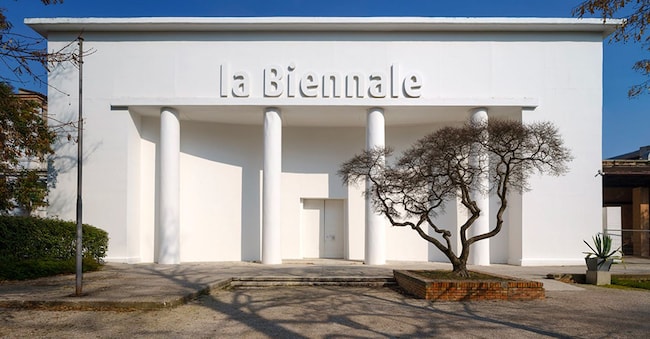
On the one hand the cut in European funds, amounting to no less than 2 million euro, on the other the risk of the resignation of the president of the Biennale. It is on this ridge that the Italia government's difficult game on the issue of Russia's presence at the international art exhibition held in the Lagoon is moving. A thorny issue that joins the other important fronts open on the side of international diplomacy just as Prime Minister Giorgia Meloni and President of the Republic Sergio Mattarella are preparing to receive the President of Ukraine Volodymyr Zelensky, who is expected in Rome on Wednesday afternoon, 15 April.
European Commission cuts subsidies
Just on the eve of this important visit, in fact, the European Commission has formalised its intention to proceed with cutting its contribution to the kermesse due to the presence of Russia. In fact, the Education and Culture Executive Agency (Eacea) has sent a letter informing the Fondazione della Biennale di Venezia of its intention to suspend or revoke an ongoing subsidy of €2 million, which it had informed the Italian government of in March as a sign of "condemnation" of the Biennale's decision.
"Russia's presence is not in line with the European position on Moscow"
"Cultural events financed with European taxpayers' money should safeguard democratic values, promote open dialogue, diversity and freedom of expression, values that are not respected in today's Russia," EU Commission spokesman Thomas Regnier told Ansa. The presence of Russia, which also owns the Pavilion representing it, would violate the principles and rules laid down in the sanctions that Europe has imposed on Russia as a consequence of the war declared on Ukraine.
Rules forbidding any event or act that could be construed as propaganda in support of the regime. All the more so since the artists who will perform in the exhibition space at the Giardini, designed in 1914 by architect Alexey Shchusev, will be brought by the company whose co-owner, together with the commissioner Anastasia Karneeva, is precisely the daughter of the powerful minister Sergey Lavrov, Ekaterina. Everything will be overseen by Biennale President Pietrangelo Buttafuoco, who has always defended the right of artists of all creeds and backgrounds to express themselves. He maintains that no rules have ever been violated and that he has organised spaces to give a voice to Russian dissident artists as well.
The Biennale defends its work
Buttafuoco has never given any sign of wanting to give up on his choice: a forcing on him dictated by reasons of overriding state necessity could have the consequence of taking him a step backwards. This is a risk that neither Prime Minister Meloni nor Culture Minister Alessandro Giuli would like to have to face: firstly because Buttafuoco's is one of the few names of right-wing intellectuals of calibre. And then because the Biennale is ready to open its doors: the inauguration is in fact scheduled for 9 May.

