Energy

Bills decree, OK by the Chamber: from bonuses to telemarketing, all the novelties

Among the planned solutions, that of providing a new life for Italian coal-fired power plants

by Rome Editorial Staff

Via libera della Camera alla fiducia posta dal Governo sul decreto Bollette INFOPHOTO

4' min read

Translated by AI
Versione italiana

4' min read

Translated by AI
Versione italiana

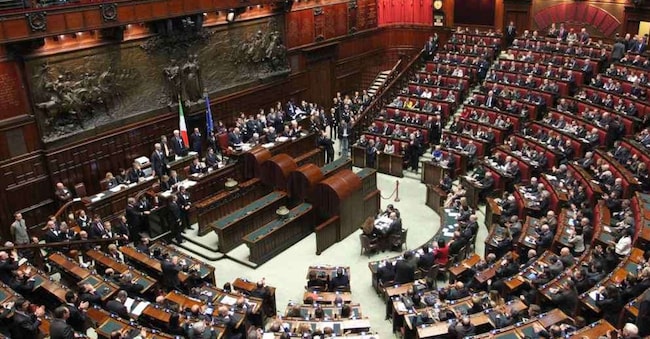
The House of Representatives gave the green light with 157 votes in favour and 93 against to the bill decree, which now passes to the Senate. The text (to be converted into law by 21 April) had been put to the vote of confidence by the government, which passed with 203, 117 no votes and 3 abstentions.

Among the solutions contained in the measure is that of providing a new life for Italian coal-fired power stations: in order to cope with the energy crisis, in the event of an emergency it will be possible to continue to draw on the most polluting fossil fuel until 2038, 13 years beyond the deadline set by the National Energy and Climate Plan, which envisaged a stop by December 2025. The measure also introduces a clampdown on telemarketing and measures to support less polluting transport. Here is a summary of some of the measures.

Loading...

115 euro social bonus

An extraordinary contribution of the value of EUR 115 to holders of the social bonus for the supply of electricity is introduced for 2026 (it is envisaged that any resources that are not used for this purpose by the end of 2026 will be allocated to the state). There is also a contribution that electricity sellers may voluntarily grant for 2026 and 2027, in exchange for a certificate, to domestic customers who do not hold a social bonus and whose annual ISEE does not exceed EUR 25,000.

Expenditure on district heating

It is provided that, as of 1 January 2026, economically disadvantaged households entitled to the application of subsidised tariffs for the supply of electricity (electricity bonus) are also entitled to compensation for the cost of district heating supply. To this end, it is envisaged that Arera will set up a special tariff component to feed into an account managed by the Cassa per i Servizi Energetici e Ambientali.

Transparency in the energy sector

Within six months from the date of entry into force of the law converting the decree, Arera shall define, by its own provision, the methods and criteria by which retail operators in the electricity and natural gas sectors are to provide the same Authority with information on profit margins, broken down by type of customer or offer. This measure also defines the frequency of the reporting, in any case not less than one year, the subjects obliged and any dimensional thresholds for the application of the obligation, in compliance with the principles of proportionality, transparency and comparability of the information, taking into account the need to minimise the related information burdens.

Support for non-domestic users

A mechanism is introduced to reduce the cost of electricity bills of non-domestic users through a restructuring of the Conto Energia incentives for photovoltaic plants with a power output above 20kW. In particular, owners of photovoltaic plants with a power output greater than 20kW, who benefit from incentives under the four Conto Energia mechanisms expiring in 2029, may voluntarily choose to reduce the tariff premiums provided for between 2026 and 2027 by 15% or 30%, in exchange for an extension of the agreement by 3 or 6 months respectively. The possibility is provided for these entities to opt for an early exit from the Conto Energia incentive system, starting in 2028, in exchange for a consideration. The payment of the consideration is subject to the obligation to completely refurbish the photovoltaic systems. A decree of the Minister of the Environment and Energy Security is delegated to define the modalities for implementing the exit from the Conto Energia. Arera adjusts the timing of payment of the ASOS and ARIM tariff components by energy distributors, bringing them into line with the timing of payment by energy sellers. Arera is delegated to define the modalities by which the ASOS component of the bills of certain categories of non-domestic users will be reduced.

IRAP rate for companies operating in the energy sector

There is a 2 percentage point increase (from 3.9 per cent to 5.9 per cent) in the IRAP rate applicable to entities operating in the energy sector for the tax years 2026 and 2027.

Coal-fired power stations

The phase-out of coal-fired power plants used for electricity production is extended to 2038. It should be recalled that the National Integrated Energy and Climate Plan (NIPEC), sent to the European Commission in July 2024, envisages the cessation of electricity production from coal by 2025 for power plants on the mainland and by 2028 for those located in Sardinia, subject to the completion of the necessary interconnection infrastructure. The provision therefore sets a longer deadline than the planned schedule, without distinguishing between power plants located on the mainland and those located in Sardinia.

Telemarketing

The prohibition of commercial solicitations by telephone, including through the sending of messages to consumers, for the purpose of proposing and concluding electricity and gas supply contracts is provided for. The trader may contact the consumer by telephone, including through the sending of messages, where there has been a request made directly to the trader through the latter's computer interfaces, or where the contact has been made with respect to its electricity and gas customers who have given specific consent to receive commercial proposals. The onus is on the professional to prove the validity of the contact. Telephone contacts must be made by the trader from a number that uniquely identifies him. Contracts concluded as a result of contact made in violation of these provisions are null and void. The consumer may make use of alternative dispute resolution instruments. If these new rules are not applied, users can report the matter to the Garante per la protezione dei dati personali (Gpdp) and to the Autorità per le garanzie nelle comunicazioni (Agcom), indicating the number from which the call originated. If Agcom, within the scope of the investigative activity carried out ex officio or following the report, ascertains that the call comes from numbers other than those assigned to the professional, it orders the telephone operator to immediately suspend the use of the lines assigned to the same. The suspension may also be requested by the Gpdp, within the scope of its investigative activity, to Agcom in the presence of a significant number of reports of calls without prior consent.

Copyright reserved ©
Loading...

Brand connect

Loading...

Newsletter

Notizie e approfondimenti sugli avvenimenti politici, economici e finanziari.

Iscriviti