
Prevention

Blood pressure, cholesterol, blood sugar: from today, Europe is urging everyone to check their levels

The first EU screening week gets underway. Concerns about young people emerge from the Milan conference: diabetes is no longer just a disease affecting adults

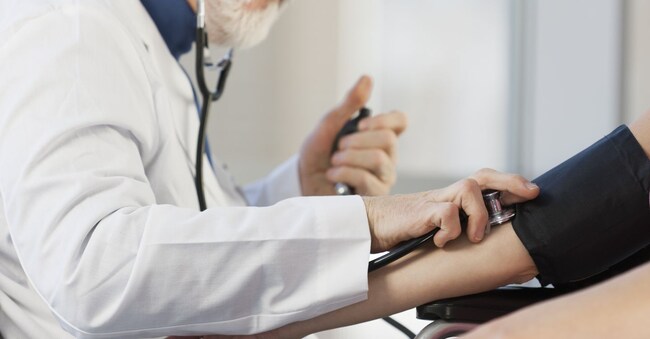
Doctor with Muscular Dystrophy checking the blood pressure of a patient Mark Hunt / AGF

4' min read

Translated by AI
Versione italiana

4' min read

Translated by AI
Versione italiana

Checking your blood pressure, monitoring your blood sugar levels, knowing your cholesterol levels. Simple steps that Europe wants to turn into a collective habit. Starting today, World Heart Day, and running until 4 October, the first European Screening Week is taking place, with the slogan ‘Know your numbers’ (Know your numbers). The initiative was launched in Milan, during the 62nd Congress of the European Association for the Study of Diabetes (EASD), by the three leading European scientific societies in the cardiometabolic field: the European Society of Cardiology (ESC), the EASD and the European Association for the Study of Obesity (EASO).

The figures behind an emergency

The starting point is the scale of the problem. Cardiovascular diseases remain the leading cause of death in the EU: in 2022, they caused 1.7 million deaths – one in three – and affect around 62 million people. Diabetes affects 35.3 million Europeans, and around one in six adults is obese. These three conditions often co-occur and are closely linked, placing an ever-increasing burden on families and healthcare systems.

Loading...

The problem, experts explain, is that they are all too often detected too late, when symptoms appear or complications have already developed. Hence the aim of moving from a reactive to a preventive approach. The campaign forms part of the European Commission’s ‘Safe Hearts’ Plan, which aims to reduce premature cardiovascular deaths by 25 per cent by 2035, and supports the proposed EU Council recommendation on cardiovascular health checks.

“Prevention cannot wait,” said Olivér Várhelyi, the European Commissioner for Animal Health and Welfare, urging members of the public to get screened and to consult a healthcare professional. For ESC President Cecilia Linde, screening is an opportunity to overcome inequalities linked to place of residence, gender and socio-economic status, and represents “an investment in our children, our communities and the future of Europe”.

The president of the EASD, Francesco Giorgino, pointed out that “too many people are still living with type 2 diabetes without realising it” and that prevention must also involve those with type 1 diabetes, who face an increasing cardiovascular risk over time. The President of the EASO, Volkan Yumuk, called for a move beyond body mass index alone in the diagnosis of obesity, whilst the President of the EUDF (European Diabetes Forum), Chantal Mathieu, called on Member States to “turn the plan into action”, starting with this week’s screening programme.

The chairpersons of the three organisations are urging the public to take part in the thousands of local events planned across Europe. As well as blood pressure, blood sugar and cholesterol, body mass index and waist circumference are also important factors.

Diabetes among young people

Whilst the campaign looks to the future, the data presented at the congress – which runs until 2 October – highlight the urgency of the situation. According to the Diamond-T1D model, by 2049 there will be 12.1 million people with type 1 diabetes worldwide, 29 per cent more than the 9.4 million in 2025. Even today, the condition mainly affects younger people: in 2025, the 0–19 age group accounted for 42 per cent of new cases (37 per cent in high-income countries, 49 per cent in low-income countries). A study by the Colorado School of Public Health indicates that, since the start of the century, new cases among those under 20 have increased almost tenfold: this is a condition that no longer affects only adults and the elderly.

In Italia, there are almost 4 million people with diabetes, plus around one and a half million people who are unaware that they have the condition. The number of type 1 cases is expected to rise by 16 per cent by 2049, reaching over 239,000.

Treatments and guidelines

Among the topics covered at the congress were disease-modifying therapies for type 1 diabetes, which do not replace insulin but aim to modulate the autoimmune response and preserve beta cells. At present, there is only one approved drug to slow the progression of the disease, but other immunomodulators and antigen-specific and cellular strategies are currently being trialled. There will also be extensive coverage of incretins, multi-agonists and amylin for obesity, with a focus on safety and side effects.

Giorgino cited two documents: the new EASD guideline on continuous glucose monitoring, which recommends extending CGM to all adults with type 2 diabetes regardless of insulin treatment, and the 2026 ADA/EASD Consensus Report, which advocates early and intensive treatment, combining glycaemic control with cardiovascular, renal and hepatic protection, as well as weight management.

Loading...

The Italian model

Italia is staking a leading role. From the 1987 framework law to the Mulè Act, which introduced paediatric screening for type 1 diabetes and coeliac disease, right through to the Pella Act, which recognises obesity as a chronic, progressive and relapsing condition. Now under consideration is Bill 287, tabled by Senator Daniela Sbrollini, which aims to make physical activity prescribable by the National Health Service as a form of treatment.

The message coming from the stage in Milan is clear: early diagnosis saves lives, and prevention must become an integral part of day-to-day healthcare across Europe.

Copyright reserved ©
Loading...

Brand connect

Loading...

Newsletter

Notizie e approfondimenti sugli avvenimenti politici, economici e finanziari.

Iscriviti