
Bomb threats against aircraft: European intelligence services are investigating the Russian lead
A cross-border investigation has been launched to determine whether Moscow is directly involved

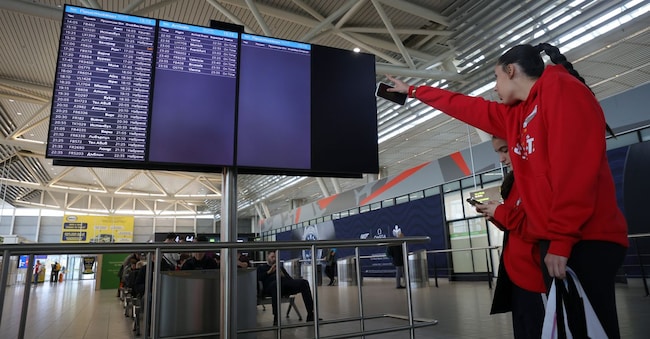
European security agencies are investigating to establish whether the co-ordinated bomb threats that targeted dozens of European flights may have originated in Russia. This is reported by the Financial Times, citing intelligence officials who say that a cross-border investigation is underway amongst European intelligence services to trace the origin of the threats. Some European intelligence officials believe that a Russian origin is the most likely, based on motive, modus operandi, previous incidents and the initial evidence that has emerged. One working hypothesis is that the threats come from pro-Kremlin activists or hacker groups.
The long road to a concrete attribution
European officials warn, however, that the road to a concrete attribution of responsibility for the false bomb threats is still a long one and that it may not be possible to reach a definitive conclusion. Even in the case of alleged threats from pro-Kremlin activists, the FT points out, it would still remain to be established whether, and to what extent, the Russian secret services directed, encouraged or authorised the operations. Investigators do not believe that those responsible represent a real threat to European aviation.
The claim by Male State (which it denies)
The emails were sent from various anonymous accounts and from different geographical locations: one was traced to Colombia. Many of the messages were written in the recipients’ own language. In an email sent on Friday 6 November to the Irish media, the authors claimed to have ‘experimented with multithreading” and that they had recruited European residents, as well as gaining access to compromised devices, servers and accounts. The FT also notes that a threat sent on Thursday to Fiumicino Airport had been attributed to the Russian chauvinist group Male Stat, whose founder Vladislav Pozdnyakov has, however, denied the organisation’s involvement.
The Lithuanian precedent
According to the head of security for Lithuanian airports, Vidas Ksanas, the group – or someone claiming to represent it – had previously sent several bomb threats to airports across the country. In October 2023, over 1,500 false alarms had targeted schools and nurseries in Lithuania. The authorities in Vilnius had accused a ‘state actor’, without publicly identifying it, whilst intelligence circles had attributed responsibility to Russian activists, likely encouraged by the Kremlin’s intelligence services.

