

Bones and tendons: 3D metamaterials will be used to reconstruct ‘impossible’ joints
In *Nature Communications*, tissue engineering is shaping the future by recreating the interface between such diverse tissues. But we are only just getting started

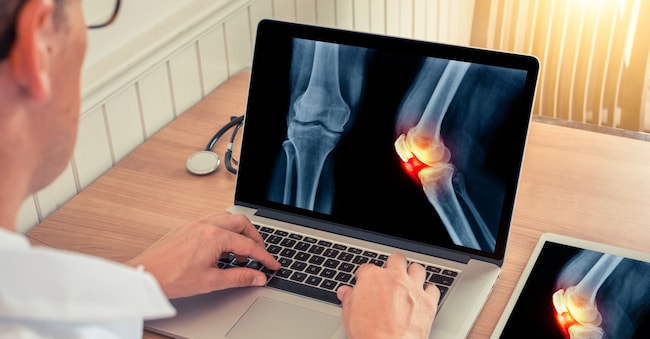
The former are hard, the latter extremely soft and elastic. These characteristics alone are enough to reveal the complexity of a secret that nature has incorporated into the human body by combining bones and tendons. These structures are, in fact, joined by a natural interface which, fortunately for us, rarely fails. But if it does, of course, we need to devise a solution capable of addressing such a complex anatomical and functional problem, so as to recreate a transition as close as possible to the natural one. How can we mimic this process, which has taken millions of years of evolution and has enabled strength and resilience to be maintained as we move from the rigidity of bone to the flexibility of the tendon? One answer comes from metamaterials and is proposed by researchers at Delft University of Technology in a study published in *Nature Communications*: thanks to new strategies combining two types of metamaterials, they have designed structures that faithfully mimic the bone-tendon interface.
The secret of metamaterials
Replicating what nature has achieved in the laboratory is certainly no easy task. Over a very short distance, the body transitions from rigid bone to flexible tendon. This is why metamaterials have been considered – tailor-made materials whose properties are determined by their internal architecture rather than their chemical composition. There are two main classes. Laminar-structured metamaterials, consisting of continuous surfaces and suitable for rigid structures and the integration of bone cells, or beam-structured metamaterials, which can better replicate softer tissues. “Combining these two types of metamaterials has been a real challenge for engineers,” comments the lead author Jianxing Yang in a statement from the centre. “The direct connection between the two often creates areas of weakness where failure can occur.” The first instinct for engineers is to transition gradually from one architecture to the other; but this results in the transition region becoming too long and too far removed from the compact bone-tendon interface found in nature.”
For this reason, the research focused on an algorithm that identifies compatible frameworks – both lamellar and beam-and-stirrup structures – and determines the best way to join them. The method aligns the geometries of the two structures and introduces a transition cell that shares the characteristics of both. This results in a gradual and rapid transition (rather than an abrupt boundary) from one structure to the other.
Recreating nature
The experts have 3D-printed several prototypes, subjected them to mechanical testing and confirmed that it is possible to create robust connections between the two families of metamaterials. Now comes the most complex challenge: we need to understand whether and how living cells respond to these hybrid structures within a single scaffold. “By culturing cells on these newly designed structures, we hope to understand how geometry influences cell adhesion, growth and differentiation,” commented one of the authors, Amir A. Zadpoor. Ultimately, the aim is to determine whether the designed transitions can guide the formation of different types of tissue, just as occurs at the natural bone-tendon interface.” What is certain is that strategies are now available to facilitate the creation of tissue-engineered implants and structures that not only adapt to the body’s mechanical properties but also help to direct its biological response. All this is aimed at developing solutions to the most serious forms of trauma and musculoskeletal problems.
A future of innovation
“Research into metamaterials capable of replicating the interface between tendon and bone is an example of the prospects that tissue engineering offers to orthopaedic and trauma surgery,” comments Marco Mugnaini, President of OTODI (Italian Association of Hospital Orthopaedic and Traumatology Surgeons). “What is certain is that the possibility of creating structures capable of replicating biological tissues opens up promising prospects for future clinical applications. For OTODI, scientific innovation is a central element in the evolution of orthopaedic practice: we promote research activities and the drafting of guidelines on topics of great clinical relevance, such as osteoarticular and periprosthetic infections. In this sense, the challenge for the future is to integrate research into biomaterials, technological innovation and clinical evidence, thereby translating scientific advances into benefits for patients.”

