
Technology, bonuses and tax relief drive the conversion of bonus into welfare
A quarter of workers receive the bonus in goods and services and benefit from tax exemption. Two out of three second-level contracts allow for the welfarisation of the bonus. Several companies provide a bonus of up to 20% in the event of conversion, from Enel, Fincantieri, Eni, A2a, Saipem, Menarini and Ducati. Tax relief up to EUR 3,000 and the technological push of digital platforms boost conversion rates

At Unicredit more than 90% of bank employees choose to receive their productivity bonus, or part of it, in their welfare account. The bank went from a one-off productivity bonus of EUR 1,000 gross in 2021 to EUR 2,500 in welfare, thanks to tax exemption, in 2025: an increase of 200%. The conversion rates are largely due to tax exemption, digitalisation of the service and a flexible benefits offer ranging from education, care and assistance to family members, health, leisure, retirement, healthcare, reimbursement of bills, rent, shopping vouchers, fuel, mobility, education and assistance.
The increased expendability of welfare credit
Welfare credit has increased its expendability and has now become an option chosen by almost a quarter of workers. This is a leap that was unimaginable ten years ago, when many companies found themselves with workers who did not spend the welfare credit due to the excessive complexity caused by the absence of digital platforms and bureaucracy. All this is now confined to the past, if it is true that two out of three second-level contracts now provide for welfare, and over time the number of workers who choose to convert the bonus by benefiting from tax exemption (within the amount of EUR 3,000) has progressively increased. Although the percentages are increasing slowly, especially in the post-inflationary period when the focus on money has been very strong. While the average figure is around 25 per cent, in large companies the percentages of those who convert the premium rise to 40 per cent and there is no shortage of stories of companies where conversion rates reach 90 per cent.
The welfarisation of the award
Some data and company stories help to understand. Starting from the latest Ministry of Labour report on second-level (company and territorial) contracts, we read that in mid-January there were 9,114 compliance filings referring to active contracts: of these, 8,073 refer to company contracts and 1,041 to territorial contracts. The target group is more than 2.6 million workers, while the average annual premium amount is EUR 1,712. Of the 9,114 active contracts, 6,222 provide for corporate welfare measures. We are therefore talking about two thirds. As part of the periodic analyses carried out by Adapt on collective bargaining, it emerges that, among the 1,301 company agreements signed between 2022 and 2024 and present in the database, 31% of the agreements regulate the performance bonus. Among these, 68%, i.e. 7 out of 10, provide for the option of welfarisation of the bonus. Assolombarda's Welfare Observatory, which monitors an area of intense production activity (Milan, Monza, Pavia and Lodi), has shown a growth in the propensity to convert with the percentage of workers who now make this choice reaching 26%, 5% more than the previous year, while the converted quota is 65%, again 5% more than the 60% of the previous year. The data tell us that the workers who choose to convert, although not the majority, are growing and therefore, even with the 5% tax-free allowance on cash bonuses, the advantage of total decontribution and the possibility of benefiting from specific services, such as supplementary health, welfare or work-life balance, remain a determining factor for a quarter of employees. In addition, the 65% share of the converted premium is very substantial, almost two-thirds, suggesting that the choice is driven by targeted needs such as financing expensive services, from school fees to health care. As explained by the digital platform TreCuori, market data in Italy describe a scenario characterised by growing but still low conversion rates, in a range between 10% and 40%, which varies depending on territories, company size and the presence of an app that makes it easy to 'buy' goods and services. Achieving high percentages of conversion to welfare would, however, be advantageous both for the company, which obtains important economic benefits, and for the workers, who find themselves with greater purchasing power, as it allows them to take advantage of the entire gross amount of the bonus instead of the net amount after taxes and contributions.
The conversion bonus
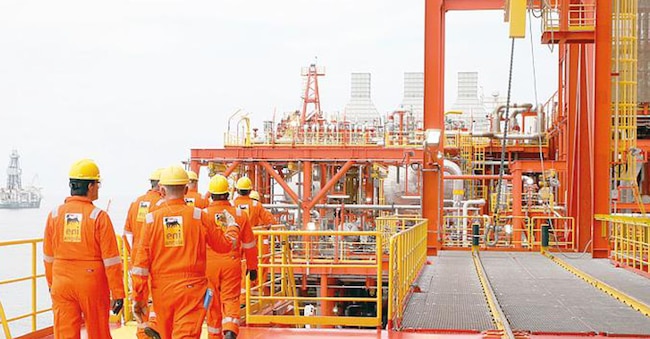
According to Adapt's latest welfare report, among the agreements that provide for the welfarisation of the bonus, 56% of them introduce the so-called conversion bonus, i.e. an additional quota in welfare goods and services, paid by the company, for employees who have opted for the total or partial conversion of the bonus. Focusing on the regulation of conversion bonuses, it is noted that the additional shares are generally defined in percentage values to be calculated on the converted bonus and may vary according to the employee's choice to convert all or only part of the bonus. These quotas generally range from 5% to 30% of the converted amount. In many company contexts, the bonus may also vary according to the portion of the bonus converted and the destination of the welfare credit chosen by the worker. Among the agreements cited by Adapt are NHT Italia, Rai, Gefran, Fidia, Saipem, Fonderie Mora, Rold, Menarini, and Ducati. Going into some of the stories, from 2017 Enel envisages the possibility for its employees to convert the performance bonus into welfare credits to be paid into their pension fund or alternatively to be used to obtain reimbursements on numerous types of expenses, including: family education expenses, food and fuel expenses, health care, elderly care services, sports activities, and children's school canteen expenses. The amounts can also be invested in travel and holiday expenses. The bonus that Enel provides for those who convert the premium is 20%. In 2025, the percentage of workers who chose to convert the premium was 38%, compared to 30.4% last year, a real record number. Going into the details of expenses, 35% goes into retirement savings, 24% into shopping vouchers, 22% into leisure expenses, and 19% into reimbursements of other kinds. In A2A the trade union agreements provide for the possibility of converting the result bonus into welfare services and/or supplementary pensions and a bonus equal to 18% of the converted amount. About 30% of people convert the bonus or part of it. Preferred goods/services are complementary welfare, vouchers and reimbursements, but also travel/leisure. Starting in 2017, in line with current regulations, Eni has offered employees the possibility of accessing the tax and contribution opportunities provided on flexible benefits by allowing the conversion of a portion of the result bonus. The company grants a bonus of 25% of the portion of the result bonus actually spent through the conversion. Once converted, the welfare credit can be allocated to 3 areas: Supplementary Pension, Supplementary Health Care or in Welfare Services. The percentage of employees who decided to convert a part of the performance bonus into welfare services in 2025 was more than 30% (out of about 20,200 eligible), allocating about 15% of the total value of the performance bonus. Almost all of the employees who converted their bonus opted to convert it into reimbursement of expenses under the regulations and into vouchers. In Fincantieri, the Level II agreement provides for the voluntary conversion of part or all of the bonus into welfare. The agreement provides for a 10% surcharge on the converted amount. The percentage of employees who have converted at least part of the bonus is more than 40% and among the most popular goods and services are fringe benefits, followed by the Diffuse Share Ownership Plan, Travel services, Family area, especially education and health insurance. "The wide participation in the result bonus conversion initiatives testifies to the soundness and effectiveness of a model that integrates benefits, services and protection measures, fully consistent with our vision of responsible, inclusive and long-term oriented development," explains Luciano Sale, Director of Human Resources and Real Estate at Fincantieri.
The push of technology
With or without bonuses, there is no shortage of virtuous cases, and two factors are certainly the driving force, as explained by the TreCuori digital platform: a tailor-made service, a user-friendly app on which to obtain and use services, and customer service that works. Certainly from technology comes a very strong push to make premium conversion easy and simple. At TreCuori, they say that their platform encourages high conversion rates, with percentages as high as 90 per cent, and that it allows a very wide range of goods and services to be 'purchased' without commission. These range from shopping vouchers to medical and dental care, from school to public transport, from babysitting to assistance for the elderly, from sports to travel, to interest on mortgages and supplementary pensions, as well as classic fuel and shopping vouchers and, for those who do not enjoy the company canteen, even food vouchers that can be spent at thousands of supermarkets.

