
Forest family, the legal point. Friday appeal on suspension of parental authority
The order states that the parents, after being heard twice, stopped cooperating with the judges in October

Key points
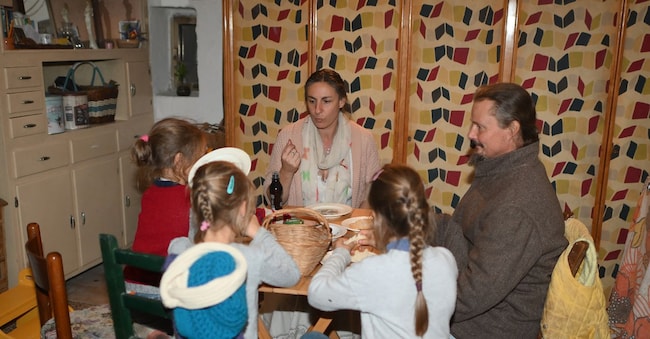
The perplexities of Justice Minister Carlo Nordio on the one hand, the new family lawyers at work on the other. Lawyers Marco Femminella and Danila Solinas, who took Giovanni Angelucci's place (he has announced that he has withdrawn his defence mandate), are preparing the appeal, which will be filed on Friday, against the order of the Juvenile Court of L'Aquila 2061/2025 of 20 November that suspended the parental responsibility of Catherine Birmingham and Nathan Trevallion, appointed a provisional guardian, and ordered the removal of the minors from the family home and their placement in a foster home where they are staying with their mother.
The story begins in 2021
From a strictly legal point of view, the matter is very complex. The minister Nordio, at the question time, spoke of the balancing of interests in the field, saying he was ready to intervene 'should profiles of disciplinary importance emerge, exercising the powers' conferred on him by law. The minister's perplexity is the same as that expressed by the Minister for the Family, Eugenia Roccella, on the sidelines of a conference: 'The order I read clearly states that this heavy gesture (the suspension of parental authority and the removal) was decided because the children suffered from a lack of confrontation with the peer group, of socialisation. The peer group is fundamental, it is very important, but so are the parents'.
And, if there is division on social media on the subject, even in Australia, where the children's mother was born, and in England, where the father comes from, the spotlight is shining on the story that - it is good not to forget - has been going on for years. Trevallion and Birmingham bought the house in the middle of the woods of Palmoli (Chieti, Abruzzo) on 29 April 2021, getting married in November of the same year. Before choosing an isolated lifestyle, the children's father worked as a chef and dealt in fine wood furniture, the mother worked on the Internet: owner of a site bearing her name (unencrypted until last April, then blacked out) offering energy readings.
The choice tolive 'off-grid' - without electricity, running water or traditional services, producing their own food, water and energy and raising their three children (an 8-year-old girl and 6-year-old twins) at home - was recounted on the net. The family's autonomy was interrupted in 2024, with the notorious food poisoning that led to their admission to hospital and the involvement of social workers, the same ones who today report serene children in the family home.
The content of the ordinance
The appeal by the new lawyers will have to refute the order's narrative, which states that 'the social service had reported that the minors were in a condition of substantial abandonment, in an uncomfortable and unhealthy housing situation and without education and health care; the family lived in a dilapidated ruin without utilities and in a small caravan; the minors did not have a paediatrician and did not attend school'. The six-page decision of the Juvenile Court of L'Aquila includes a request for a technical report on the static safety of the ruin and, from the health point of view, for more thorough investigations into the minors' condition.

