

Botulism: here are the safe foods, precautions and how to prepare and store food and baby food
The vademecum of the Istituto Superiore di Sanità for safe food preparation and storage and what to do if you suspect you have eaten contaminated food
4' min read
Key points
4' min read
In Italy, the domestically produced foods most responsible for cases of botulism are black olives in water, canned vegetables and mushrooms in oil, and meat and fish, especially tuna. The health risks are high, as intoxication caused by botulinum toxins - the best known of the nine identified so far is clostridium botulinicum - can have serious health effects and in some rare cases can be fatal. Attention, say experts from the Istituto Superiore di Sanità (Iss), which has drawn up a decalogue for the safe preparation and storage of food, and in the event of suspicion of having ingested contaminated food, must be maximised. In the period 2001-2024, 1,276 suspected clinical cases were reported to the national botulism surveillance system and 574 were laboratory confirmed, a figure that makes Italy one of the countries with the highest incidence in Europe
The risks of an ancient practice and botullin toxins
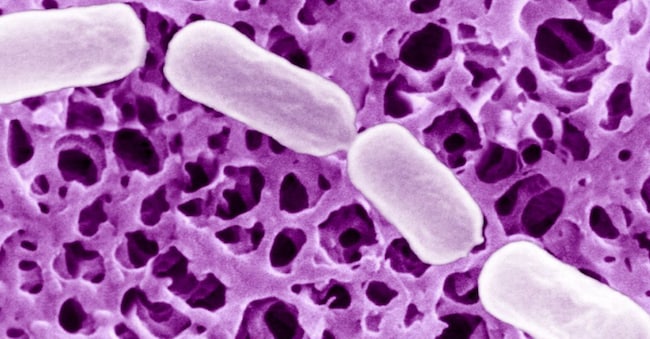
'One of the main reasons for this high incidence of botulism in Italy lies in the canning tradition still deeply rooted in the country,' explains Fabrizio Anniballi, head of the National Botulinum Reference Centre of the Istituto Superiore di Sanità. Italy is famous for its traditional food preservation methods, which have been handed down for generations. This practice, which once allowed food to be stored at home, could be at the root of the spread. Botulism in Italy, especially in southern regions, remains a public health problem, mainly related to the ingestion of improperly made home-made preserves'. Foodstuffs that do not allow botulism to develop are all naturally acidic or acidic preserves - e.g. tomato puree and pickles -, preserves prepared with high concentrations of sugar (jams and marmalades) or salt (pickled or dry cured food preserves). All other preserves to be safe require sterilisation treatments, which can only be carried out industrially. Botulinum toxins are the agents that cause botulism and are considered the most powerful natural poison for humans. Botulinum is an anaerobic micro-organism, i.e. it develops in the absence of air, and can be found in soil, sediment and dust in the form of a spore. Food may come into contact with the spores, but they only become dangerous if they allow the passage of the spore to vegetative cells, allowing the micro-organism to develop. It is in fact at this stage that the production of the toxins responsible for the disease takes place.
How to recognise the symptoms of botulism and what to do
.At an early stage, the symptoms of botulism are not so characteristic and this can unfortunately delay diagnosis, but typical symptoms usually appear within about 24-72 hours and consist of double vision, difficulty in focusing, difficulty in holding the eyelids open, dilation of the pupils, dry mouth and difficulty swallowing, difficulty in articulating speech, constipation and urinary retention. In the most severe forms, respiratory failure and in very rare cases death can occur. As soon as one realises the severity of the symptoms, one must go to hospital. Doctors have at their disposal antitoxin, which is only effective in the first few days after eating the contaminated food, as it acts on the toxin that is circulating in the blood, and supportive treatments. It is a good idea to remain calm and promptly contact the attending physician or the nearest emergency room if typical symptoms of intoxication appear. The doctor should be told what food has been ingested, how long the symptoms have been present, and it is a good idea to hand over the residue of the canned food for analysis.
The rules of canning and the click-clack method
.Boiling (reaching 100°C) as a stabilising measure for canned food is not sufficient, but inactivates the toxin, so boiling a suspected canned product for 5-10 minutes makes it temporarily safe as long as it is then consumed immediately. Tomato preserves are fine, as this vegetable is strongly acidic. Ready-made sauces, on the other hand, should be avoided: the meat or fish content reduces the acidity of the tomato and exposes you to risk. Before opening a conserve,' advises the Iss, 'visually inspect the container for liquid spillage and loss of vacuum. If the metal caps or capsules appear convex (curved upwards) and if you press your finger into their centre and hear a 'click clack', the containers are no longer vacuum-packed. The food should therefore neither be tasted nor consumed.
Precautions after opening the can and freezing
Preserved foods should be refrigerated and consumed as soon as possible. Keeping food in the refrigerator, while greatly slowing down its degradation, does not prevent it. Therefore, if the product is altered in smell, colour or consistency, it should not be tasted or consumed, but discarded. Freezing alone does not eliminate the risk of botulism. Although it may stop the growth of the bacteria, the spores may resume their activity once the food is thawed.

