

Chip in brain to control robotic hand: breakthrough comes from China
A device developed in Shanghai allows people with paralysis to move their hands through brain signals. It is the first brain-computer interface authorised for use outside clinical trials

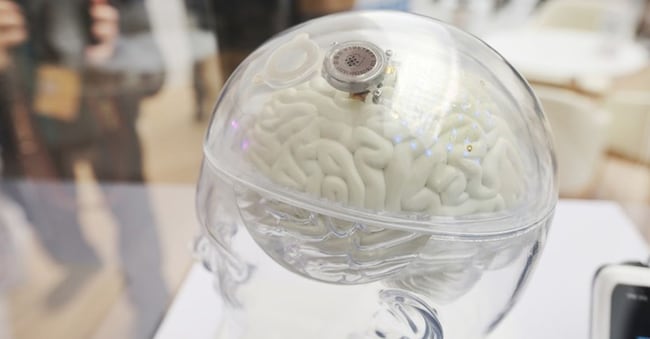
China has authorised the first brain implant for people with severe paralysis, marking an important milestone in the development of brain-computer interfaces. The device, called Neo, was developed by Shanghai-based Neuracle Medical Technology and received approval from the National Medical Products Administration, China's regulatory body for medical devices.
The implant can be used in patients aged between 18 and 60 years with limb paralysis due to spinal cord injury in the cervical region. The aim is to restore at least part of the ability to move hands through direct translation of brain signals.
The system consists of a coin-sized chip inserted into the skull, connected to eight electrodes placed on the surface of the brain. The electrodes record the electrical activity that is generated when the patient imagines moving his or her hand. The signals are sent to a computer that decodes them and turns them into commands for a soft robotic glove, capable of grasping objects and making basic hand movements.
According to the researchers involved in the clinical trials, 32 people have received the device so far. All of them have been able to perform the grasping movement with the help of the robotic glove, an action they could no longer perform before the implantation. In one of the cases described in a scientific preprint, a patient who had been using the system for nine months was able to regain the ability to grasp and manipulate objects, and was able to eat and drink independently.
The Chinese device is also distinguished by its relatively low level of invasiveness. Unlike other experimental systems, the electrodes do not penetrate deep into the brain tissue but are placed on the surface of the brain, a choice that may have facilitated the regulatory approval process. The approval represents a milestone for the field of brain-computer interfaces, technologies that directly connect the nervous system to electronic devices to transform brain signals into concrete actions.


