
Brands are launching a new quest to uncover what customers aren’t saying
Artificial intelligence transforms reactions and engagement into measurable data. From advertising to retail, the use of advanced technologies to predict the effectiveness of campaigns is on the rise

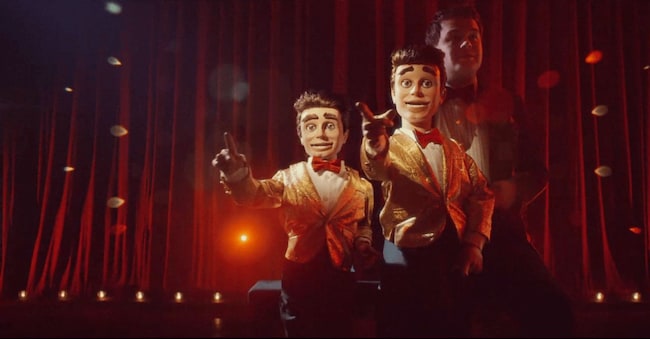
From the advanced artificial intelligence of today to the almost mystical practices of ancient Greece. Spanning more than twenty-five centuries, the new campaign for the American market by the giant Mars draws inspiration from the ancient art of ventriloquism for its new advert, which is set to air this month. The campaign is called Double Act and was created for Twix. It transforms two ventriloquist dummies into unlikely stars of a musical. The creative concept draws on the brand’s historic positioning – two is better than one – turning the two Twix bars into a metaphor for camaraderie. A advert constructed almost entirely using practical effects, featuring surreal storytelling and carefully calibrated humour. In short, here the special effects come from performers highly skilled in vocal techniques, capable of creating the illusion that the voice is coming from elsewhere.
And to think that Mars is actually one of the first multinationals to have invested in emotional AI to measure and optimise the effectiveness of advertising campaigns. The company has carried out one of the most extensive studies to date, involving over 1,500 consumers across France, Germany, the UK and the US, who watched more than 200 adverts whilst a webcam recorded their facial micro-expressions. The aim was to ascertain whether the emotions evoked by the adverts could predict their commercial effectiveness. The findings were reported by Forbes: emotional analysis proved to be more accurate than questionnaires alone in predicting short-term sales.
Emotions to be translated
Read emotions to sell more effectively. After clicks, likes and dwell time, the new frontier in measurement concerns what we feel. Consequently, the market for platforms that promise to transform attention and engagement into measurable data, thanks to artificial intelligence that decodes stress and engagement through micro-facial expressions, posture, eye movements and behavioural cues. The global market is currently worth $3.4 billion, with growth projected to reach $20.8 billion by 2034, according to the Indian market research firm Fortune Business Insights.
The algorithm reads the most hidden and valuable part – namely, that linked to emotions – by learning to decipher what we do not say. Following the era of big data and predictive algorithms, the new oil is emotional data. It helps us understand what excites, bores, frightens or engages us. This perspective opens up enormous opportunities for brands, retailers and experience designers, but it also raises ethical questions. ‘Until now, marketing has measured the shadow; we measure the object: micro-expressions, pupil dilation, posture, validated physiological markers. We read the nervous system, which doesn’t lie like a questionnaire. This is how we bridge the say-do gap and start from the biology of emotion, not from pixels,” says Marco Baldocchi, CEO of Emotivae, an emotional AI and neuroscience platform that has arrived in Italia thanks to the company Thymos.
‘But invisible persuasion did not begin with Emotion AI: marketing has always used colours, music and layout to persuade. Persuasion works and is legitimate when it is transparent and respects people’s choices. The problem is covert manipulation that circumvents people’s awareness. ‘Emotion AI is a tool used to understand consumers’ emotional states and optimise their experiences in order to build loyalty,’ says Baldocchi.

