
So brands rewind the tape and focus on the nostalgia effect
Revival of music, words and images: the call to the past is expressed in soothing and recognisable storytelling. The rediscovery of roots is among the strong trends of Tbwa's Backslash's research

4' min read
4' min read
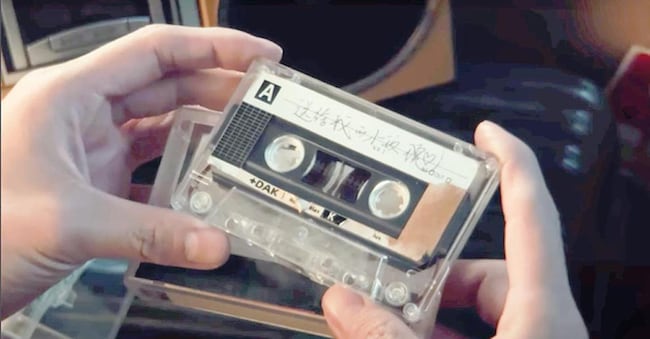
A return to the future, to paraphrase a film title that made history. Because in Apple's recent Chinese New Year campaign, the memory tape rewinds, taking us back to the Nineties. Forget metaphor: we are actually in front of a cassette tape. At the same time, the tale is told with tools that in those whirlwind years were not even imagined, namely the iPhone 16 Pro, in an already established marketing operation for the Cupertino giant. Eighth video for the Chinese New Year, but this time a guinness video celebrating the Year of the Snake. In this case it is the first musical filmed via smartphone. Wei during the celebrations at his parents' house discovers the compilation and is transported to a dream world where he falls in love with a perfect stranger.
Multi-generational links
.In a turbulent economic phase, marketing plays the memory card. A form of caution, a way of closing in on itself. It is the exaltation of bygone times and cherished places, far removed from today's upheavals and the dynamics of globalisation thrown into crisis by geopolitics. Welcome to the marketing of nostalgia that redefines space and time by working on recognisable images and calming storytelling. "When ties with the past are severed, we lose more than just history: we let go of inspiration, identity and the ability to imagine a future," wrote Dulani Porter a few weeks ago in AdWeek, highlighting the link between memory and creativity.
"Thenostalgic emotion is the first response to change and to that which challenges our certainties, since man knows that it is the past that helps him define what scenario of the future is desirable for him. When we live in a state of strong emotional involvement, we have a greater capacity and predisposition to retrieve certain elements in our memory than when we are not involved,' argues Daniela Bavuso, co-author of 'Retro marketing' with Natale Cardone for Edizioni LSWR. Meanwhile, the nostalgia effect tends to differ from the present and the future. "It has the characteristic of capturing in our imagination those elements that are easy to encode and that can expose us to emotional involvement. This makes us more receptive, also considering that emotions help us memorise what we learn. It tells us about facts and dimensions that are not real or futuristic, also focusing on the representation of rewards with the related production of dopamine: marketing, in short, works to complete mental representations and make them accessible to us,' Bavuso points out.
Today, this narrative passes through music, images, permeable words, even far from what one has experienced. It is aboutmulti-generational anchors. "We don't have to have experienced or perceived those situations directly. Marketing works on target shifting with involvement that spreads to audiences further away from direct involvement,' says Bavuso.
The refuge of the comfort-zone
.It is the revival of roots that implies a spatio-temporal anchoring. This is how the Tbwa Backslash global cultural intelligence unit puts it in black and white when presenting its glossary of the 39 cultural changes that are reshaping the present. An observatory that analyses data from more than 45 countries around the world. "Pandemics, climate crises, wars, denatality, ageing populations, immigration, tech revolutions: we live in a hyper-connected world where depression and loneliness are the diseases of the century. For many it is simply too much to handle, a modernity that generates anxiety and fear, whereas years ago it generated hope and optimism. So people seek refuge in comfort-zones that are reassuring and familiar. The use - and in Italy often the abuse - of historical testimonials and songs, as well as the construction of stereotyped imagery of reassuring families and places, conveys emotional closeness between company and people,' says Fabrizia Marchi, CEO of TBWA\Italia. But one has to think about systemic phenomena. "For a brand today the challenge must be to create culture, to enrich and generate something lasting that adds value to the human experience. The culturally relevant brands will be those that offerinspiration with a tangible and transparent mission. Today, the theme of care is emerging prominently: towards the environment, humanity and oneself. Companies are being asked to be concrete, truly sustainable - environmentally, socially, individually - and transparent,' says Marchi.

