
Brazil challenges China’s monopoly on rare earths
Following the Chamber of Deputies, the Senate has formally approved the bill establishing the new national policy on critical and strategic minerals

2' min read
2' min read
On 3 September, the Brazilian Senate approved the bill establishing a national policy for the processing and industrialisation of critical and strategic minerals, following the Chamber of Deputies’ initial approval last May. The bill is now awaiting final promulgation by President Lula.
The objective
The legislation marks a change of direction: the aim is to retain technological and productive resources within the country, moving away from an export-only approach and discouraging foreign investment.
Brasília’s move comes against a backdrop of intense international tensions, exacerbated by the trade wars instigated by Donald Trump. With Beijing having begun to use its resources as a bargaining chip – culminating in last year’s export restrictions – the West has started to look for alternative suppliers.
According to data from the Associated Press and Reporter Brasil, in the first six months of 2026, Brazil attracted massive inflows of capital into the sector, primarily from the United States, Australia and Canada.
Brazil: the world’s second-largest potential supplier
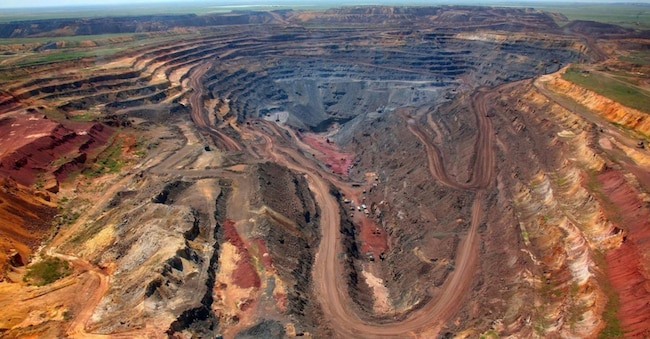
Although Brazil is the world’s second-largest potential supplier of rare earths in terms of reserves (over 20 million tonnes, around 23 per cent of global reserves), its actual production is negligible because the country lacks the necessary refining and processing infrastructure, a sector in which the ‘Dragon’ holds a near-total monopoly. The new law aims to bridge this gap, but in the short term it risks causing Brazil to lose significant foreign investment, as the domestic technological resources necessary for self-sufficiency in production are still lacking.
Risks to the environment
Added to this is a serious environmental and social cost. The only producer operating in the area is Serra Verde, an asset acquired by the United States following the final agreement last April, whose operations are often concentrated in the immediate vicinity of protected areas and indigenous territories. The extraction and processing activities carry a high risk of deforestation, pollution and the release of radioactive waste and toxic chemicals into the environment.

