Agro-industry

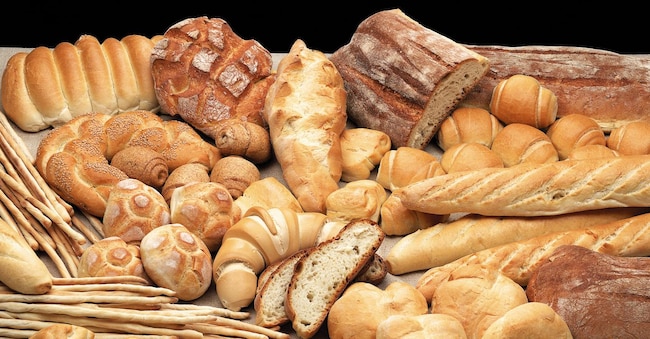
Bread, turnover at 8.4 billion but falling consumption (it was three times as much 40 years ago)

Purchases around 30 kg per head per year, but in 1980 the quota was 84 kg. Flour price tensions still affecting prices

by Maria Teresa Manuelli

In panetteria9 italiani su 10. Il 97% degli intervistati da Ipsos consuma abitualmente pane; di questi, il 91% lo acquista, mentre il 6%  lo produce autonomamente in casa

3' min read

3' min read

As the consumption habits of Italians change, bread loses its centrality in the modern diet. But not its importance: it is still among the most loved - and purchased - food products by Italians. So much so that 97% consume it habitually, albeit with different frequencies, compared to only 3% who have given it up. This was certified by a survey conducted by Ipsos for Assopanificatori, the association that brings together the Confesercenti bakery and bread and bakery products retail trade companies.

On average, Italians consumeb>between 29 and 30 kg of bread per year, approximately 80 grams per day. A quantity that has remained fairly stable in recent years (it was 31 kg in 2019), although clearly lower than that recorded in the past: in 1980 - 44 years ago then - the quota was 84 kg per head per year. A downward slide in average quantities consumed due mainly to competition from other foods.

Loading...

'Over the years, the quantity of consumption,' comments Davide Trombini, president of Assopanificatori Confesercenti, 'has decreased, and this has affected the survival of businesses. The first to pay the consequences have been artisan producers and distributors, also because the reduction in consumption has been accompanied by increasingly aggressive competition from packaged and pre-frozen products, often without effective communication to consumers'.

Despite this, however, bread-making remains of great economic importance with a turnover that, according to estimates by Assopanificatori, is around 8.4 billion euros. In 2023 there were around 28 thousand bread businesses in Italy (considering both those who produce bread, 22 thousand, and those who only sell it, around 6 thousand) employing over 135 thousand people.

'Our bakers,' Trombini continues, 'are an important representation of Italian craftsmanship and it is also thanks to their production that regional culinary traditions are kept alive. Protecting this category means preserving a sector that is essential not only for the country's economy, but for Made in Italy itself'.

However, tensions remain on flour prices. Despite the decline after the 2022 peak, commodity prices remain high. Today, the price of common wheat at origin is 215 euro/tonne, whereas in 2019 it was 199 euro/tonne (+8%). The industrial price of common wheat is €574/tonne, when in 2019 it was €391/tonne (thus an increase of +46%).

Clearly, the increases also reverberated on consumer prices, albeit to a lesser extent. The peak was reached in 2022 (+11%), with a slight decline in 2023 (+10%). Between January and April this year, however, the increase was +2.1 per cent.

As mentioned, 97 per cent of those surveyed by Ipsos habitually consume bread; of these, 91 per cent buy it, while 6 per cent - a share that, projected on the part of the population taken into consideration, corresponds to more than 2 million people - produce it themselves at home.

Of those who buy it, 26% do so every day, 31% three or four times a week, 21% twice a week and 14% only once. But there are also 6% who buy it even less frequently.Bakeries with annexed shop and pure bakers - who do not produce bread, but only sell it - remain the channels of choice for buying bread (37 and 15% of the indications respectively), even though the relative majority of consumers (45%) get it at the supermarket. Of the latter, 57% use the bakery counter, 26% buy packaged bread, while 17% opt for pre-frozen and freshly baked bread, offered by many large-scale distribution outlets.

The 3% of Italians who do not consume bread - just over one million people - do so for various reasons. 15% of these cite not liking it as a food; 11% health reasons; 7% difficulty digesting it or intolerances. 37% of those who do not eat it do so because they fear it makes them fat, while 30% because they are tired of ending up throwing it away.
An issue that is also relevant for the 97% who do eat bread. Of these, in fact, only 46% say they never or almost never throw it away: 4% admit to throwing it away daily or almost daily, 19% between once and three times a week, 31% less often.

Copyright reserved ©

Brand connect

Loading...

Newsletter

Notizie e approfondimenti sugli avvenimenti politici, economici e finanziari.

Iscriviti