

Breast cancer: here’s when surgery can be avoided
No incisions, no general anaesthesia, no surgical scars or implants, and you can go home the very same day: the benefits of cryoablation for the ‘right’ patients, as explained by the IEO in Milan

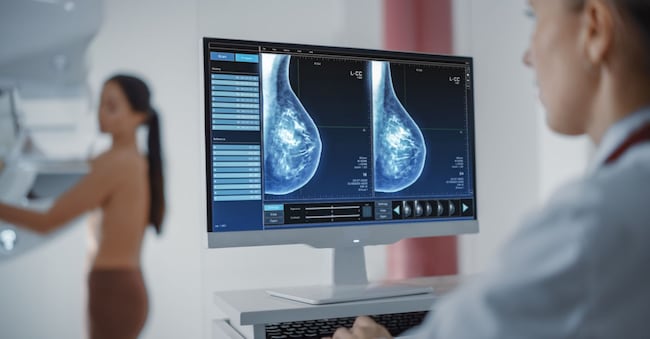
For some women with early-stage, small and biologically favourable breast cancer, treating the disease without undergoing surgery is now a real possibility. At the European Institute of Oncology (IEO), the 100th patient enrolled in the Precice trial has in fact been treated with percutaneous cryoablation. The 100 patients in the trial join the many women already treated at the IEO using the same method outside the trial protocol.
The technique
Cryoablation is not an experimental technology. It is a well-established technique in interventional oncology that destroys the tumour using cold. A thin probe is inserted through the skin, under local anaesthetic and under ultrasound guidance, until it reaches the tumour. Within a few minutes, an ‘ice sphere’ forms around the tumour – monitored in real time – which destroys the tumour tissue along with an appropriate safety margin. There are no surgical incisions, no general anaesthesia is required, and the patient can go home the same day.
The data
The key is to select the right patients. Precice, the first Italian study of its kind, involves women aged 50 or over with single-focus tumours measuring up to 15 millimetres and favourable biological characteristics. It is therefore not a treatment suitable for all breast cancers, but for eligible patients the benefits can be significant.
And the oncological data are now extremely encouraging. In the ICE3 multicentre trial, the five-year rate of ipsilateral tumour recurrence was 4.3 per cent, a result in line with that observed following conservative surgery in comparable populations. Numerous studies have shown that, in carefully selected patients, cryoablation achieves local control comparable to that of surgery, whilst offering a better cosmetic outcome, fewer complications, a much faster recovery and significantly lower costs.
‘The question is no longer whether we are able to radically destroy a small breast tumour using cold therapy: we already know that. The real question is whether, in the right patients, we can achieve the same oncological safety as surgery whilst avoiding the need for an operation. International data tell us that this possibility is real, and the Precice study was set up precisely to demonstrate this prospectively. The first 100 patients represent a very important milestone for us,” comments Franco Orsi, Director of Interventional Radiology at the IEO and principal investigator of the Precice study.

