

Breast cancer, here's why mammography should be anticipated throughout Italy from the age of 45
The number of cases in women under 40 has almost doubled in the last 30 years: incorrect lifestyles such as obesity, alcohol and smoking are to blame, and it is essential to initiate genetic counselling pathways that allow prevention and possible treatment to be planned in a more targeted and effective manner

Key points
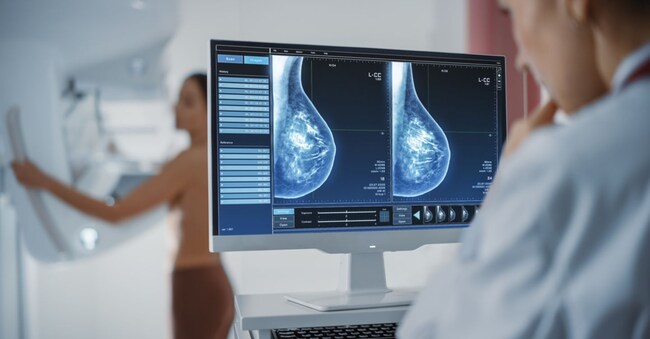
Lowering the age of the first mammogram to ensure more women get an early diagnosis and thus a better chance of recovery. But a scientific study presented a few days ago in Chicago at the Congress of the Society of Radiologists of North America (Rsna) showed that 20-24% of all breast cancers registered over 11 years in seven New York facilities occurred in women between the ages of 18 and 40.
20% of cases among the under 40s
'As the Italian Society of Medical and Interventional Radiology we were in Chicago to lead the delegation of Italian medical radiologists,' explains Nicoletta Gandolfo, Sirm National President and Director of the Asl3 Imaging Department in Genoa, Italy, 'and we followed the presentation of the work, which calls for serious reflection. Firstly, because the data are similar to those in Italy: in our country,' Gandolfo emphasises, '20% of breast cancer cases, about 11,000, occur under the age of forty. A significant number that has grown (almost doubled) in the last thirty years. The causes? They are not certain,' Gandolfo explains, 'but largely attributable to risk factors such as obesity, alcohol and smoking, as well as hormonal factors linked to changes in women's lifestyles, such as late pregnancy, few children and not breastfeeding. It should also be taken into account that when it arises at a younger age, the neoplasm is often more aggressive, as in the triple-negative forms'.
Screening at 45 for all
What to do, then? 'First of all, we must standardise in all Italian regions the start of mammography screening at 45 years of age,' emphasises Luca Brunese, President-elect of Sirm. 'In this perspective, we appreciate the allocation of resources by the Minister of Health to widen the age range for breast cancer screening, as well as for colorectal cancer screening. We must then launch campaigns to increase the still too low adherence rate, explaining to women the great importance of early diagnosis: detecting a tumour in the early stages can guarantee overcoming the neoplasm and often a cure'.
Oncologists and family doctors in the field
As Sirm,' Nicoletta Gandolfo continues, 'we are strongly committed to this work, especially in collaboration with other scientific societies such as the Italian Association of Medical Oncology (Aiom), without forgetting the extraordinary importance of the general practitioner who can and must direct women towards this examination, especially in the southern regions. Great importance must also be given to identifying hereditary forms. It is estimated that at least 5-10% of all breast cancers are familial. In these women who have a hereditary component (especially of the BRCA1 and BRCA2 genes), it is essential to initiate genetic counselling courses that allow prevention and possible treatment to be planned in a more targeted and effective manner'.

