
Bresaola and carpaccio, Rigamonti diversifies and also looks at catering
The company with a turnover of 256 million goes beyond PGI and focuses on enhancing the value of meat from different types of cattle breeds: selections have grown by double digits in recent years. Managing director Palladi: consumers reward transparency, traceability, short labels and choice

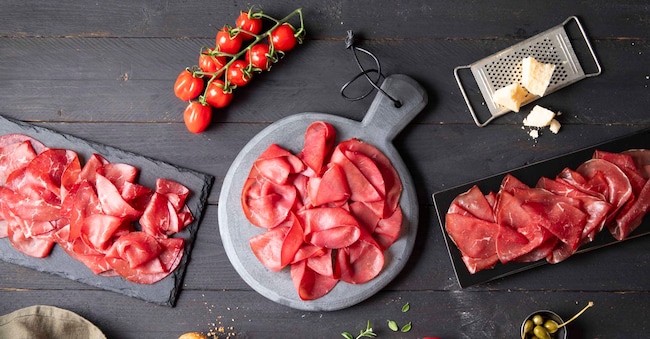
A growth of 25% in value and more than 10% in volume over the last four years, which shows no sign of stopping. These are the numbers that testify to the success of the "Carta delle Bresaole", i.e. the proposal of a "catalogue" of the same type of cured meat but produced from the meat of different breeds of cattle from all over the world, which covers almost half of Rigamonti's bresaola production. Which this year also launched the Carta dei Carpacci, from that of Piedmontese Fassona from a certified supply chain with Coldiretti, to that of Black Angus, equally traceable but from Australia and North America.
Rigamonti is leader in the segment with 40 per cent of the market share of the Bresaola della Valtellina Igp and 256 million turnover (of which about 45 million is due to the San Daniele ham with the King's and Principe brands and a smaller share from a wellness-oriented product line such as organic turkey cooked meats).
"The diversification work on bresaola was born as a transparency operation," says CEO Claudio Palladi, "to make it possible to unequivocally explain for each type of bresaola, even non-GP bresaola, the origin of the meat and consequently its different characteristics, thus eliminating any questions about the possible reluctance to clarify the origin of the raw material. At the same time, the consumer has more choice and can easily verify how different breeds of cattle can produce very different taste nuances. It is an idea that came to me when I looked at what is happening in the coffee world with the proposal of fine blends divided by origin: while there are those who continue to say that bresaola is not really Italian because the meat comes from abroad, no one dreams of saying that coffee is not Italian, despite the fact that there are no plantations in our country'.
The segmentation of the offer also makes it possible to broaden the outlet in the catering world. 'I am certainly not thinking of the starred restaurants,' Palladi continues, 'but in the so-called light catering these products provide ready-to-use solutions that are good from the nutritional point of view and in terms of taste variety. For eating out, we have a specific project on carpaccio, which I believe will be even more successful than bresaola'.
The good sales results of this type of product fit in with the broader trend of ready-to-eat meals, but may also come as a surprise at a time of inflation, which has sent the bresaola market on a rollercoaster ride in recent years. "I believe that products with a few essential, unprocessed ingredients and a short label will be increasingly rewarded. After the post-Covid phase where consumers counteracted the drop in purchasing power by buying cheaper cured meats, I believe that the trend now underway and which will continue in the future is to consume perhaps less but of higher quality, and I am not just talking about bresaola. So also at higher prices'.


